English
 Español
 Português
 Русский
 Deutsch
 Francés
 العربية
 한국어
한국어
 Türk
Türk
 日本語
日本語

How a Full Automatic Butyl Extruder Reduces Production Errors in IGU Manufacturing
In insulating glass production, errors rarely come from a single major mistake. Most quality problems develop gradually from small inconsistencies during primary sealing. This is where a Full Automatic Butyl Extruder plays an important role.
Manual coating depends heavily on operator skill and concentration. Over long shifts, coating thickness can vary, especially when production speed increases. A Full Automatic Butyl Extruder eliminates this variability by maintaining fixed process parameters.
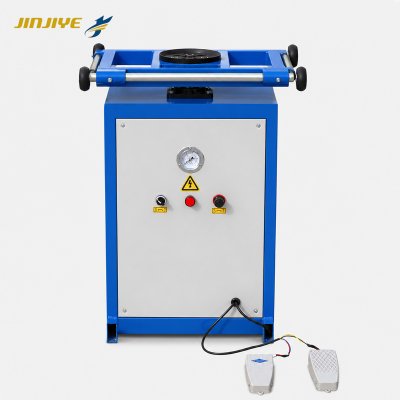
An Automatic Butyl Extruder Machine controls sealant temperature and extrusion pressure digitally. This ensures that the butyl remains within the correct working range, preventing common issues such as poor adhesion or uneven bead formation.
When paired with an Automatic Butyl Coating Machine, spacer bars receive consistent sealing on both sides. This uniformity improves compatibility with secondary sealants and reduces long-term leakage risks.
From a cost-control standpoint, fewer errors mean fewer rejected IGUs. Factories using a Full Automatic Butyl Extruder typically see lower material waste and reduced maintenance caused by sealing defects.
Rather than increasing inspection workload, automatic butyl extrusion helps manufacturers control quality at the source, making the entire IGU process more reliable.