English
 Español
 Português
 Русский
 Deutsch
 Francés
 العربية
 한국어
한국어
 Türk
Türk
 日本語
日本語

Automatic Butyl Extruder Machine: A Practical Upgrade for Insulating Glass Factories
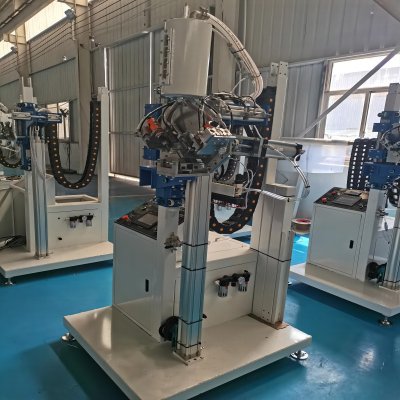
In many insulating glass factories, the primary sealing process is still treated as a supporting step rather than a critical operation. However, long-term field performance shows that unstable primary sealing is often the root cause of moisture penetration and IGU failure. This is why more manufacturers are turning to an Automatic Butyl Extruder Machine as a practical production upgrade.
Instead of relying on operator experience, automatic systems maintain stable temperature, pressure, and coating width throughout the entire working shift. This consistency is difficult to achieve with manual equipment, especially during continuous production.
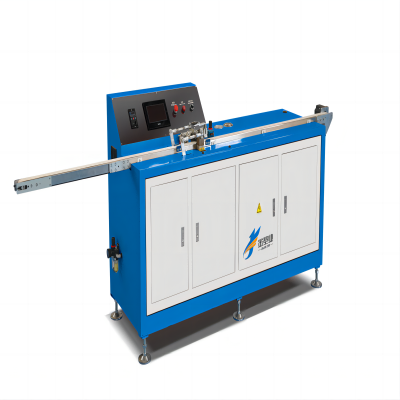
A Full Automatic Butyl Extruder is designed to handle daily industrial workloads. Once parameters are set, the machine runs with minimal adjustment, allowing operators to focus on overall line coordination rather than individual coating accuracy.
From a production management perspective, an Automatic Butyl Coating Machine also helps standardize output quality. Spacer bars receive uniform butyl application, which improves adhesion during secondary sealing and reduces rework caused by uneven coating.
Factories that upgrade to an Automatic Butyl Extruder Machine often report lower rejection rates and more predictable production schedules. Instead of reacting to sealing issues after assembly, problems are prevented at the primary sealing stage.
For insulating glass manufacturers aiming for stable quality rather than short-term output, automatic butyl extrusion is no longer an optional investment—it is a necessary production foundation.