English
 Español
 Português
 Русский
 Deutsch
 Francés
 العربية
 한국어
한국어
 Türk
Türk
 日本語
日本語

Defeating Moisture at the Source: The Practical Mechanics of the Manual Molecular Sieve Filling Machine
The Real Cost of Internal Condensation
Take a look at any modern high-rise or energy-efficient home, and you'll see Insulating Glass Units (IGUs) doing the heavy lifting for thermal and acoustic control. But an IGU is only as good as its internal climate. If even a fraction of ambient moisture is trapped between the glass panes during assembly, the unit will inevitably "fog" from the inside out when temperatures drop. Once condensation appears inside the cavity, the entire unit is considered a total failure. On the factory floor, preventing this internal fogging relies entirely on a granular desiccant—specifically, molecular sieves—packed inside the aluminum perimeter spacer. Getting those tiny granules inside the narrow spacer frame efficiently falls to one incredibly practical piece of equipment: the Manual Molecular Sieve Desiccant Filling Machine. Let's break down the mechanics of this process and why a specialized tool is non-negotiable for IGU longevity.
The Physics of Adsorption and Flow
To understand the filling process, we first have to look at how molecular sieves actually behave. These granules are synthetic 3.zeolites with a highly porous microscopic structure designed to physically trap and hold water molecules (adsorption). Because they are so highly reactive to moisture, time is of the essence on the factory floor. If a bag of molecular sieves is left open to the ambient air for too long during a slow filling process, it will absorb humidity from the room before it ever makes it into the glass unit, drastically reducing its effective lifespan. Furthermore, the granules themselves generate static friction and dust when poured, making them surprisingly difficult to handle in bulk.
The Challenge of the Spacer Cavity
Getting the desiccant into the spacer frame presents a unique mechanical bottleneck. Standard aluminum spacer bars have extremely narrow internal cavities, typically ranging from 6mm to 24mm in width. If operators try to fill these narrow channels completely by hand using funnels or cups, the process becomes chaotic. Granules spill onto the floor, causing waste and slipping hazards. Worse, the narrow openings frequently clog, leading to "dead zones"—sections of the spacer frame that are completely empty of desiccant. Without a uniform fill, the moisture-absorbing capacity of the final window is severely compromised.
Practical Engineering: Solving the Bottleneck
To handle the physical reality of rapid IGU assembly, the modern Manual Filling Machine relies on gravity, structural geometry, and material science rather than complex electronics.
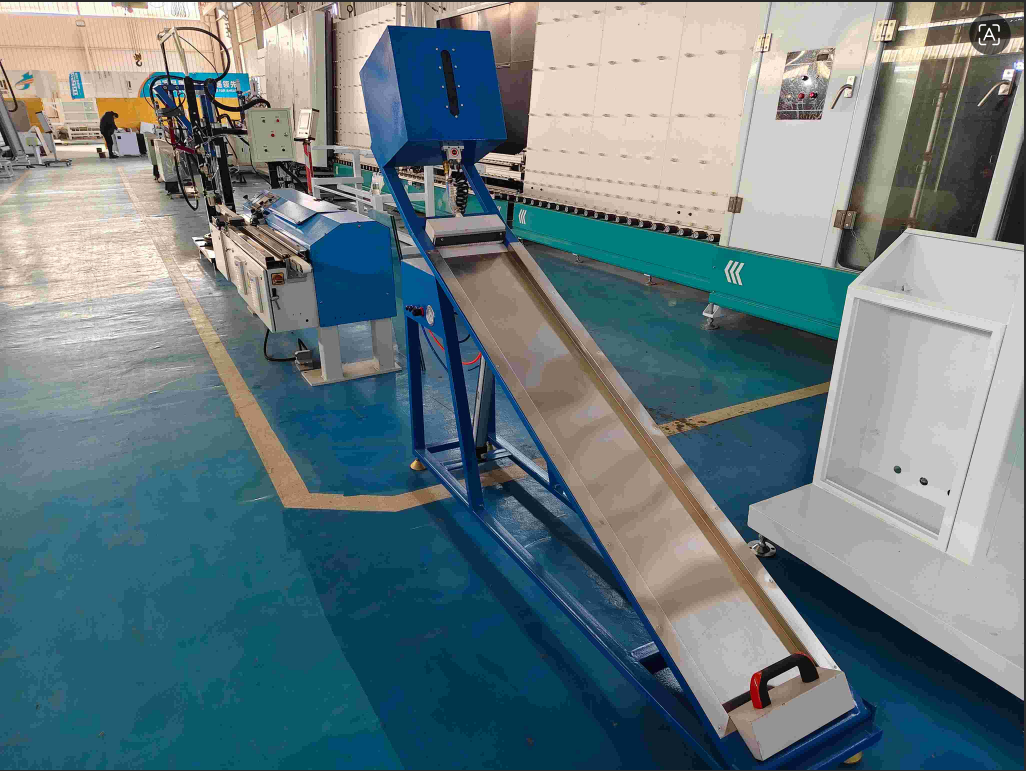
1. The Gravity-Fed Stainless Steel Chute
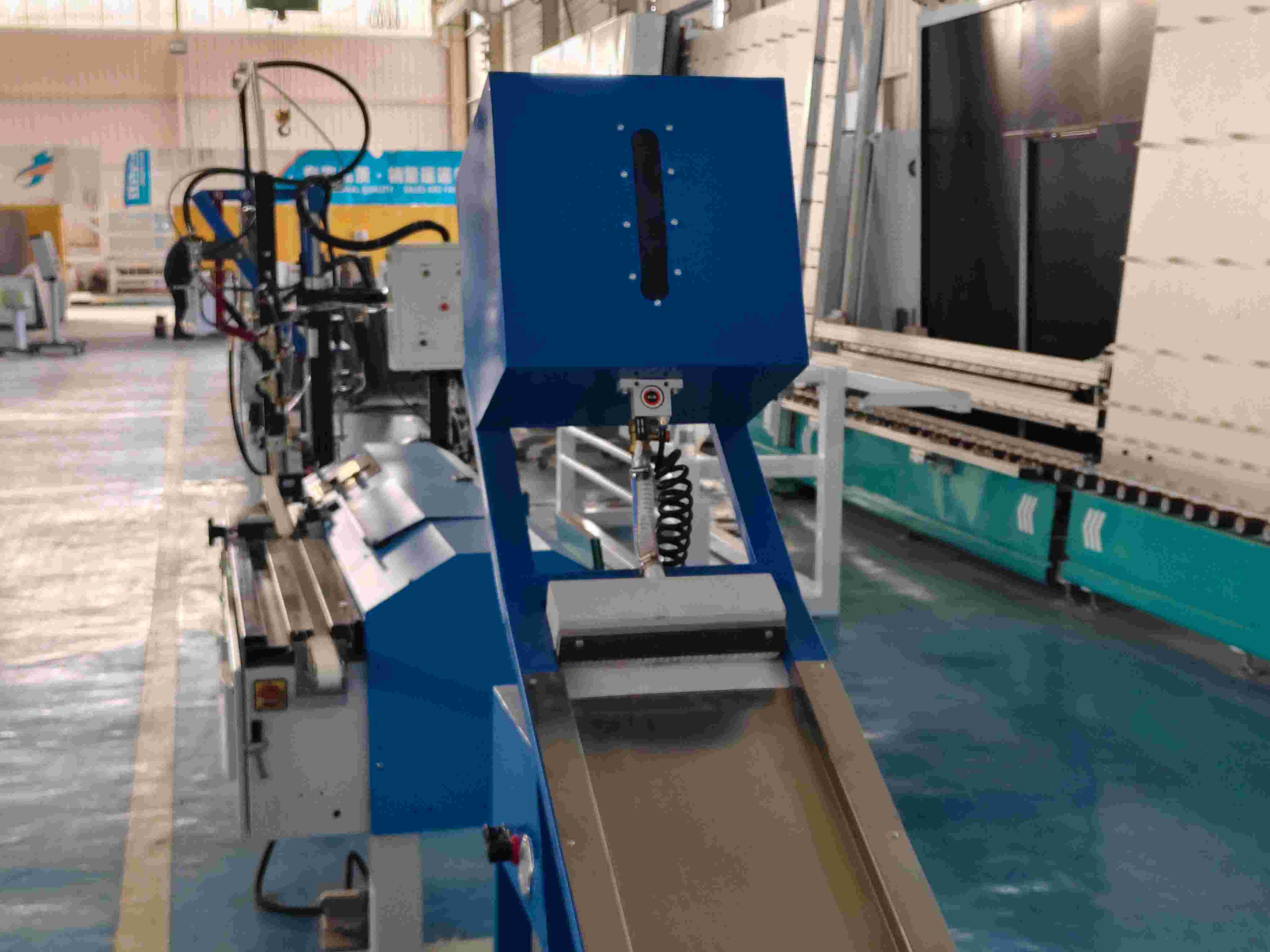
The core of the machine ditches basic funnels for a highly engineered, inclined feeding chute. The key difference here is the material: premium stainless steel. Stainless steel has a remarkably low coefficient of friction and resists static buildup. When the operator opens the release valve, the granules drop from the high-capacity hopper (usually holding 15-20kg) and flow down the polished chute like a liquid. This smooth, continuous flow prevents the "bridging" or clogging effect that happens with plastic funnels, ensuring the spacer bar fills rapidly and uniformly from end to end.
2. Universal Spacer Compatibility Fixtures
Because production lines switch between different glass specifications daily, the machine features adjustable mechanical fixtures at the filling nozzle. These guides securely grip the aluminum spacer, perfectly aligning the narrow opening with the desiccant flow. This active alignment means zero spillage and zero wasted material, regardless of whether the factory is running 6mm residential glass or 24mm heavy commercial units.
3. Keeping the Floor Moving
A highly efficient machine also has to make sense economically. Unlike massive automated filling stations that require complex PLC programming and constant electrical power, the manual filler uses a purely mechanical, gravity-based design. This means zero electrical consumption, zero downtime for software faults, and practically zero maintenance. Its compact, vertical footprint allows it to be placed directly beside the spacer bending or frame assembly station, creating a localized, highly efficient workstation that keeps the primary production line moving without bottlenecks.
4. Moving Toward Predictable Manufacturing
Protecting an IGU from internal moisture shouldn't depend on slow, messy hand-pouring. By utilizing optimized flow geometry and static-resistant materials, the Manual Molecular Sieve Filling Machine strips out the variables that lead to inefficient desiccant packing. For glass processors looking to eliminate internal fogging defects and maintain rapid assembly speeds, understanding the practical mechanics behind this equipment is critical. Sometimes, the most reliable way to guarantee the structural integrity of a high-tech glass unit is through brilliant, straightforward mechanical engineering.