English
 Español
 Português
 Русский
 Deutsch
 Francés
 العربية
 한국어
한국어
 Türk
Türk
 日本語
日本語

The Invisible Foundation of Flawless Glass: Why the Right Glass Washing Machine Changes Everything on the Factory Floor
The Midnight Phone Call Every Factory Manager Dreads
It usually happens when you are finally sitting down for dinner, or worse, late at night. The phone rings. It’s your biggest architectural client, and the tone of their voice instantly tells you that something has gone terribly wrong. The massive, multi-million-dollar curtain wall project they are installing has hit a wall: the newly delivered double-glazed units are showing faint, ghost-like water spots and micro-scratches under the harsh afternoon sunlight. The entire batch is rejected.
Every seasoned factory manager knows this sinking feeling. When you trace the problem backward through the production line—past the state-of-the-art sealing robots, past the high-tech lamination room, past the expensive tempering furnace—the culprit is almost always the same. It is the very first step of the entire deep-processing journey. The glass simply wasn't clean enough.
For decades, the traditional Glass Washing Machine has been the neglected stepchild of the factory floor. Factory owners willingly invest millions in cutting tables and laser-guided CNC machines, only to funnel their pristine glass through an outdated, rust-prone washing tunnel that does more harm than good. A single fingerprint, a microscopic drop of machine oil, or a lingering trace of mineral-heavy tap water acts like a ticking time bomb. Once that glass is sealed or tempered, that tiny imperfection is baked in forever.
At JJY, we’ve walked hundreds of factory floors across the globe. We’ve sat in breakrooms with exhausted operators who spend hours manually scraping glue residue because the automated line failed. We realized that the industry didn't need another generic piece of washing equipment. It needed a revolution in the philosophy of cleanliness. This realization became the driving force behind our completely reimagined industrial washing system.
The Low-E Dilemma: When "Clean" Means "Scratched"
The architectural world has fundamentally shifted. Today, energy efficiency is paramount, which means almost every high-end project demands Low-E (Low-Emissivity) coated glass. These microscopic silver-ion coatings are engineering marvels that reflect heat while letting in light, but they come with a massive catch: they are incredibly delicate. Treating a piece of Low-E glass like a standard piece of float glass is a recipe for disaster.
Here is the dirty secret of traditional washing equipment: the stiff nylon brushes designed to scrub off heavy industrial dirt act like sandpaper on Low-E coatings. We watched operators wince as expensive coated glass entered the washing tunnel, knowing that a brush spinning just a little too aggressively could strip away thousands of dollars of value in seconds.
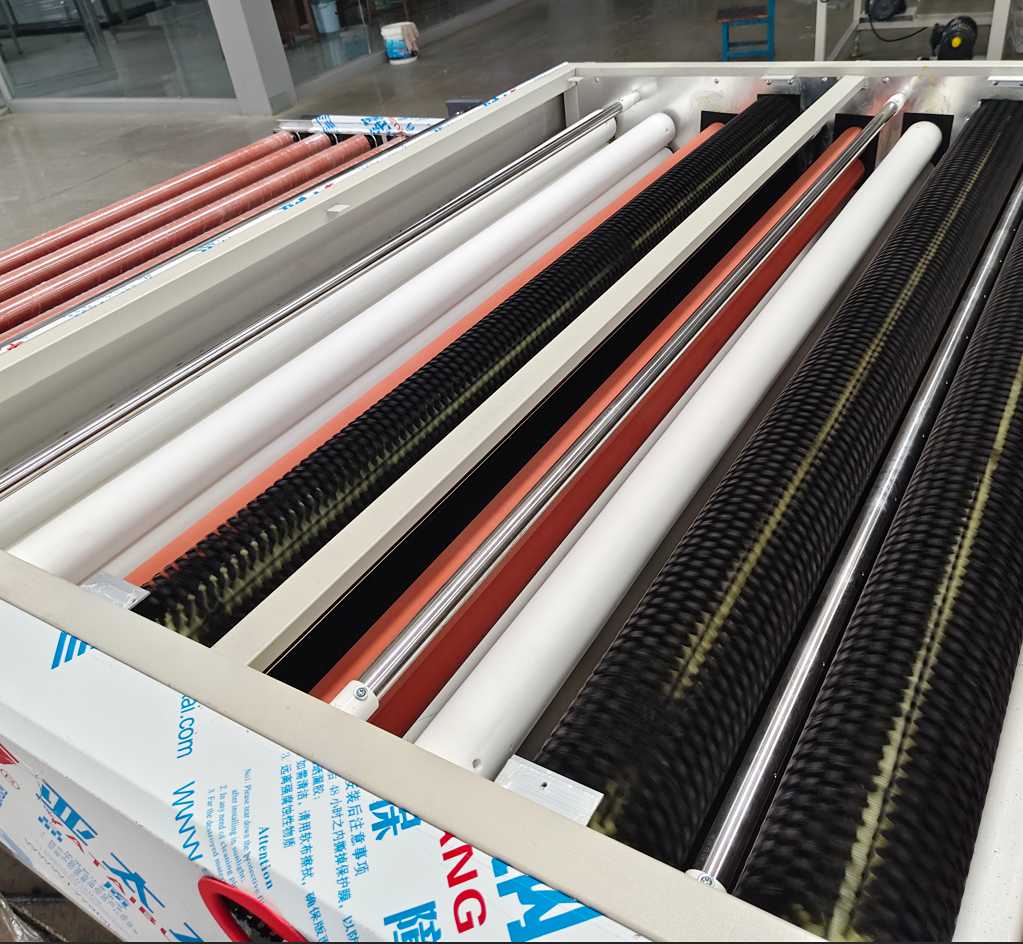
Our engineering team tackled this head-on. In our new generation of the Glass Washing Machine, we completely eliminated the hard-bristle paradigm. We replaced the standard scrubbing mechanisms with a multi-unit array of nano-scale, ultra-soft brushes. These specialized brushes are so gentle they feel like velvet to the touch, yet when spun at high variable speeds driven by intelligent inverters, they create a powerful centrifugal force that lifts debris away from the surface without ever dragging it across the coating. Each brush unit dynamically adjusts its pressure based on the specific thickness and type of glass being processed, guaranteeing a 100% thorough clean with absolutely zero microscopic scratching. Your Low-E glass exits the tunnel exactly as it entered—only perfectly clean.
The Chemistry of Clean: Why Good Water is Not Enough
Even if you have the softest brushes in the world, you cannot escape the fundamental laws of chemistry. Water is nature's universal solvent, which means normal factory tap water is loaded with invisible dissolved minerals like calcium, magnesium, and iron. When ordinary water dries on a piece of glass, it evaporates, but the minerals do not. They are left behind as stubborn, white, calcified water spots.
We realized that treating the mechanical brushing was only half the battle; we had to address the fluid dynamics and the water chemistry itself. That is why our advanced washing system is designed to seamlessly integrate with industrial-grade reverse osmosis and deionization technologies. For instance, connecting the machine to a dedicated 60L/h three-core water purification system transforms the final rinsing stage.
Instead of bombarding the glass with hard municipal water, the final rinse cycle utilizes a dedicated unit of high-pressure nozzles that mist the glass with pure, deionized water. Because this water has been stripped of its mineral content, it leaves absolutely nothing behind when it dries. The result is a crystalline, invisible finish. The glass isn't just visually clean; it is chemically sterile, providing the perfect, uncontaminated canvas for subsequent butyl sealant application or PVB lamination.
The Aero-Dynamic Dry: Slicing Water, Not Baking It
Washing the glass is only the beginning. Getting it perfectly dry before it hits the inspection station is arguably the hardest part of the process. For years, the industry standard was brute force: massive, energy-hungry blowers blasting heated air into the tunnel. Not only does this consume a staggering amount of electricity, but heating the glass right before it enters a temperature-sensitive lamination or sealing process can cause severe thermal expansion issues. Furthermore, the deafening roar of traditional blowers creates a miserable, fatiguing environment for the factory workers.
We looked to the aviation industry for a better solution. The drying section of our latest Glass Washing Machine completely abandons the "bake and blow" method. Instead, we engineered a precisely angled, multi-unit system of aerodynamic air knives.
These air knives compress the incoming air and force it through a microscopic slit, creating a high-velocity, blade-like curtain of air. As the glass passes beneath this air curtain, the water isn't evaporated; it is physically sheared off the surface of the glass in a clean, uniform wave. Even at maximum conveyor speeds, the glass emerges bone-dry, at ambient room temperature, and ready for immediate processing. Better yet, by redesigning the internal acoustic dampening chamber surrounding the air knives, we reduced the operational decibel level by nearly 30%. Your operators no longer have to wear heavy ear protection just to stand near the machine.
Built for the People Who Run It: The Human-Centric Design
A machine is only as good as the human being operating it. In our interviews with maintenance crews, we heard a recurring nightmare: washing machines rust from the inside out. The combination of water, heat, and constant motion turns cheap steel into a crumbling mess within a few years. When a bearing fails deep inside a rusted tunnel, the entire production line stops for days while mechanics fight to pry the machine apart.
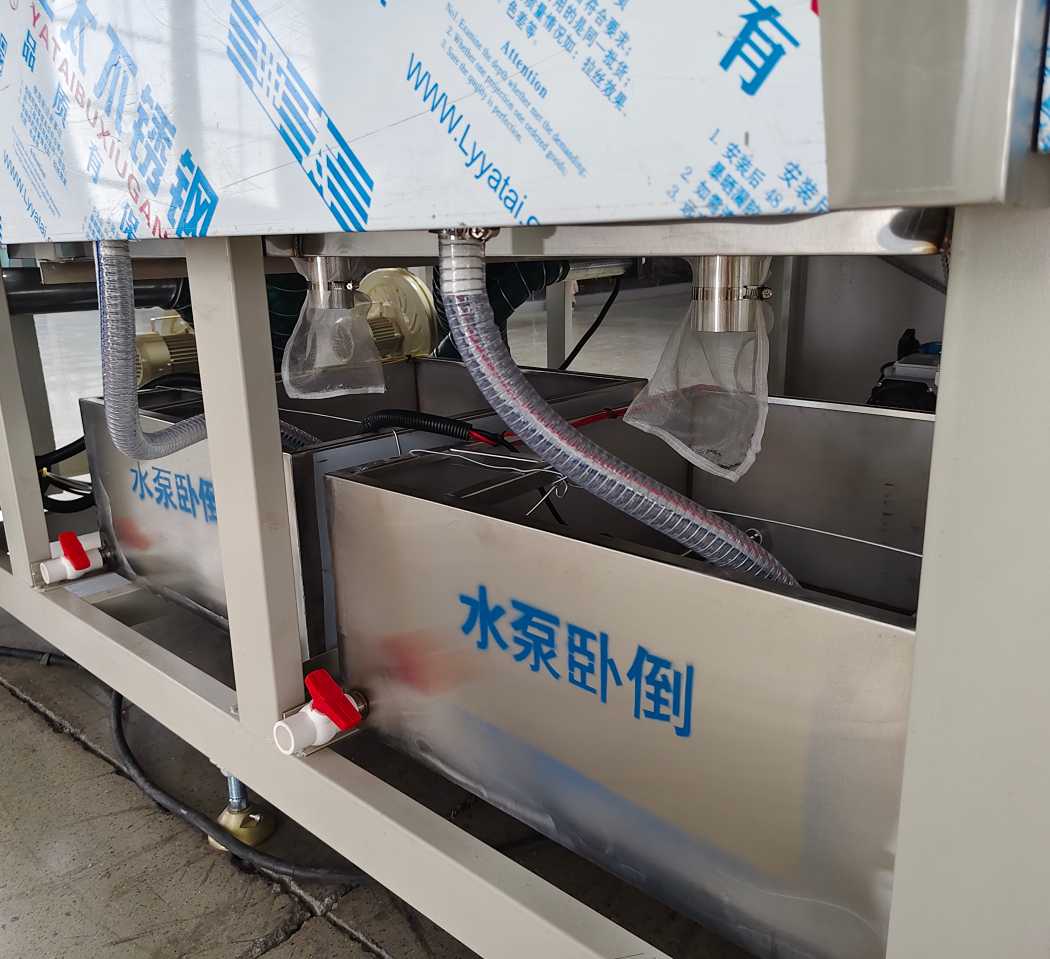
We refuse to build disposable machinery. The entire chassis, water tanks, and internal structural components of our washing system are forged from premium, heavy-duty stainless steel. It is built to withstand the wettest, most corrosive environments for decades.
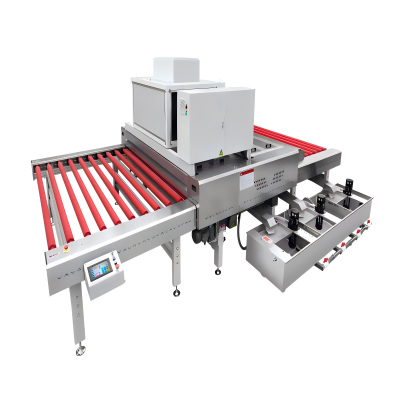
More importantly, we designed it with the maintenance technician in mind. The top section of the machine is motorized, allowing a single operator to lift the entire upper canopy with the push of a button. This grants instant, unobstructed access to every brush, nozzle, and roller unit for routine cleaning or rapid replacement. The water tanks roll out smoothly on heavy-duty casters for effortless draining and filter swaps. We believe that if you make a machine easy to maintain, it will actually get maintained, drastically extending its operational lifespan.
The True Economics of Cleanliness (ROI)
When factory owners look at a high-end Glass Washing Machine, they sometimes hesitate at the initial capital expenditure. But let's talk about the true economics of the factory floor. What is the real cost of a cheap washing machine?
Calculate the cost of the labor hours spent manually wiping down glass that the machine failed to clean. Calculate the cost of the raw materials—the expensive Low-E glass, the aluminum spacers, the polyurethane sealants—wasted because a batch failed quality control due to internal fogging or delamination caused by surface contamination. Calculate the devastating cost to your brand's reputation when a client rejects a delivery.
When you view it through this lens, a premium washing system is not an expense; it is the most profitable insurance policy your factory can buy. By virtually eliminating dirt-related scrap rates, the JJY washing system pays for itself in its very first year of operation. It gives your sales team the confidence to pursue the most demanding, high-tolerance architectural contracts, knowing that your production line is backed by an uncompromising foundation of cleanliness.
Seamless Integration into the Factory of the Future
As the industry moves toward fully automated, "lights-out" manufacturing, standalone machines are no longer enough. Equipment must communicate and integrate.
We designed our washing system to act as the perfect precursor to any downstream process. Whether you are feeding pristine glass directly into a high-speed Vertical Laminating line, or sending it into our advanced multi-zone Hot Pressing equipment for ultimate IGU sealing, the integration is flawless. The PLC control system can automatically synchronize its conveyor speed with the rest of your line, adjusting its internal parameters based on the incoming glass flow without requiring manual human intervention.
A Partnership, Not a Transaction
At the end of the day, installing a new machine is a leap of faith. You are trusting the manufacturer with the lifeblood of your business: your daily output.
When you choose JJY, you are not just acquiring a piece of machinery; you are gaining a dedicated engineering partner. From the initial consultation regarding your specific water quality and production bottlenecks, to the seamless installation and lifetime global technical support of every unit we deploy, we stand by your side.
Clean glass is the invisible foundation upon which your entire factory's reputation is built. It is time to stop compromising on the most critical step of your production process. Reach out to our global sales and engineering team today. Let’s discuss how upgrading your washing technology can eliminate your deepest production headaches, protect your most valuable materials, and elevate the quality of every single piece of glass that leaves your loading dock. The era of flawless glass starts here.