English
 Español
 Português
 Русский
 Deutsch
 Francés
 العربية
 한국어
한국어
 Türk
Türk
 日本語
日本語

Insulating Glass Equipment Trends in 2026
Insulating Glass Equipment Trends in 2026
The insulating glass market is changing. For many glass factories, the main challenge is no longer simply producing more units. It is producing different orders efficiently without adding more workers or creating additional waste.
Today, one production shift may include standard double glazing, triple glazing, Low-E glass, different spacer widths and customized sizes. When these orders are mixed together, frequent manual adjustments can slow down the entire production process.
This is why flexibility has become an important consideration when purchasing new insulating glass equipment.
What Glass Processors Are Looking For
Production speed is still important, but it is only one part of the decision.
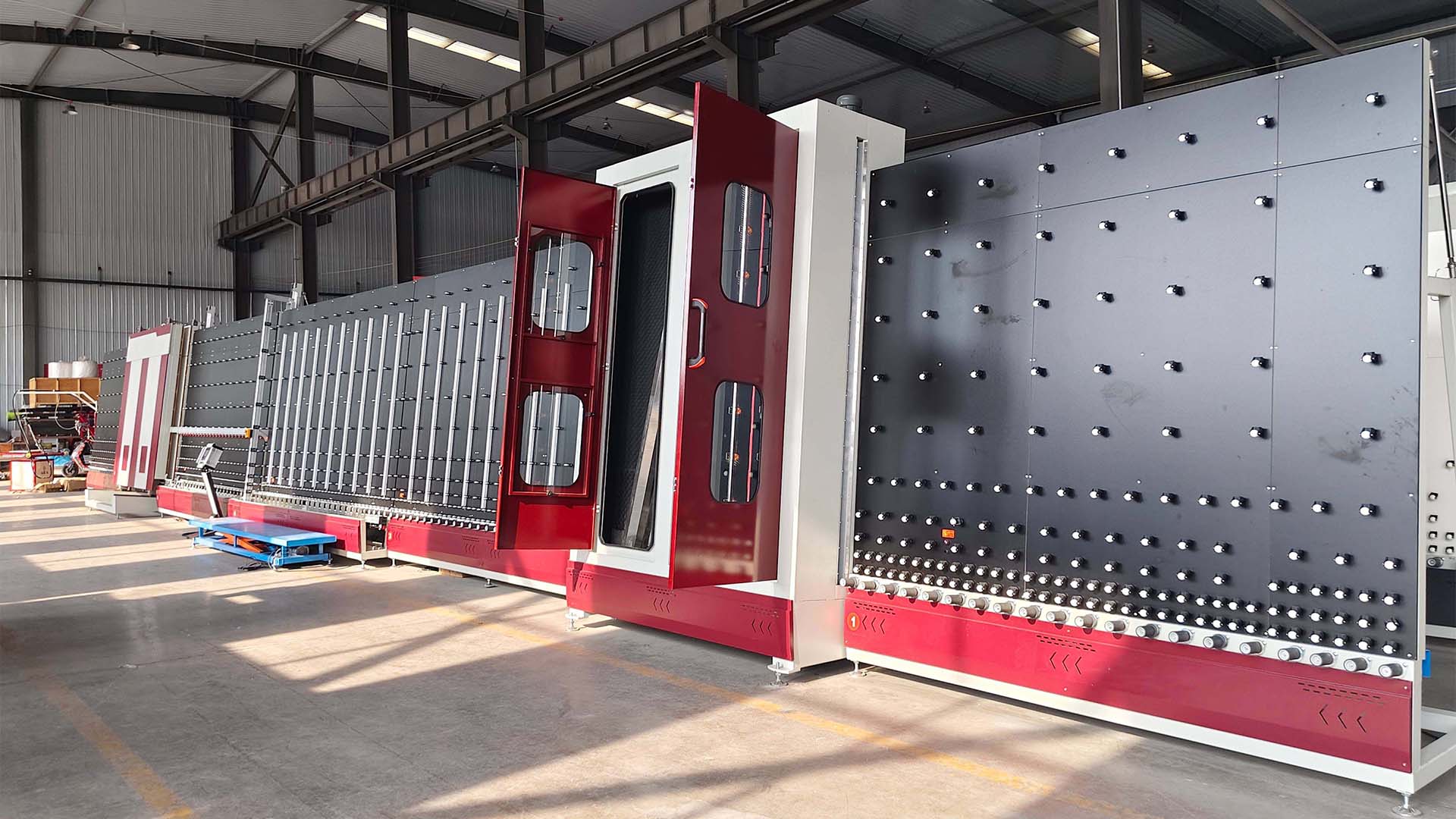
Glass processors are paying more attention to changeover time, labor requirements, equipment stability and after-sales support. They want machines that are easy to operate and can handle different product specifications without long periods of manual setup.
Automatic glass measurement, thickness detection, servo adjustment and stored production parameters can help reduce operator workload. These functions are especially useful for factories handling customized residential orders or small production batches.
The purpose of automation is not to add unnecessary complexity. It should make daily production easier.
Labor and Quality Remain Major Concerns
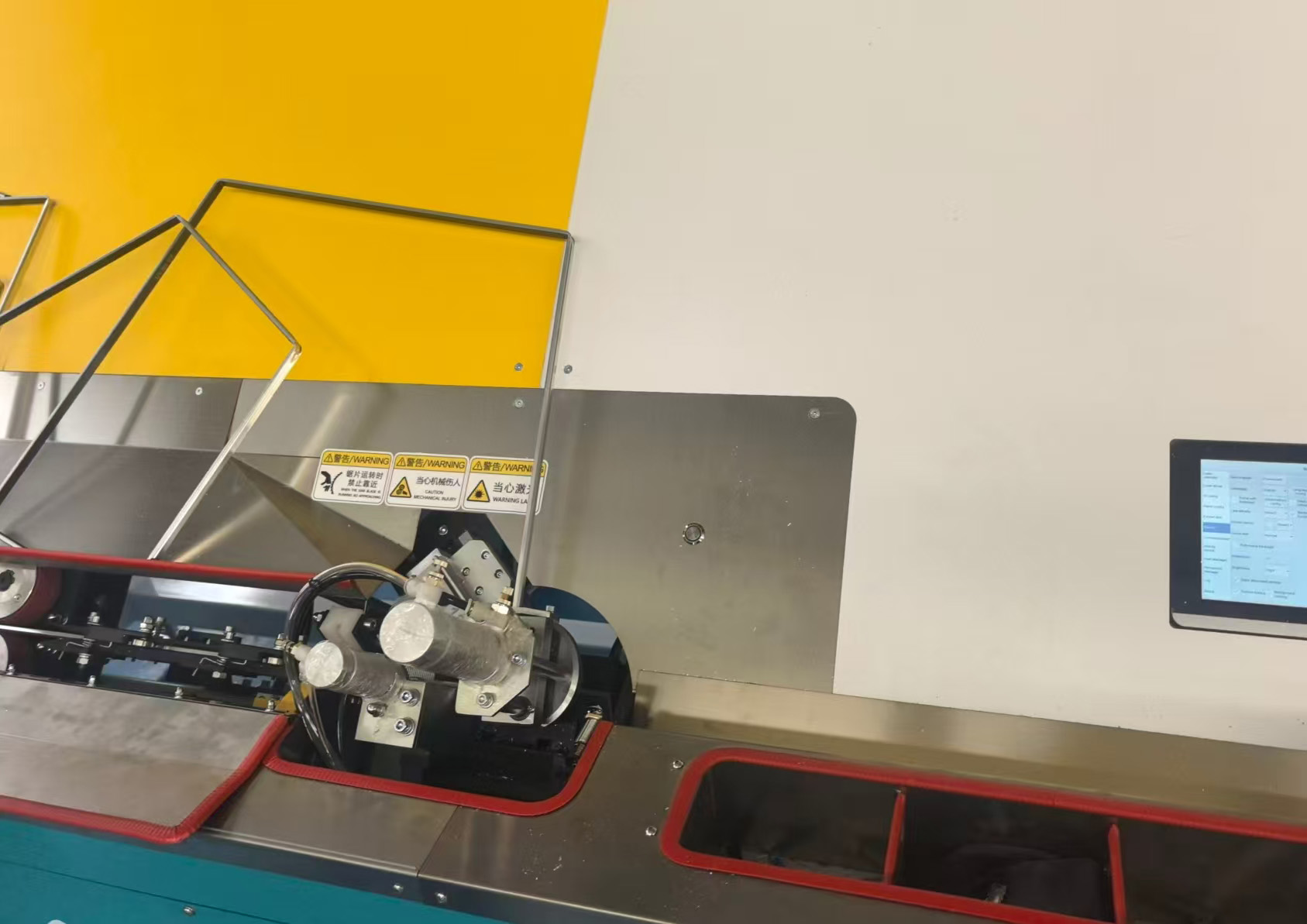
Spacer bending, molecular sieve filling, butyl coating, glass assembly and secondary sealing all affect the final quality of an insulating glass unit.
When these processes depend heavily on operator experience, production results may vary between different workers and shifts. Incorrect positioning, uneven sealant application and glass misalignment can lead to rework or customer complaints.
Automatic equipment helps standardize these processes. Once the correct settings are entered, the machine can repeat the same movement and working parameters throughout production.
This makes employee training easier and gives factory managers better control over product quality.
Looking Beyond the Purchase Price
A low machine price does not always mean a low production cost.
Labor, material waste, maintenance, spare parts and unexpected downtime can all affect the real cost of equipment. A machine that requires frequent adjustment may also reduce daily output, even if its maximum running speed appears high.
When comparing equipment, customers should consider how the machine performs during a complete working shift. Stable production is often more valuable than a high catalogue speed that can only be reached under ideal conditions.
Improving the Complete Production Flow
In many factories, one fast machine cannot solve the overall production problem.
The washing section may wait for spacer frames. Sealed glass may build up before inspection, film application or packing. When one process is slower than the others, it becomes a bottleneck for the whole factory.
A practical upgrade usually starts with the process that requires the most labor or creates the most delays. The factory can then connect additional equipment step by step.
This approach is often more suitable for small and medium-sized glass processors than replacing the complete production system at one time.
JINJIYE Equipment Development
JINJIYE Intelligent Equipment Co., Ltd. develops machinery for several important stages of insulating glass production.
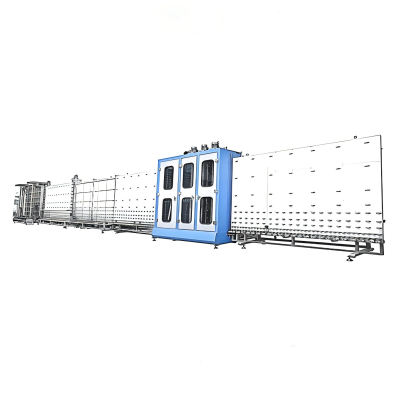
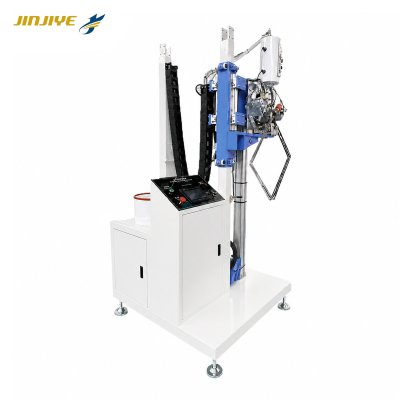
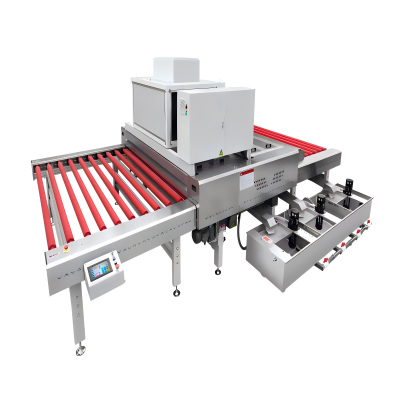
The product range includes insulating glass production lines, aluminum spacer bending machines, molecular sieve filling machines, butyl extruders, sealing equipment and vertical glass film laminating machines.
JINJIYE focuses on problems commonly found in customer factories, including mixed-size orders, high labor requirements, unstable processing quality and slow downstream operations.
Equipment solutions can be planned according to glass size, production capacity, factory layout and existing machinery. This is particularly important for customers who want to upgrade an existing production line rather than build a completely new factory.
Automatic Film Application for Finished Glass
Finished insulating glass may be scratched or contaminated during storage, transportation and installation. Protective film can reduce this risk, but manual film application takes time and often produces uneven results.
The JINJIYE vertical glass film laminating machine automatically measures glass height and thickness before applying protective static film.
The machine uses servo-controlled movement, photoelectric positioning and bottom glass support to keep the application process stable. It includes four film laminating stations for different film-width requirements.
The film is cut on the machine instead of directly on the glass surface, reducing the possibility of scratches.
The equipment can work independently or connect with an existing production line. It is suitable for insulating glass, decorative glass and customized mixed-size orders.
Moving Toward Practical Automation
The future of insulating glass equipment will be shaped by flexible production, stable quality and lower dependence on manual work.
For glass processors, the most useful equipment is not always the most complicated machine. It is the machine that fits the actual production process and solves a clear factory problem.
JINJIYE will continue developing practical equipment and customized solutions for insulating glass manufacturers in different markets.
Contact JINJIYE to discuss your glass specifications, factory layout and production requirements.