Insulating Glass Equipment and IGU Production Line Guide

2026/07/14 18:05

How to Choose Insulating Glass Equipment for Better IGU Production


Choosing the right insulating glass equipment is not only about price or machine speed. The goal is to build a stable process that produces clean glass, accurate spacer frames, continuous butyl coating, controlled desiccant filling and reliable sealing.

Many insulating glass factories struggle with excessive manual work, uneven quality, material waste and production bottlenecks. A machine may run quickly, but total output remains low when spacer frames are not ready or product changeovers take too long.

This guide explains the main machines in an insulating glass production line, the problems they solve and how to select a suitable configuration.


What Equipment Is Needed to Manufacture Insulating Glass?


An insulating glass unit, also called an IGU or double-glazed unit, normally consists of two or more glass panes separated by a spacer and sealed around the perimeter. The cavity contains dry air or an insulating gas such as argon.

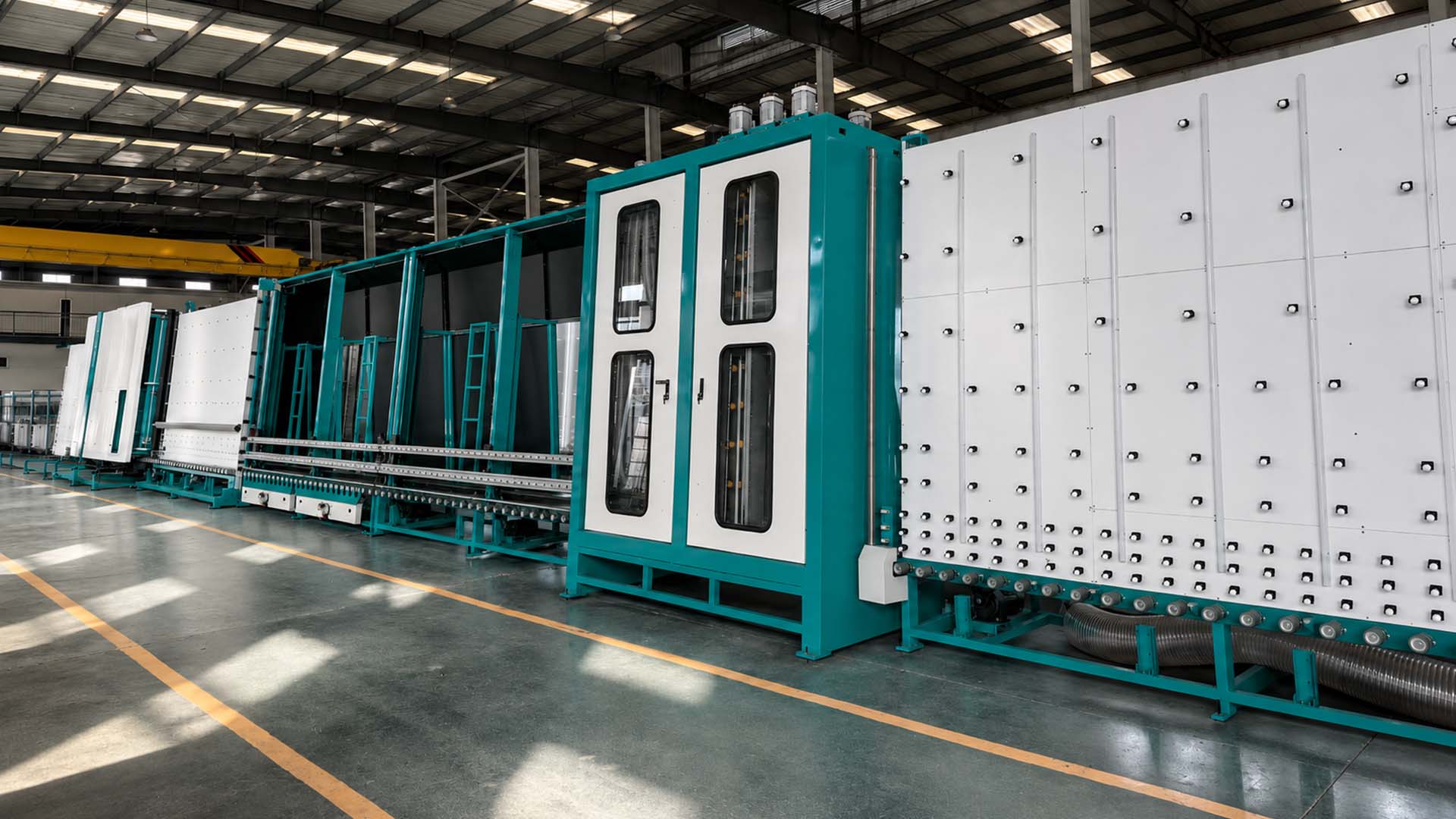
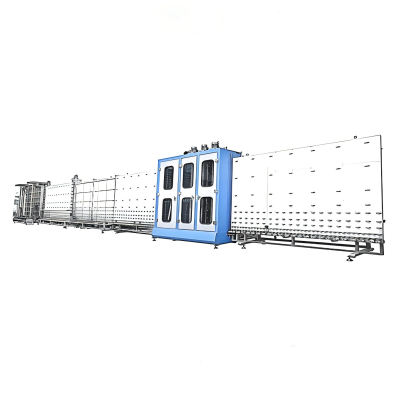
A complete IGU production line may include:


- Glass loading and cutting equipment

- Low-E glass edge-deletion equipment

- Glass washing and drying machine

- Automatic aluminium spacer bending machine

- Automatic desiccant filling machine

- Automatic butyl extruder

- Frame positioning, glass assembly and panel press

- Argon gas filling system

- Insulating glass sealing robot

- Two-component sealant extruder


Factories can purchase a complete line or upgrade individual production stages. The correct choice depends on glass size, daily capacity, spacer type, labour cost and available workshop space.

Main IGU Production Stages


Glass Cutting, Washing and Drying

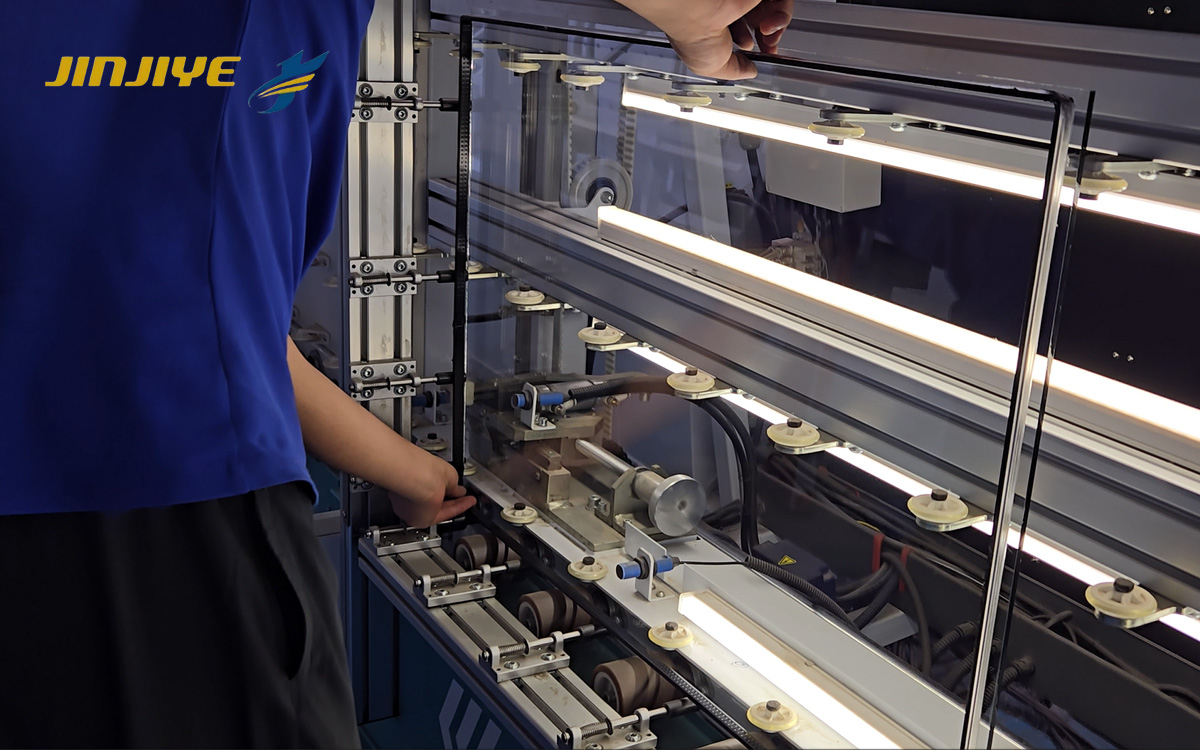
Glass is cut according to the order and washed before assembly. Dust, fingerprints, glass particles or remaining water can create visible defects and affect sealant adhesion.


When selecting a glass washing machine, check the glass thickness range, brush configuration, water system, drying performance and Low-E glass compatibility. If washed glass still has marks, inspect the water quality, filters, brushes, nozzles and air knives before increasing production speed.

Automatic Aluminium Spacer Bending


The spacer controls the cavity width and frame geometry. A **fully automatic aluminium spacer bending machine** forms spacer bars according to programmed dimensions.

Compared with manual measuring and cutting, automatic bending can reduce corner joints, improve dimensional consistency and shorten preparation time. It is especially useful for factories producing many customised window sizes.


Before ordering, confirm the compatible spacer widths, minimum and maximum frame sizes, required shapes and production-data input method.

Automatic Desiccant Filling


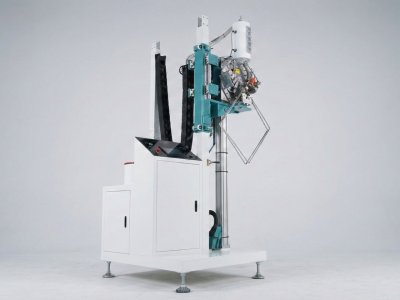
Desiccant, commonly molecular sieve for IGU production, adsorbs residual moisture inside the sealed cavity. A **fully automatic desiccant filling machine for spacer frames** provides a cleaner and more repeatable filling process.

It helps reduce manual filling time, material spillage and inconsistent filling quantities. However, desiccant must remain sealed and dry before use. Prepared frames should move to the next production stage without unnecessary delay.


 Automatic Butyl Extrusion

An automatic butyl extruder for spacer frame applies the primary seal to both sides of the spacer. Stable heating and controlled pressure help produce a continuous, uniform coating.


The machine can reduce variation between operators and improve production consistency. Temperature, pressure, nozzle cleanliness, spacer condition and butyl storage all affect the result.

Assembly, Gas Filling and Secondary Sealing


The coated frame is positioned between the glass panes, and the unit is assembled and pressed. Argon gas can then be introduced to improve thermal performance.

Secondary sealant may be applied manually with a two-component sealant extruder or automatically with an insulating glass sealing robot. A sealing robot suits higher-volume rectangular production, while a manual extruder is useful for special shapes and lower-volume work.


Three Machines for Upgrading Spacer Production

A factory does not always need to replace its complete line. Three automatic machines can solve many spacer-preparation problems:


1. Automatic Aluminium Spacer Bending Machine** — improves frame accuracy and reduces manual measuring and corner joining.

2. Automatic Desiccant Filling Machine** — provides cleaner, more consistent molecular sieve filling with less waste.

3. Automatic Butyl Extruder** — produces stable primary sealing and reduces dependence on operator technique.


These machines can be installed separately or used as one coordinated spacer-processing cell. Their working capacity should match the existing washing, assembly and sealing equipment.


Common Insulating Glass Production Problems


Moisture or Fog Inside the IGU


Possible causes include wet glass, inactive desiccant, insufficient filling, interrupted butyl coating or poor secondary sealing.


Check desiccant storage and filling consistency, confirm that washed glass is completely dry, inspect the primary seal on both sides of the spacer and verify secondary-seal coverage. Moisture control depends on the complete IGU sealing system, not only the filling machine.


Spacer Frames Do Not Fit Correctly


Frames that are too large, too small or out of square slow assembly and create uneven sightlines. Incorrect production data, manual measuring errors or poor calibration may be responsible.


Use an automatic spacer bending machine, verify the first frame after each changeover and measure both diagonals before starting batch production.


Butyl Coating Is Uneven


Uneven coating may result from incorrect temperature, unstable pressure, a dirty nozzle or contaminated spacer surfaces.


Allow the machine to reach a stable temperature, clean the nozzle regularly and record the successful settings for each spacer width. The objective is a continuous primary seal without skipped sections.


Actual Output Is Lower Than Expected


Machine speed is not the same as total factory capacity. The slowest repeated process determines actual output.


Record cycle and waiting times at each station. Prepare spacer frames in the same order as the glass, standardise changeovers and keep materials close to the production area. Ask the supplier to calculate capacity using your typical product sizes instead of only the highest theoretical speed.


Quality Depends on Skilled Workers


Automation reduces variation in spacer bending, desiccant filling, butyl coating and secondary sealing. Operators still need training, but their work shifts from repetitive manual operations to setup, monitoring, inspection and maintenance.


Create standard operating procedures and save successful production settings so that quality remains stable between shifts.


How to Choose the Right Insulating Glass Machinery

Before requesting a quotation, provide the supplier with:


- Minimum, maximum and typical glass dimensions

- Glass thickness and maximum finished IGU thickness

- Double- or triple-glazing requirements

- Low-E glass percentage

- Spacer material and width range

- Required output per shift

- Argon gas-filling requirements

- Factory voltage and compressed-air supply

- Workshop layout and available installation space


Also confirm installation, commissioning, operator training, manuals, spare parts, warranty and remote technical support.


The price of an **insulating glass production line** depends on glass size, automation level, gas filling, spacer type, sealing method, software integration and service scope. Compare quotations item by item instead of looking only at the total price.


To estimate return on investment, calculate potential improvements in labour, acceptable output, material waste and rework. A machine that improves first-pass yield may provide more value than one with the highest nominal speed.


Why Choose JINJIYE?


JINJIYE has been engaged in insulating glass equipment manufacturing for 18 years. We supply individual machines and coordinated production solutions, including:


- Insulating glass production lines

- Fully automatic aluminium spacer bending machines

- Fully automatic desiccant filling machines

- Fully automatic butyl extruders

- Glass washing machines

- Insulating glass sealing robots

- Two-component sealant extruders


Our support can include equipment selection, factory-layout discussion, manufacturing, installation and commissioning, operator training and technical assistance.

Frequently Asked Questions


Can I purchase only the three spacer-processing machines?

Yes. If the existing washing, assembly and sealing equipment has sufficient capacity, the automatic spacer bending machine, desiccant filling machine and butyl extruder can be added as a targeted upgrade.


Can one IGU line produce double and triple glazing?


Many lines can be configured for both. Confirm the assembly sequence, panel press capability and maximum finished thickness before ordering.


Is the equipment suitable for Low-E glass?


Yes, when the washing brushes, coating orientation, transport system and edge-deletion process are appropriate. Provide the Low-E specification to the equipment supplier.


How should I compare two quotations?


Compare technical limits, included functions, output for your typical products, installation, training, spare parts, warranty and after-sales support. Labour requirements, material waste and expected first-pass yield should also be considered.

Improve Your IGU Production with the Right Equipment


The best insulating glass equipment solves a clearly defined production problem. It should help your factory achieve cleaner glass, more accurate spacer frames, consistent desiccant filling, continuous butyl coating and reliable final sealing.

Before purchasing, document your product range, common sizes, target capacity and current bottlenecks. A balanced production line normally delivers more acceptable units than several fast but poorly coordinated machines.


Please fill in the enquiry form so that we can prepare a suitable equipment recommendation, quotation and service plan for your factory.


Related Products

x