English
 Español
 Português
 Русский
 Deutsch
 Francés
 العربية
 한국어
한국어
 Türk
Türk
 日本語
日本語

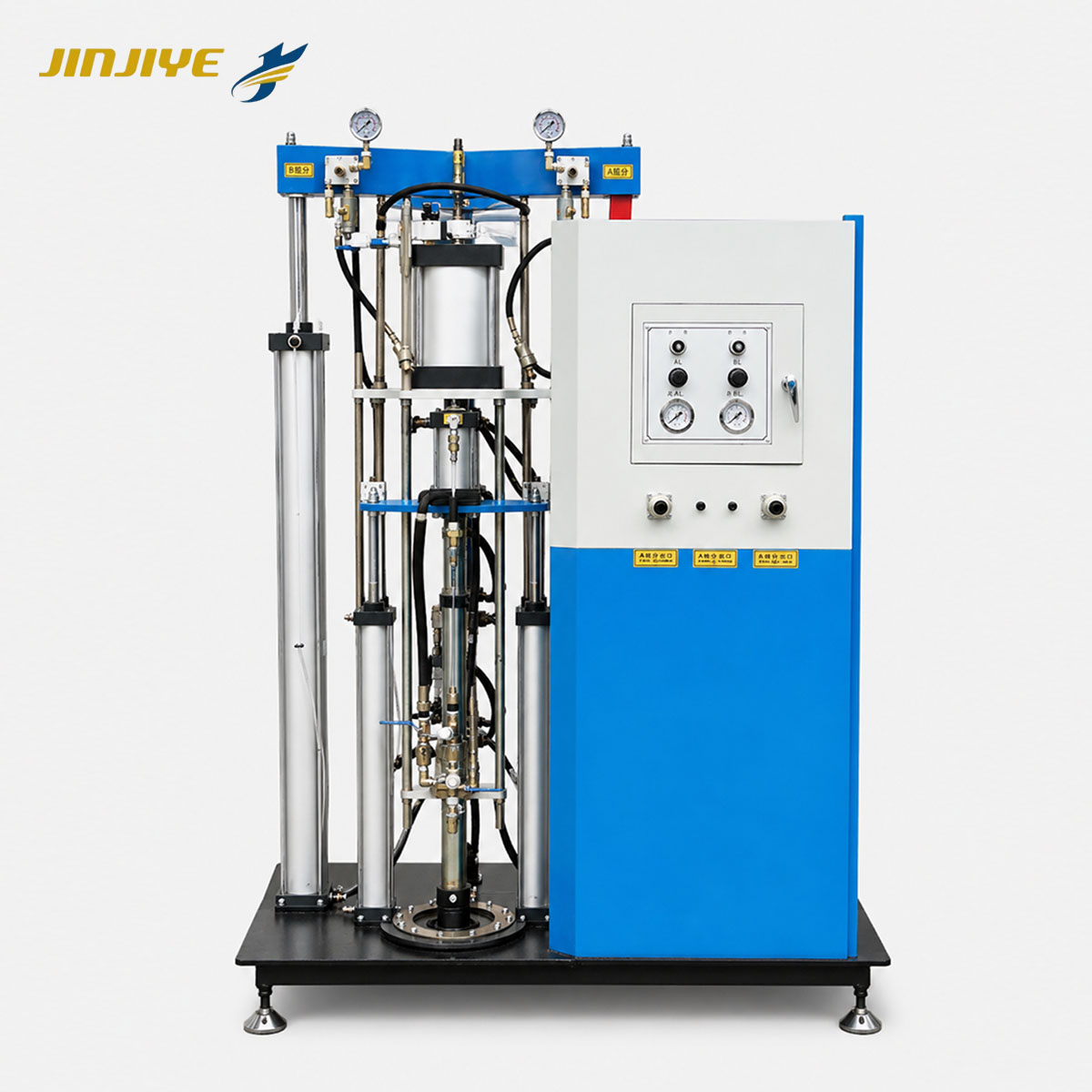
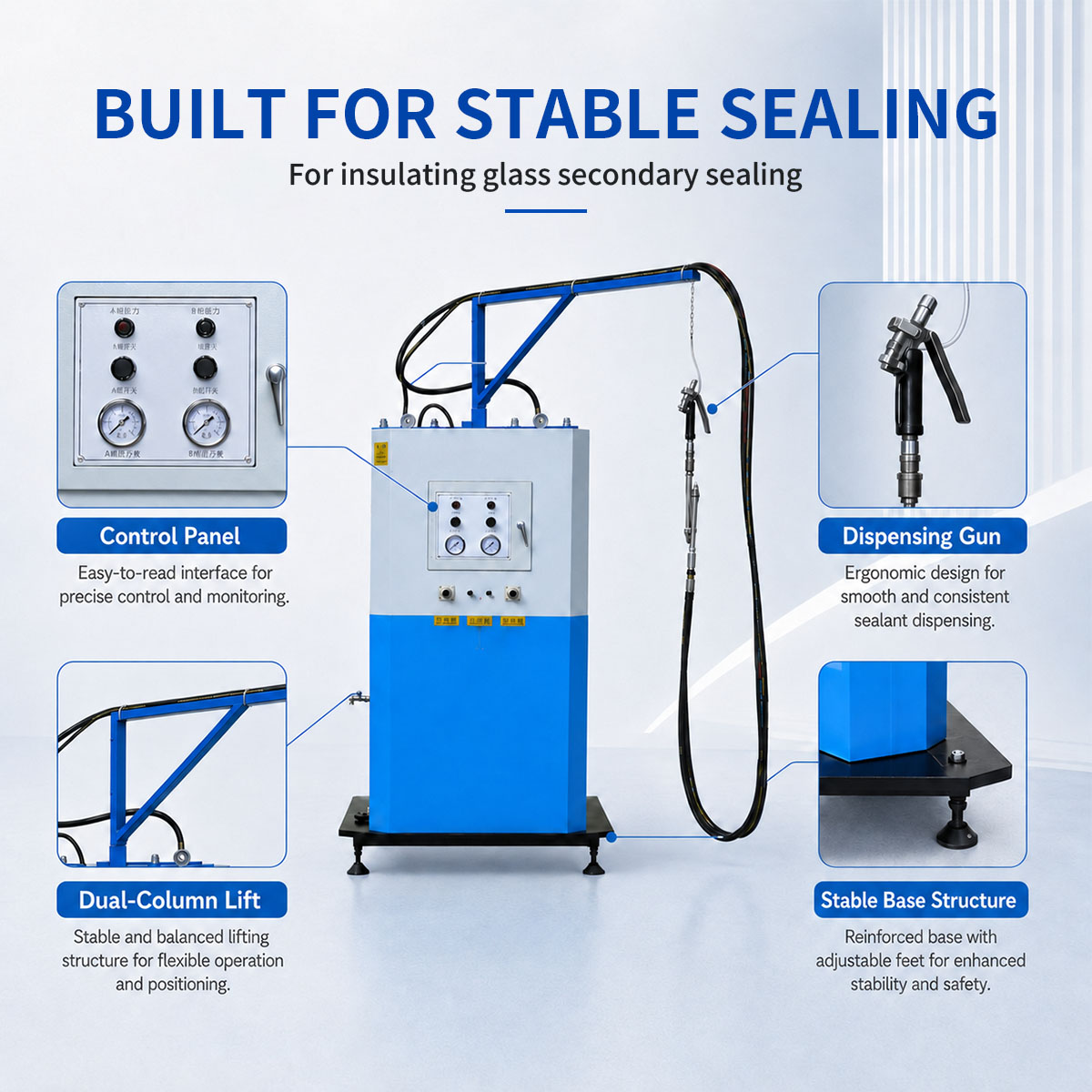
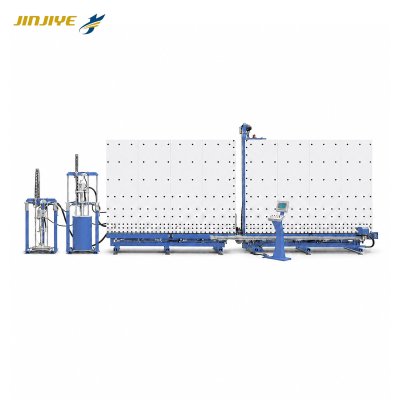
Two-component dispensing station
Accurate Mixing Ratio
The base material and curing agent are automatically mixed according to the preset ratio, helping reduce errors caused by manual operation.
Stable Sealant Output
The system delivers sealant evenly during continuous production, which helps maintain consistent sealing quality.
Less Material Waste
Accurate proportioning and controlled output can reduce excessive sealant use and unnecessary material loss.
Improved Sealing Quality
Uniformly mixed sealant helps improve adhesion, airtightness, and the overall durability of insulating glass units.
Higher Production Efficiency
Automatic mixing reduces repeated manual preparation and allows operators to complete sealing work more efficiently.
Two-Component Sealant Extruder for Insulating Glass
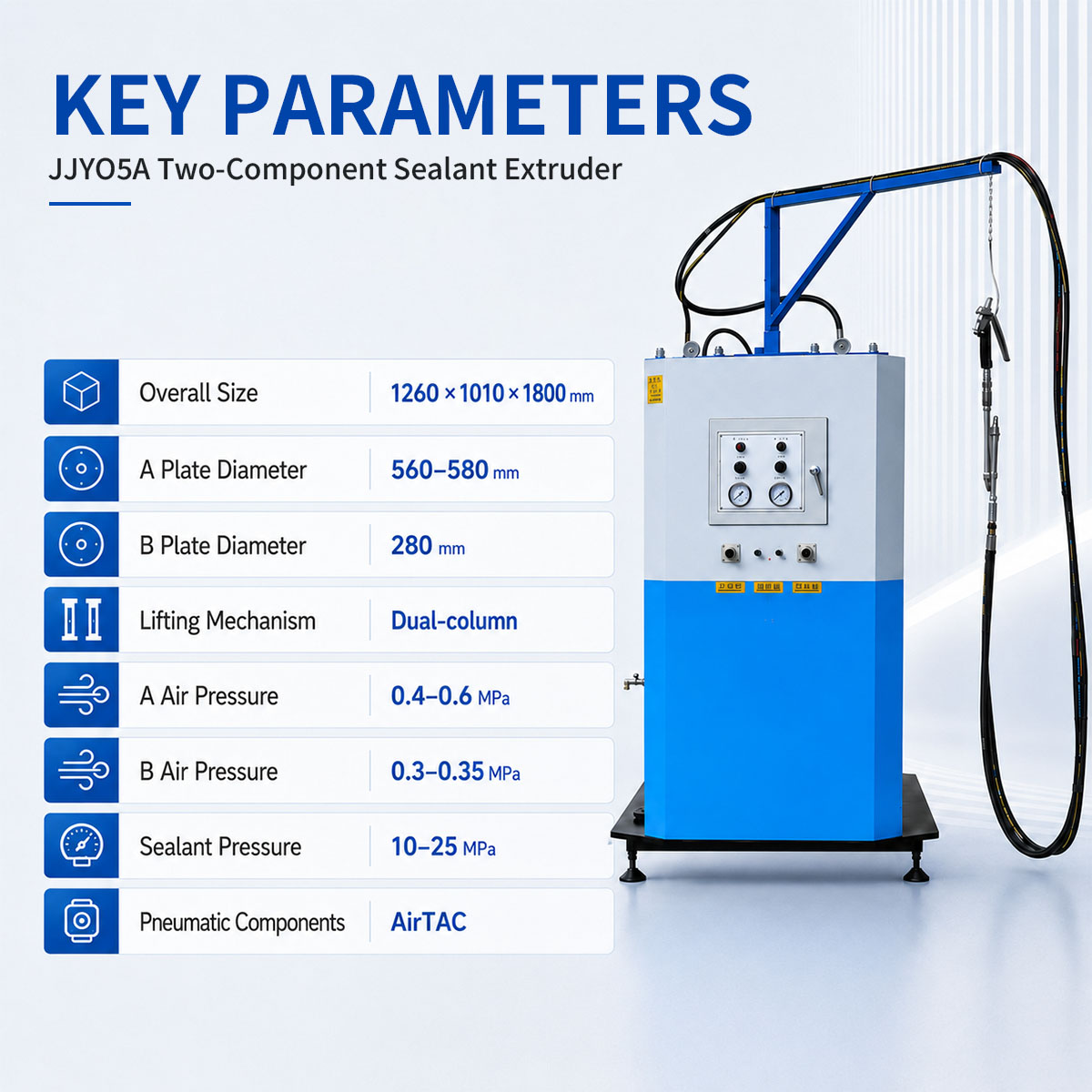
The two-component sealant extruder is designed for mixing and dispensing two-component silicone or polysulfide sealant used in insulating glass production.
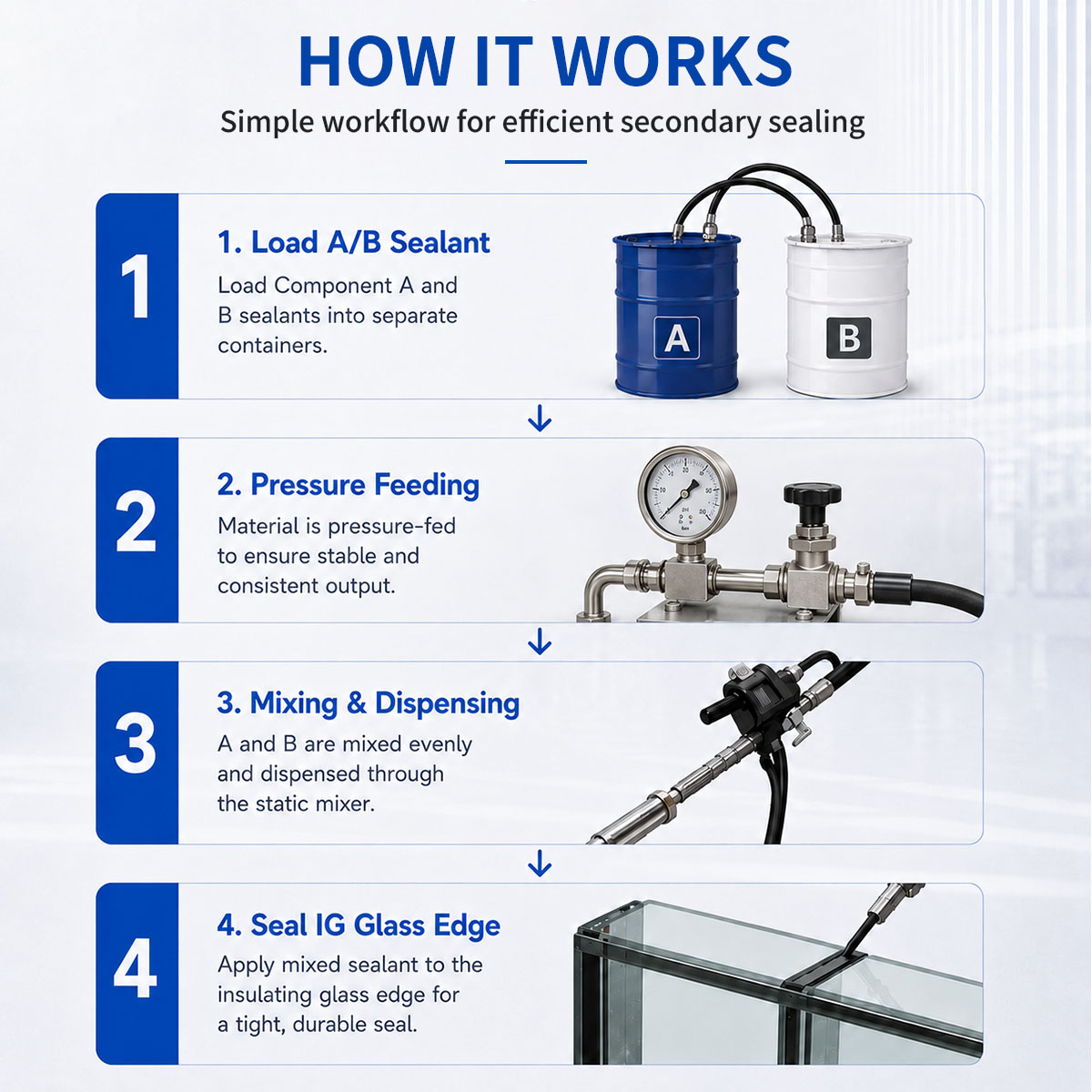
The machine automatically supplies the base material and curing agent according to the required mixing ratio. It provides stable pressure, uniform mixing and continuous sealant output, helping operators complete the secondary sealing process more efficiently.
Accurate Mixing Ratio
The base material and curing agent are supplied separately and mixed according to the preset proportion.
Stable ratio control helps reduce curing problems caused by incorrect manual mixing. It also improves the consistency of the sealant during continuous production.
Uniform Sealant Output
The machine maintains stable pressure during dispensing, helping the sealant flow smoothly from the mixing gun.
Uniform output makes it easier for operators to control the sealant thickness and fill the glass edge evenly.
This helps reduce interruptions, uneven sealing and repeated repair work.
Suitable for Different Sealant Materials
The equipment can be configured for different two-component sealing materials, including:
Two-component silicone sealant
Two-component polysulfide sealant
Other compatible insulating glass sealants
The actual machine configuration should be selected according to the sealant type, viscosity and packaging specifications.
Reduced Manual Mixing
Traditional manual mixing can cause ratio errors, uneven curing and unnecessary material waste.
With automatic proportioning and mixing, operators do not need to prepare each batch of sealant by hand.
This reduces repetitive work and helps improve production efficiency.
Less Material Waste
Controlled material feeding helps reduce excessive sealant use.
The machine can provide sealant according to the actual working requirement, helping factories improve material utilization and control production costs.
Proper operation and regular cleaning also help reduce hardened sealant inside the system.
Reliable Insulating Glass Sealing
Well-mixed sealant helps improve adhesion between the glass, spacer and secondary sealing layer.
A stable sealing process supports the airtightness, water resistance and long-term durability of insulating glass units.
Final sealing quality also depends on the glass surface, spacer condition, sealant quality and curing environment.
Easy Operation
The machine is designed for straightforward daily operation.
Operators can control material supply, pressure and sealant output according to production requirements.
The mixing gun allows the sealant to be applied directly to the edge of the insulating glass unit.
Common Applications
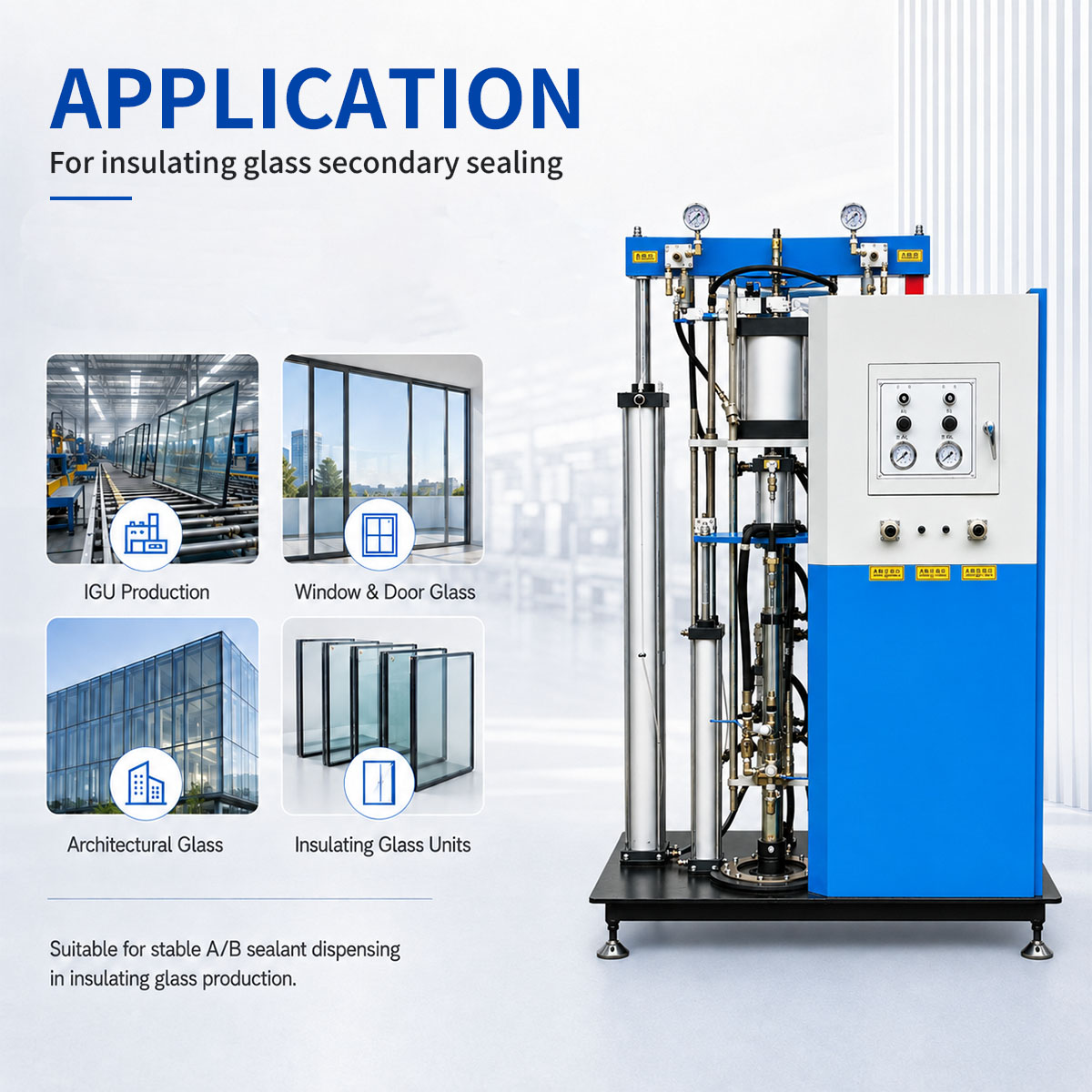
The two-component sealant extruder is commonly used for:
Insulating glass production
Double glazing production
Architectural glass processing
Curtain wall glass
Residential window glass
Commercial window and door glass
Why Choose a Two-Component Sealant Extruder?
The main advantages include:
Accurate material proportioning
Uniform sealant mixing
Stable dispensing pressure
Reduced manual preparation
Lower material waste
Consistent sealing quality
Improved production efficiency
Suitable for continuous IGU production
Information Required Before Ordering
Before selecting the machine, please confirm:
Sealant material
Mixing ratio
Sealant viscosity
Drum or barrel size
Required output
Power supply
Air pressure
Manual or automatic operation
Standalone use or production line connection
Providing this information helps ensure that the machine configuration matches the actual production requirement.