English
 Español
 Português
 Русский
 Deutsch
 Francés
 العربية
 한국어
 Türk
 日本語

Desiccant Filling Machines: Don't Fill Spacer Frames Too Far Ahead
A rack of filled spacer frames can look like useful stock for the next shift. The bending is finished, the molecular sieve is in, and the assembly team won't have to wait for frames. But if the matching glass is still being cut, or a remake has held up the order, those frames may spend much longer on the rack than anyone planned.
That waiting time matters when you're choosing an automatic desiccant filling machine. A faster filler gives you more freedom to organise production. It doesn't mean filled frames can be stored indefinitely. We're looking at hollow spacer bars filled with desiccant beads. Other spacer systems may need a different routine.
The desiccant is already working
The small openings on the cavity-facing side of a spacer give moisture a route to the beads inside. On a waiting rack, the air reaching those openings is workshop air. The beads can take up moisture there, before the frame ever meets the glass. Closing the filling hole doesn't turn the whole spacer into a sealed storage container.
Some of the material's moisture capacity can therefore be used before the frame reaches the glass. The same frame won't necessarily pick up moisture at the same rate in a dry room and a humid one. The desiccant grade and spacer design matter too, along with how long the frame has been exposed. A frame can still look clean and straight after that exposure. Its appearance won't tell you how much drying capacity remains.
This is why a general rule such as “use it sometime during the shift” isn't enough. Start with the handling guidance for the grade you're using. Look for an exposure limit that applies to your material and the way you store filled frames. It needs to match the factory's approved IGU procedure. A note about keeping unopened packs dry doesn't answer that question; any gap in the instructions needs clearing up with the material supplier.
Fill for the next assembly batch
Imagine that the bender has finished frames for two orders. The glass for the second order is ready, but the first is waiting for replacement panes. Filling everything in bending order creates a queue that assembly can't simply work through. The delayed frames keep waiting while newer frames pass them.
A useful place to control that queue is before filling. If an order is waiting for glass, its bent frames can stay in the designated storage area with their job identification, without being filled yet. When the panes are ready, release the frames in time for filling and butyl coating to feed assembly. There is little to gain from filling the frames while their glass is still missing.
When assembly keeps switching between short orders, a large release from the filler can leave several unfinished jobs on the racks. A longer filling run makes more sense when the corresponding panes are ready and assembly can take the frames in sequence. The important quantity is how many frames the next operations can actually use within the approved process window. Producing extra frames just to keep the filler busy can leave someone else managing an ageing queue.
Give a delayed batch a clear status
An order number tells the next operator where a frame belongs. It doesn't say when the desiccant went in. A batch record that includes filling time and the relevant assembly time makes a delay visible. If a batch takes long enough that one timestamp would hide substantial differences, divide the record accordingly. A batch card can carry those times; the next operator just needs to find it with the frames.
The awkward situation is a rack left after a stoppage. On restart, it may contain frames from before the interruption alongside newly prepared work. The older frames still need to be judged from their original filling time. Leave the filling record with the batch. A rack with no reliable filling time shouldn't go straight back into production. Put it on hold, along with any batch that has passed its approved exposure limit. The person responsible for release can then decide what happens to it under the factory procedure.
Covering the rack doesn't necessarily keep damp air away from the frames. Nor should a storage method used for unopened desiccant be assumed suitable for an assembled spacer frame. Any protective arrangement needs to be agreed for the actual material and frame construction, including how it is opened and used during production.
What the machine demonstration should include
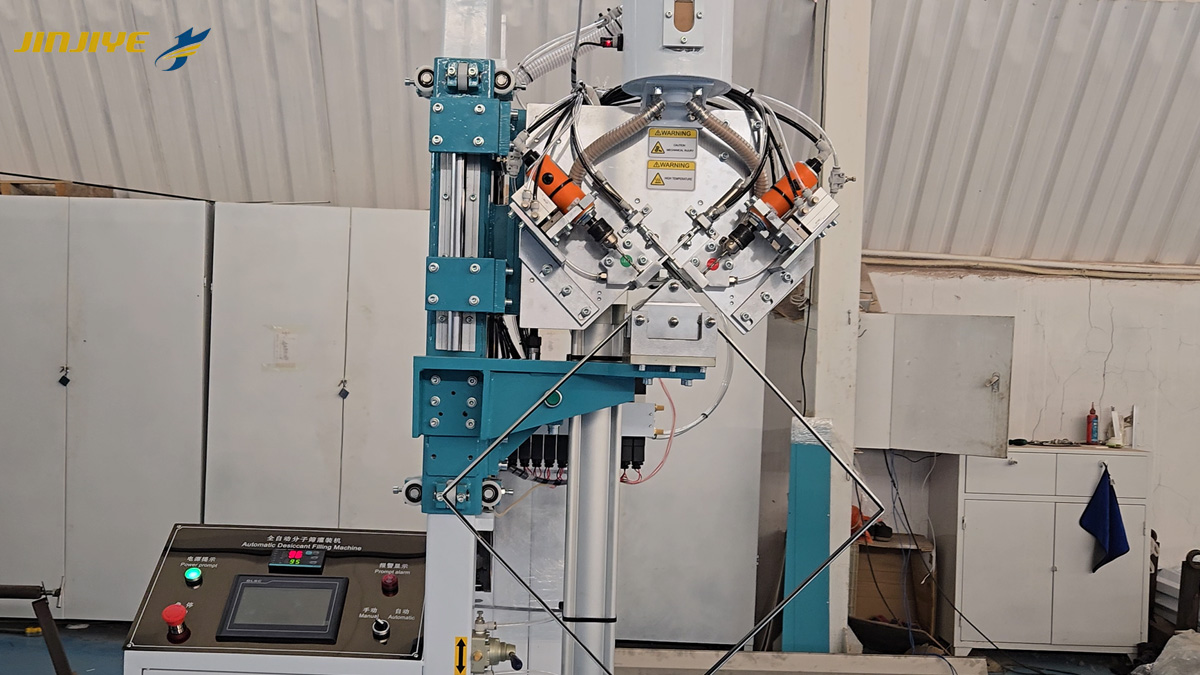
JINJIYE's automatic desiccant filling machine includes adjustable filling height, automatic material feeding and filling-hole closure. Those functions concern the filling operation. The time a completed frame spends waiting for assembly is also affected by order release, rack handling and the availability of its matching glass.
For a useful demonstration, follow one representative batch from filling to its next operation. The first frame in a large batch may sit on the rack while the last is still being filled. Its waiting time is part of the trial, even though the machine has finished with it. Write down when that first frame reaches the insulating glass production line, alongside its filling time. If a replacement pane is missing, the remaining frames for that order can wait unfilled while a job with all its glass ready goes ahead.
When discussing the equipment with JINJIYE, include the usual batch sizes and where filled frames wait. Mark both the normal waiting position and the place for batches on hold on the layout. The shift instructions should also name who can release a held batch.