English
 Español
 Português
 Русский
 Deutsch
 Francés
 العربية
 한국어
한국어
 Türk
Türk
 日本語
日本語

How Automatic Spacer Bending Stabilizes Daily IGU Production
How Automatic Spacer Bending Stabilizes Daily IGU Production
Stable daily output is not determined only by the maximum speed of an insulating glass production line. In many factories, one of the less visible causes of production fluctuation is inconsistent aluminum spacer frame preparation.
A spacer frame that is slightly oversized, undersized, distorted, or incorrectly joined may slow down frame assembly, butyl coating, glass matching, pressing, and secondary sealing. When these small deviations occur repeatedly during a long shift, the entire IGU line becomes more difficult to manage.
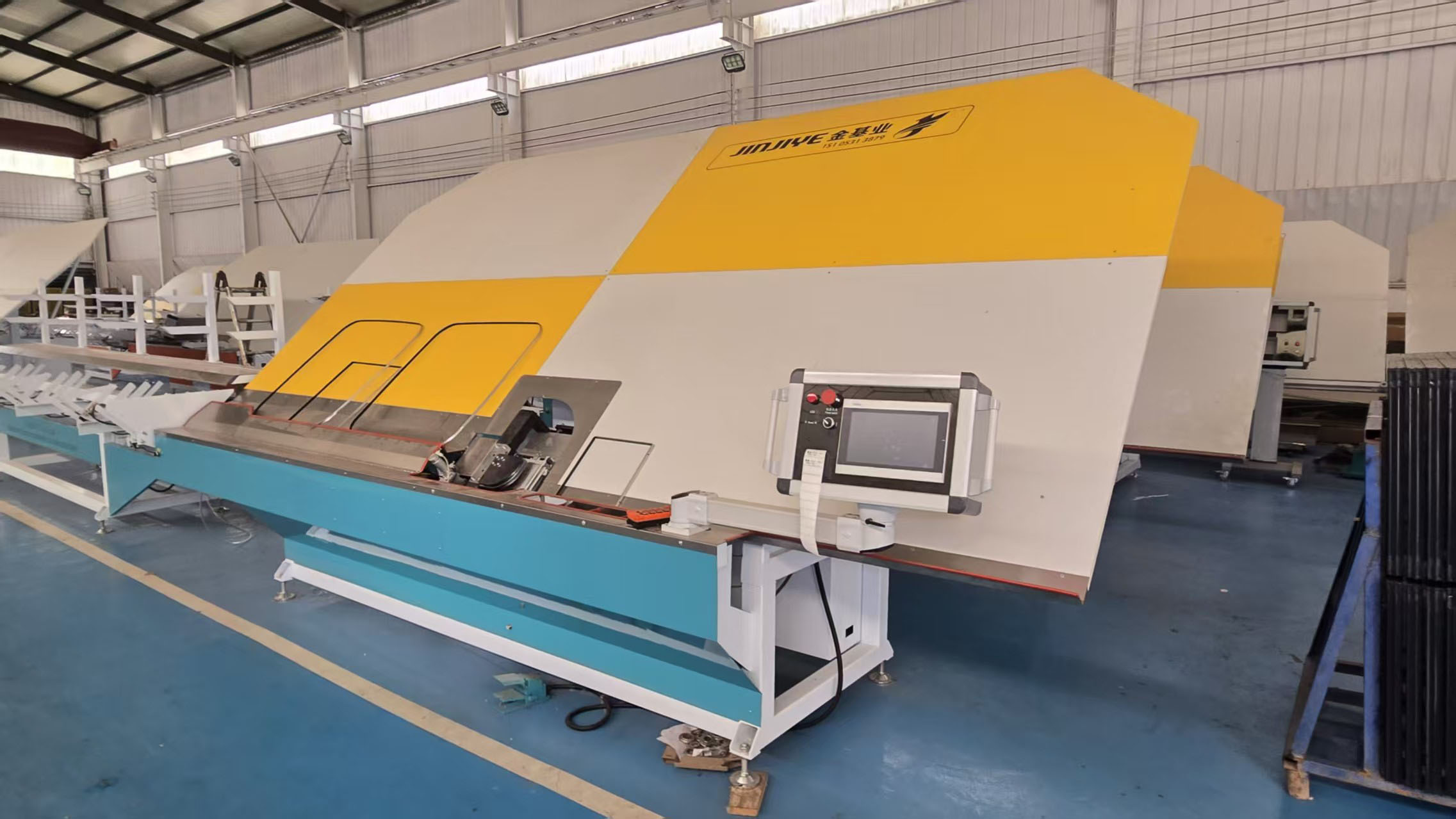
An Automatic Aluminum Spacer Bending Machine helps reduce these variations by combining programmed feeding, precise bending, automatic joining, and controlled cutting in one continuous process.
Why Manual Spacer Bending Creates Unstable Output
Manual and semi-manual spacer preparation depends heavily on operator experience. A skilled worker may produce accurate frames at the beginning of a shift, but consistency can decrease when order sizes change frequently or production continues for many hours.
Common causes of unstable spacer frame output include:
Inconsistent measuring and marking
Differences in manual feeding length
Uneven corner angles
Incorrect frame dimensions
Slow changeover between spacer sizes
Errors when processing mixed glass orders
Bending or cutting too close to a spacer joint
Material waste caused by repeated trial adjustments
These problems do not only affect the bending station. They also influence every downstream process.
For example, an inaccurate frame may require manual correction before assembly. A distorted corner can make butyl coating uneven. A frame that does not match the glass size may delay the matching process or require complete rework.
Programmed Production Reduces Operator Variation
An automatic spacer bending machine converts production data into a controlled sequence. Once the frame dimensions and production quantity are entered, the machine automatically performs feeding, positioning, bending, joining, and cutting.
The operator does not need to measure and mark every spacer manually.
This creates a more repeatable process because the main production actions are controlled by the servo and CNC system rather than by individual operating habits.
For factories producing repeated orders, stored production data also makes it easier to reproduce the same frame dimensions without performing a new manual setup each time.
Managing Mixed-Size Orders More Efficiently
Modern residential and architectural glass factories rarely produce only one frame size during an entire shift. A single order may contain many window dimensions, spacer specifications, and frame quantities.
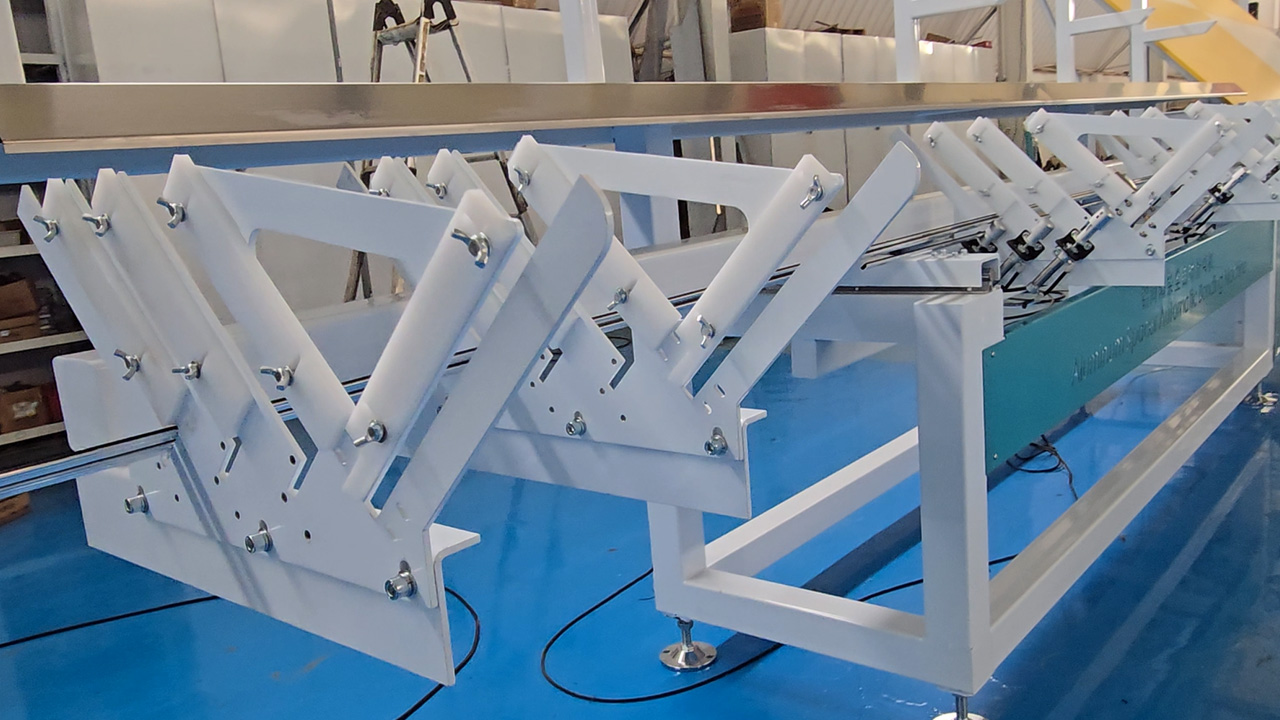
The JINJIYE automatic spacer bending system can be configured with four automatic storage bins for different aluminum spacer specifications. The control system can process production data for multiple glass sizes and arrange the required frame sequence automatically.
This is particularly useful for fragmented orders because the operator does not need to stop the machine and manually reorganize every size change.
The system can calculate, sort, and continuously process different frame dimensions, helping the bending station follow the production order more closely.
As a result, the factory can reduce:
Manual data entry
Spacer-size changeover time
Incorrect frame sequencing
Waiting time between production batches
Dependence on highly experienced operators
Feeding Accuracy Directly Affects Frame Dimensions
A bending machine cannot produce an accurate frame if the aluminum spacer feeding length is unstable.
The JINJIYE system uses CNC servo feeding with a feeding precision of 0.1 mm/m. The overall frame precision can reach ±0.5 mm, while the bending angle precision can reach 0.1°.
These figures are important because dimensional error can accumulate across four sides of a rectangular frame.
Even when each individual side has only a small deviation, the final closing point may not align correctly. The operator may then need to force the frame into shape, trim the spacer, or remake it.
Controlled servo feeding reduces this cumulative error and helps the finished frame maintain the programmed dimensions.
Controlled Bending Helps Prevent Large-Frame Deformation
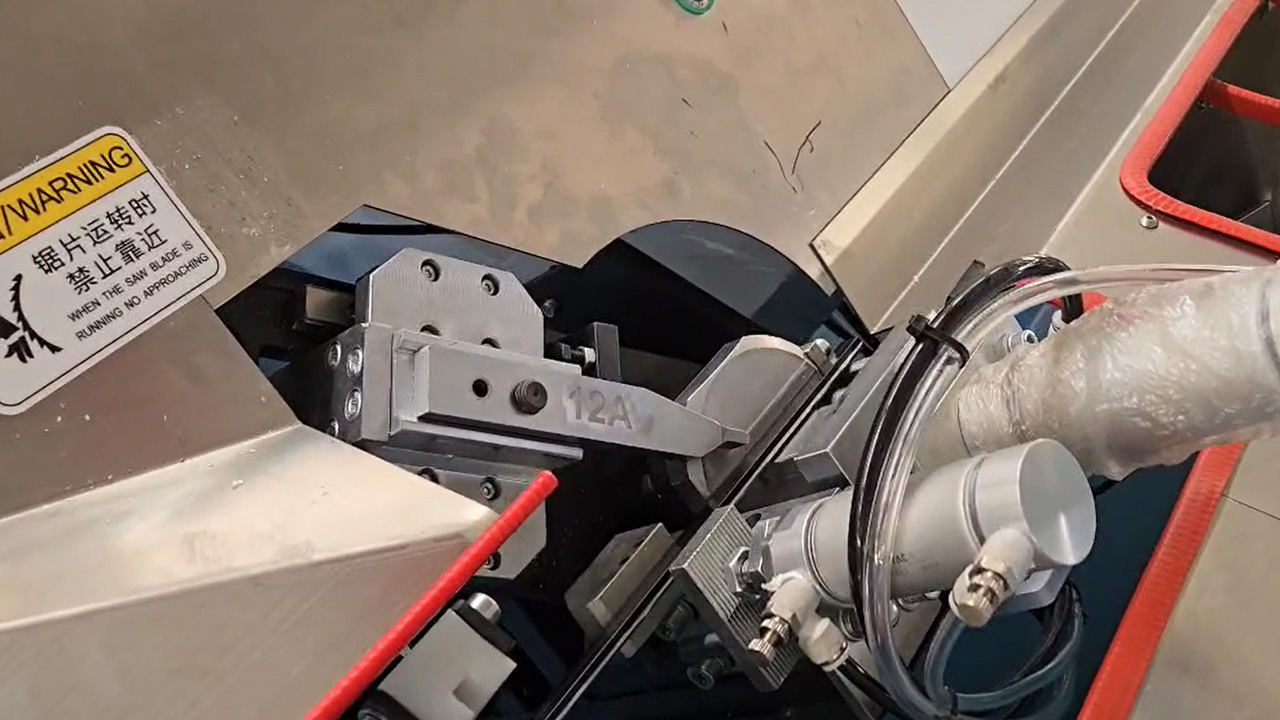
A small spacer frame and a large spacer frame should not always be bent at exactly the same speed.
Large frames require more controlled movement because excessive bending speed can increase vibration or deformation. Small frames can normally be processed faster without sacrificing stability.
The automatic control system adjusts the bending process according to the frame dimensions. This allows the machine to maintain efficient production for smaller frames while using a more stable bending sequence for larger frames.
The machine supports spacer frames from approximately 250 × 300 mm up to 2000 × 2000 mm, depending on the selected configuration and spacer specification.
It can also process standard rectangular frames and various special shapes, including triangles, quadrilaterals, hexagons, octagons, and frames with one-sided or multi-sided special geometry.
Intelligent Joint Avoidance Reduces Weak Corners
Spacer joining creates another potential source of instability.
If a joined section is positioned directly at a bending corner or cutting point, the finished frame may have reduced strength or poor corner quality.
The automatic joining system identifies the spacer joint position and avoids bending or cutting at that location. The machine automatically adjusts the feeding sequence so that the joined section remains in a more suitable straight area of the frame.
This reduces manual intervention and helps maintain more consistent corner quality.
Zero-Waste Design Improves Material Planning
Production stability is also connected to material utilization.
Frequent short offcuts, incorrect cutting positions, and repeated test pieces make spacer consumption difficult to calculate. They also increase the amount of material that must be handled and removed from the production area.
The automatic bending system uses calculated feeding and cutting positions to support a zero-waste production design. Automatic spacer joining allows the remaining material to be used more effectively instead of being discarded prematurely.
This makes daily spacer consumption more predictable and helps production managers compare planned material use with actual output.
Stable Frames Improve Downstream IGU Processing
Accurate spacer frames make several downstream processes easier to control.
Butyl Coating
A straight and correctly sized spacer frame moves more consistently through the butyl extruder. Stable corners and clean spacer surfaces help the machine apply a more even primary seal.
Frame Assembly
The operator can position the frame on the glass more quickly when its dimensions match the production data. Less manual reshaping is required.
Glass Pressing
A correctly positioned frame helps maintain the specified edge distance and cavity dimensions during glass assembly and pressing.
Secondary Sealing
Consistent frame dimensions contribute to a more uniform sealing channel. This helps the sealing robot or manual operator maintain a more predictable sealant depth around the IGU.
The bending machine therefore should not be evaluated as an isolated machine. Its accuracy affects the efficiency and quality of the complete insulating glass production process.
What Production Managers Should Monitor
Maximum machine speed alone does not represent real daily productivity.
When evaluating an automatic spacer bending system, production managers should also monitor:
Percentage of frames completed without correction
Number of remade frames per shift
Changeover time between spacer specifications
Dimensional consistency across repeated orders
Corner-angle consistency
Spacer material waste
Waiting time at the butyl coating station
Frequency of downstream assembly interruptions
Time required to train new operators
A machine that produces frames consistently can create more value than a machine that reaches a high peak speed but requires frequent adjustment and rework.
A More Predictable Spacer Frame Process
The main benefit of automatic spacer bending is not simply replacing manual labor. Its greater value is creating a measurable and repeatable production process.
With programmed production data, CNC servo feeding, controlled bending, automatic joining, joint avoidance, and automatic cutting, the factory can reduce many of the small variations that disrupt daily IGU output.
For manufacturers processing mixed sizes, repeat orders, large frames, or fragmented residential glass orders, a stable spacer bending process helps balance the entire production line.
A properly configured Automatic Aluminum Spacer Bending Machine allows production managers to plan output more accurately, reduce rework, improve material utilization, and maintain more consistent spacer frame quality throughout the shift.