English
 Español
 Português
 Русский
 Deutsch
 Francés
 العربية
 한국어
한국어
 Türk
Türk
 日本語
日本語

How to Choose the Right Insulating Glass Production Line for Your Factory
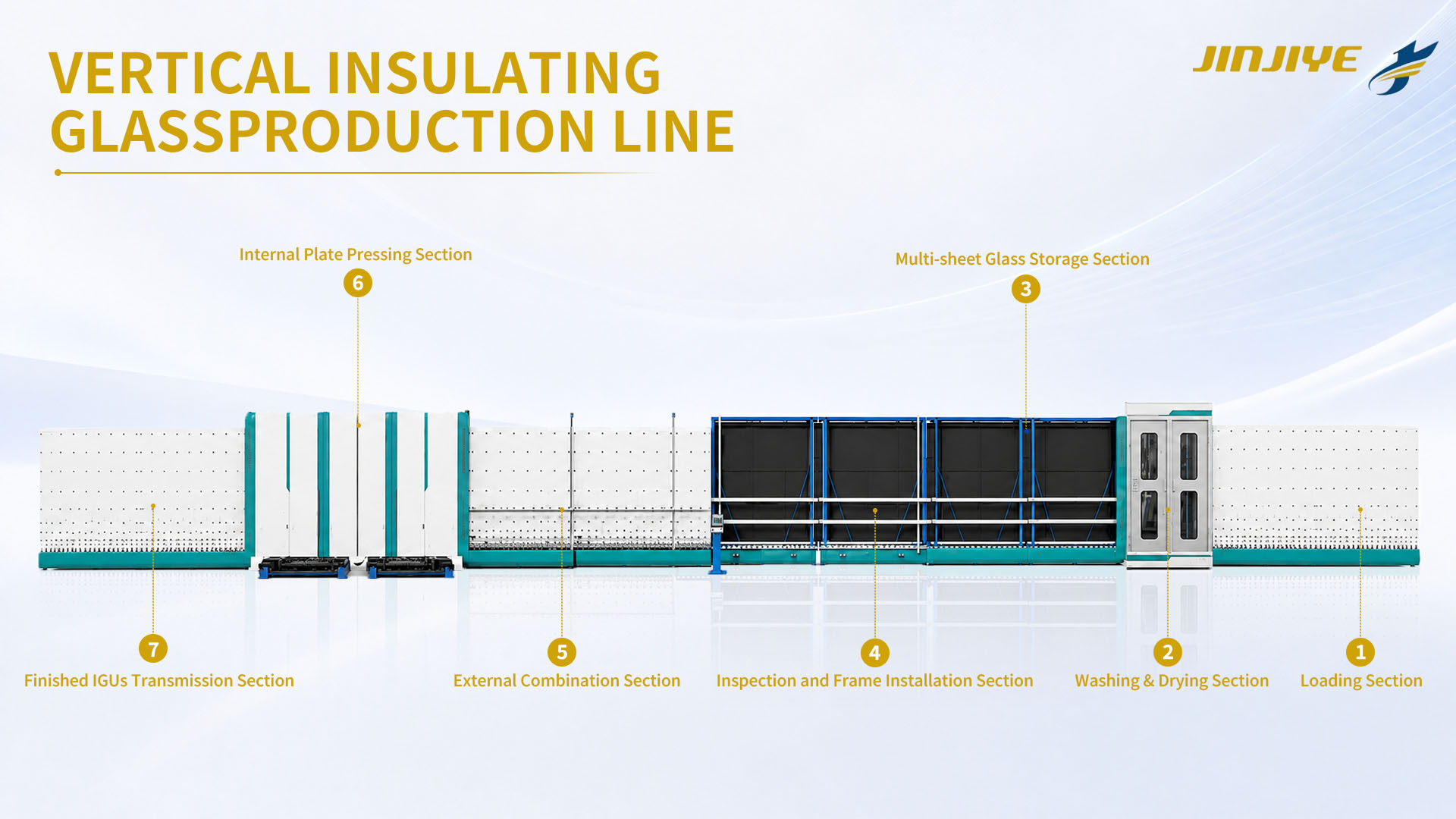
Choosing the right insulating glass production line is not simply a matter of comparing machine prices.
The correct configuration depends on your glass dimensions, daily output, product structure, automation requirements, available workers and factory space. A line that is too small may limit future production, while an oversized line can increase investment without improving actual efficiency.
This guide explains the main factors glass manufacturers should evaluate before purchasing an IGU production line.
Define Your Glass Size Rang
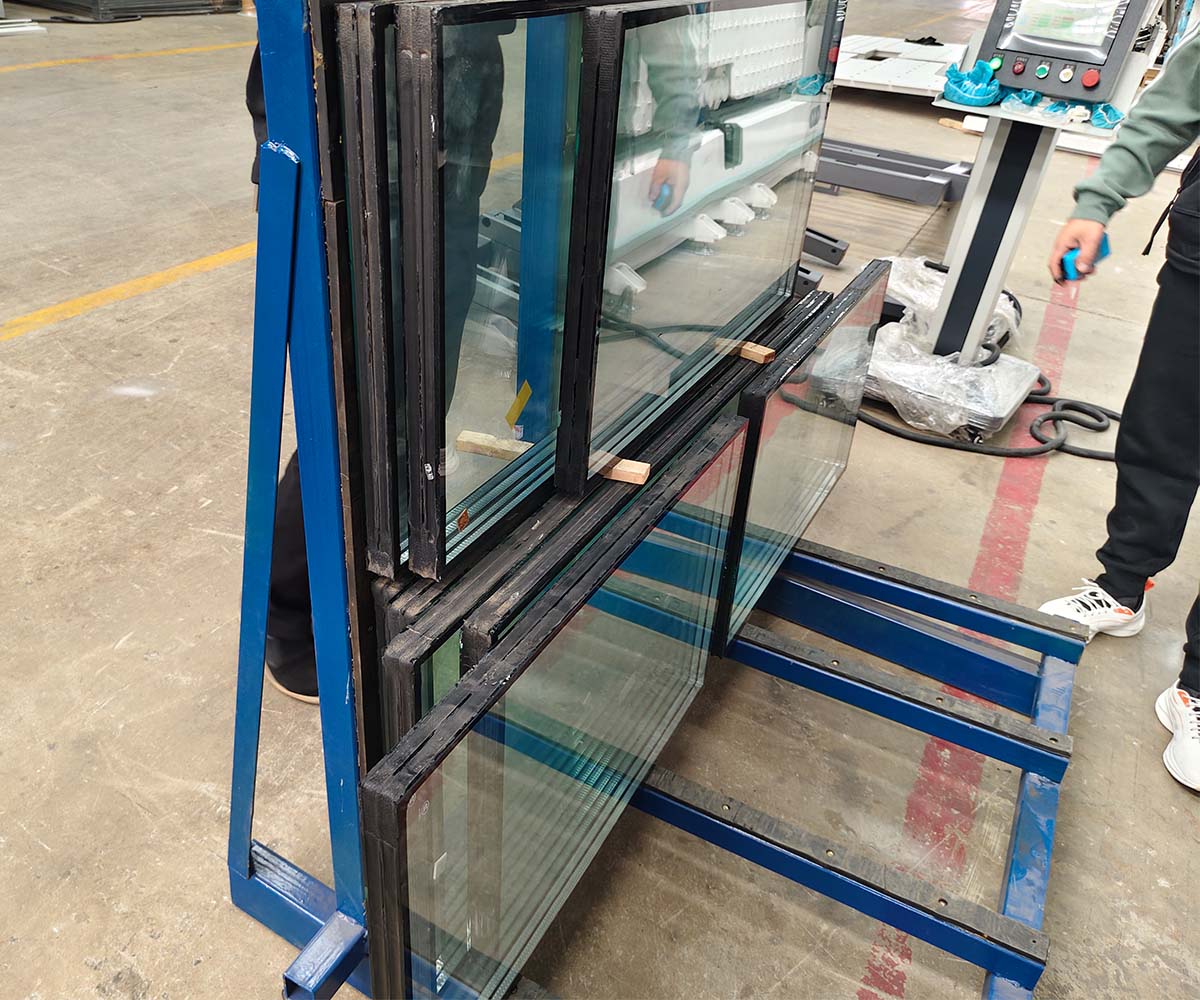
The first step is to confirm both the maximum and minimum glass dimensions.
Larger glass requires stronger conveying, supporting and pressing systems. Small glass and mixed-size orders require accurate detection and flexible positioning.
Before requesting a quotation, prepare:
Maximum glass size
Minimum glass size
Glass thickness range
Maximum finished IGU thickness
Maximum glass weight
Do not provide only one maximum dimension. A professional equipment supplier also needs to understand your normal daily production sizes.
2. Calculate the Required Production Capacity
Machine speed alone does not represent actual factory output.
Daily production is also affected by:
Average glass dimensions
Number of size changes
Double- or triple-glazing ratio
Spacer frame preparation
Argon gas filling time
Secondary sealing speed
Number of available operators
Material handling efficiency
A factory producing standard residential units has different requirements from a factory processing customized architectural glass.
Customers should provide their required output in units per shift or square meters per day. This allows the manufacturer to recommend a more suitable insulating glass production line instead of simply offering the fastest machine.
3. Choose the Correct Automation Level
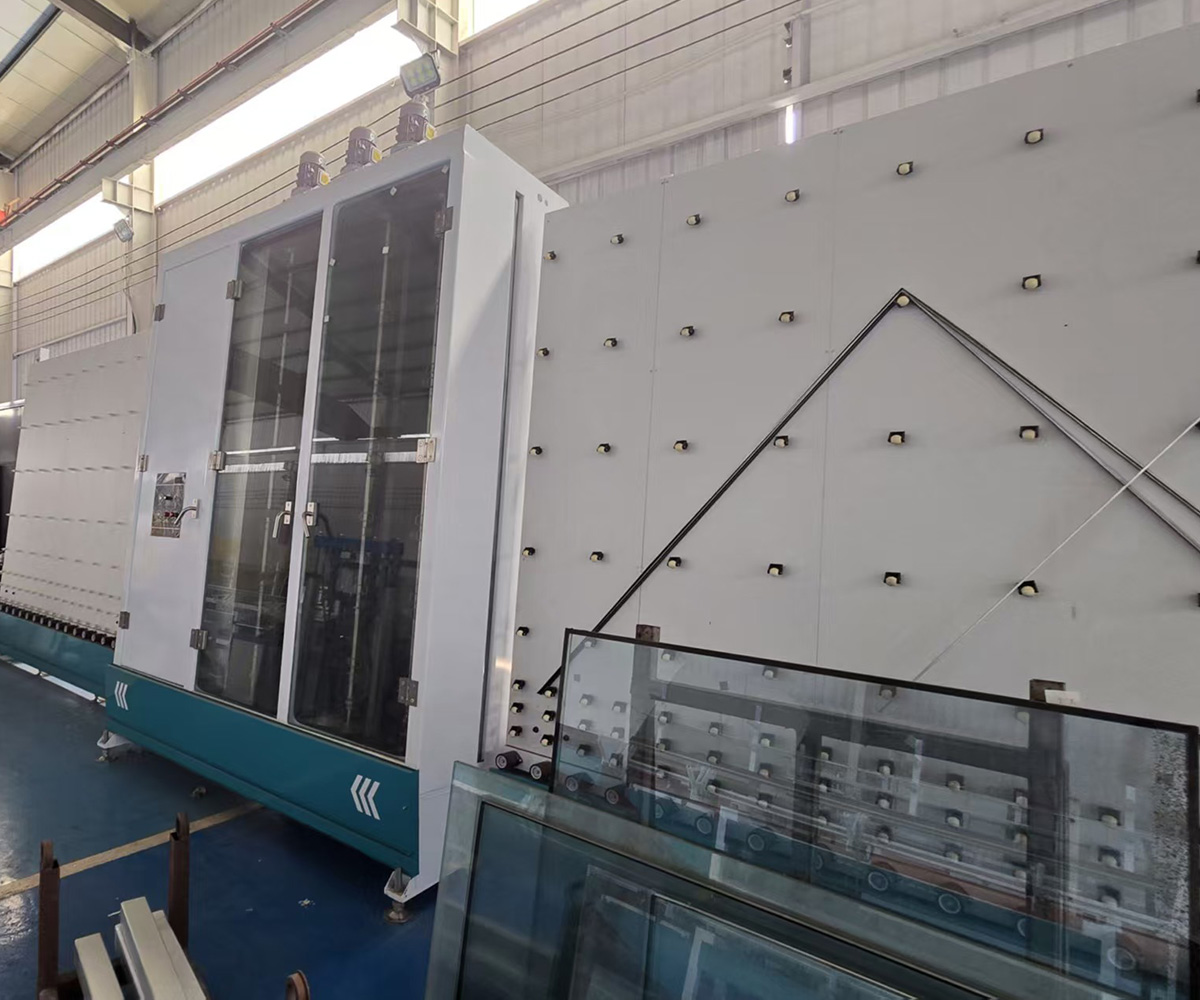
An automatic IGU production line can connect glass washing, inspection, positioning, assembly, pressing and gas filling into a continuous process.
Depending on the configuration, automatic functions may include:
Glass size measurement
Glass thickness detection
Low-E coating detection
Automatic glass positioning
Automatic assembly and pressing
Online argon gas filling
Automatic production control
A highly automated line can reduce manual handling and improve production consistency. It is suitable for factories with continuous orders, high labor costs or strict quality requirements.
A smaller factory may begin with essential equipment and add automatic spacer bending, gas filling or sealing equipment as production increases.
The best solution is not always the most automated one. It should match the customer’s actual order volume and investment plan.
4. Confirm Double- and Triple-Glazing Requirements
Double and triple glazing require different production sequences.
Triple-glazed units involve:
An additional glass sheet
An additional spacer frame
Greater finished-unit thickness
Higher finished glass weight
More assembly and gas-filling steps
Customers planning to produce triple glazing should confirm this before the line is designed.
The equipment supplier needs to know the glass thickness, spacer width, total IGU thickness and percentage of triple-glazed orders.
This information affects the conveying, pressing, gas filling and control configuration of the production line.
5. Evaluate the Glass Washing Section
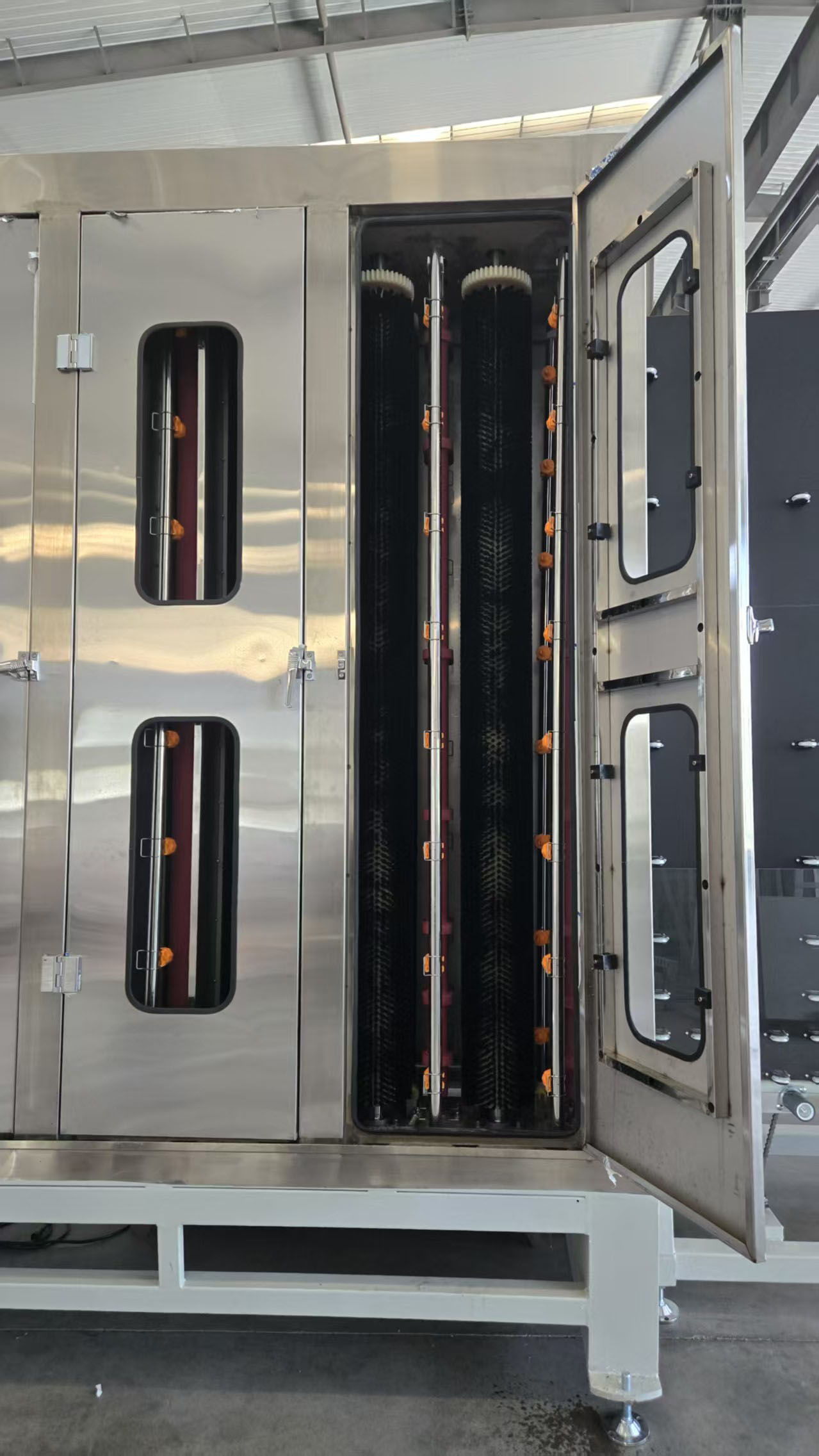
Glass washing and drying quality directly affect the finished insulating glass unit.
Poor cleaning may result in:
Dust inside the IGU
Water marks
Reduced sealing quality
Visual defects
Customer complaints
Factories processing Low-E glass should also check whether the washing machine is suitable for coated glass.
Important points include:
Brush configuration
Washing pressure
Water quality
Drying performance
Low-E surface detection
Glass surface protection
A lower-priced washing section may reduce the initial investment, but unstable cleaning quality can create long-term production losses.
6. Decide How to Fill Argon Gas
Argon gas can be filled manually, offline or during the automatic pressing process.
An online argon gas filling system can reduce manual operation and improve production flow. However, the correct configuration depends on:
Glass dimensions
Cavity thickness
Required gas concentration
Double or triple glazing
Production speed
Gas supply conditions
Buyers should evaluate filling stability and compatibility with the complete production process, not only the advertised filling speed.
7. Check the Required Standalone Machines
An insulating glass production line does not complete every process in the factory.
A complete IGU production solution may also include:
Automatic aluminum spacer bending machine
Two-component sealant extruder
Glass loading and handling equipment
Protective film laminating machine
When comparing quotations, confirm exactly which machines and functions are included.
A production-line quotation and a complete IGU factory quotation are not the same.
8. Review Your Factory Layout
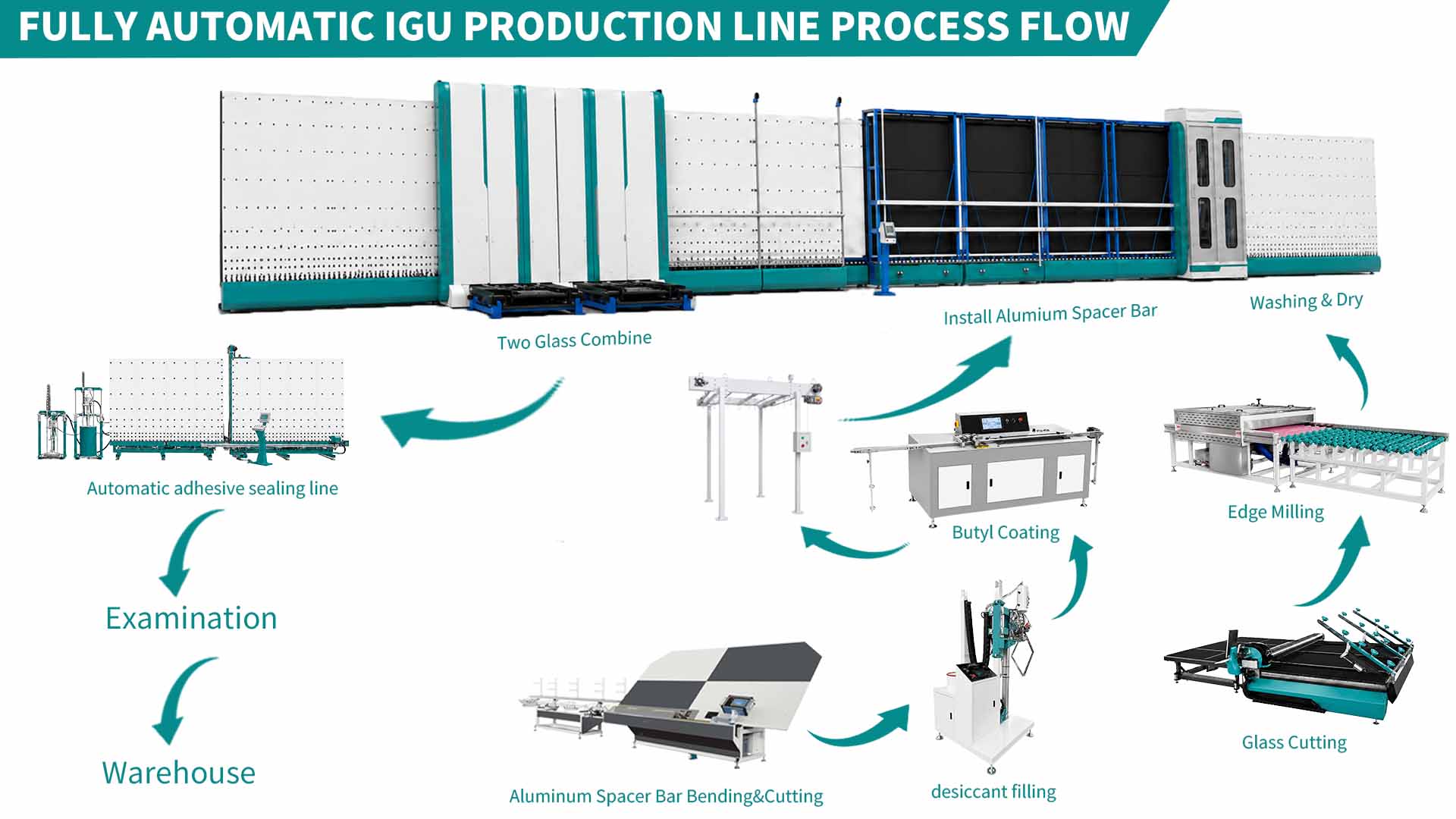
Before ordering equipment, evaluate the available workshop space and production flow.
The layout should include areas for:
Raw glass storage
Glass loading
Washing and assembly
Spacer preparation
Secondary sealing
Finished glass storage
Equipment maintenance
Safe operator access
The customer should also confirm:
Power supply
Voltage and frequency
Compressed-air supply
Water supply and drainage
Workshop entrance dimensions
A good factory layout reduces unnecessary glass movement and helps the complete production system operate more efficiently.
9. Compare More Than the Machine Price
Two quotations may include very different equipment, components and services.
Before selecting a supplier, compare:
Supported glass dimensions
IGU thickness range
Double- and triple-glazing capability
Automation functions
Main electrical components
Included standalone machines
Installation and commissioning
Operator training
Spare parts
Warranty and technical support
A lower price may exclude important functions, installation services or supporting machines.
The correct comparison should be based on the complete production solution and long-term operating cost.
10. Send Complete Information Before Requesting a Quotation
To receive an accurate equipment proposal, prepare:
Destination country
Maximum and minimum glass size
Required daily output
Glass thickness
Maximum IGU thickness
Double- or triple-glazing requirements
Low-E glass requirements
Argon gas filling requirements
Automatic sealing requirements
Factory dimensions
Local voltage
Existing equipment list
Complete information helps the supplier avoid recommending an unsuitable or unnecessarily expensive configuration.
Why Choose JINJIYE?
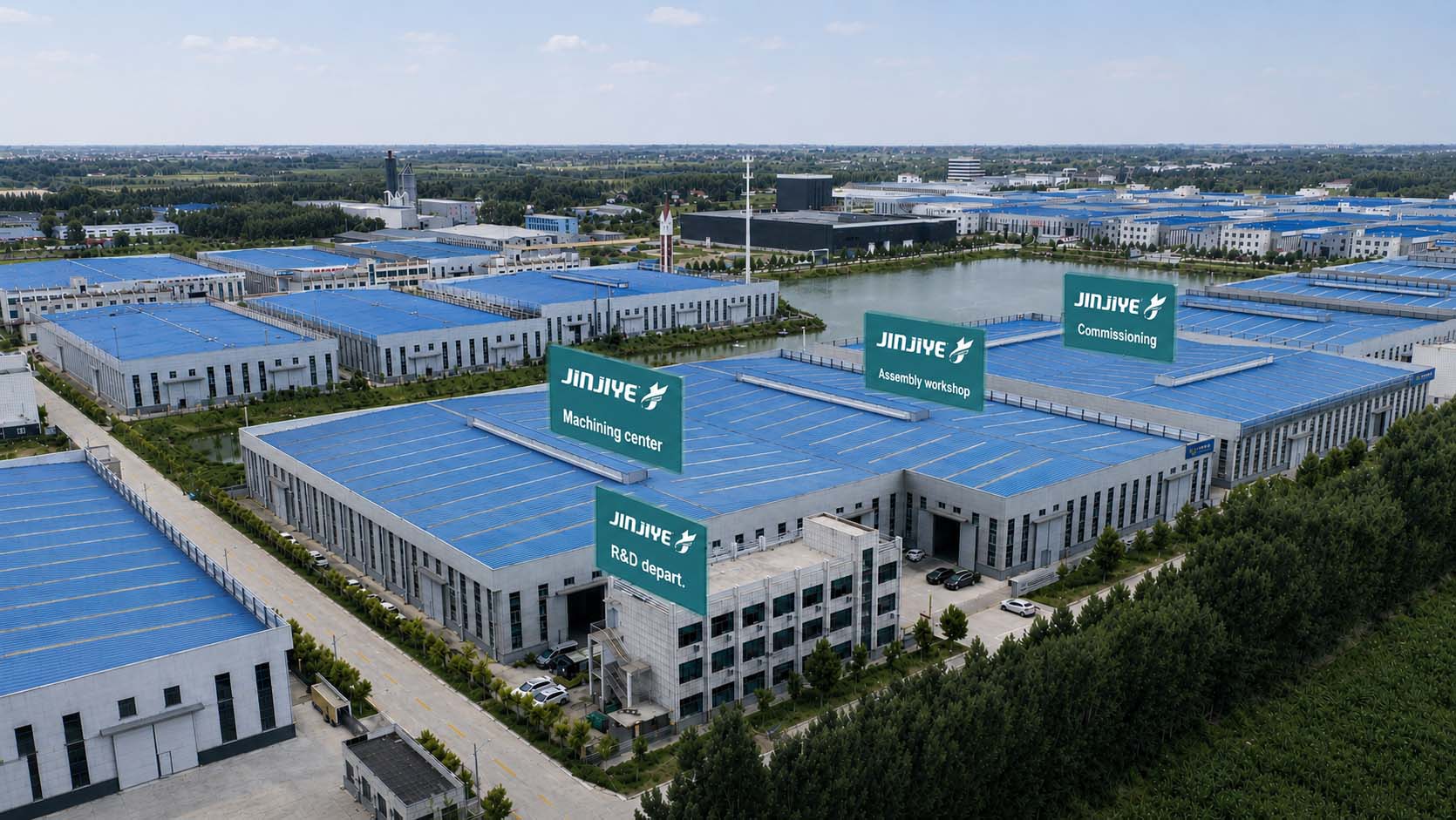
JINJIYE supplies insulating glass production lines and standalone IGU equipment for new factories and existing production-line upgrades.
Equipment solutions can be configured for:
Residential insulating glass
Architectural glass
Low-E glass
Double glazing
Triple glazing
Large-size glass
Mixed-size customized orders
JINJIYE evaluates the customer’s glass specifications, production capacity, workshop conditions and automation requirements before preparing a proposal.
Request an IGU Production Solution
Send JINJIYE your maximum glass size, required daily output, product structure and factory layout.
Our team will recommend a suitable insulating glass equipment configuration for your project.
GET YOUR IGU LINE CONFIGURATION
Frequently Asked Questions
What information is most important when choosing an IGU line?
Maximum glass size, daily output, IGU thickness, double- or triple-glazing requirements and factory dimensions are the most important factors.
Is a fully automatic line suitable for every factory?
No. The automation level should match the factory’s order volume, labor costs, product type and future expansion plan.
Can an existing IGU factory upgrade gradually?
Yes. A factory can add automatic spacer bending, gas filling, sealing or protective film equipment without replacing every existing machine.
Does an IGU production line include all factory equipment?
Not always. Spacer processing, butyl coating, desiccant filling and secondary sealing may require separate machines.