English
 Español
 Português
 Русский
 Deutsch
 Francés
 العربية
 한국어
한국어
 Türk
Türk
 日本語
日本語

Automatic vs Semi-Automatic IGU Production Line
Automatic vs Semi-Automatic IGU Production Line: Which One Fits Your Factory?
Choosing between an automatic and a semi-automatic insulating glass production line depends on your production capacity, labor costs, glass specifications and investment budget.
A small residential glass factory may only need a semi-automatic solution, while factories producing large quantities of Low-E, double-glazed or triple-glazed units may benefit more from automation.
JINJIYE provides IGU equipment configurations based on each customer’s actual production requirements.
What Is a Semi-Automatic IGU Line?
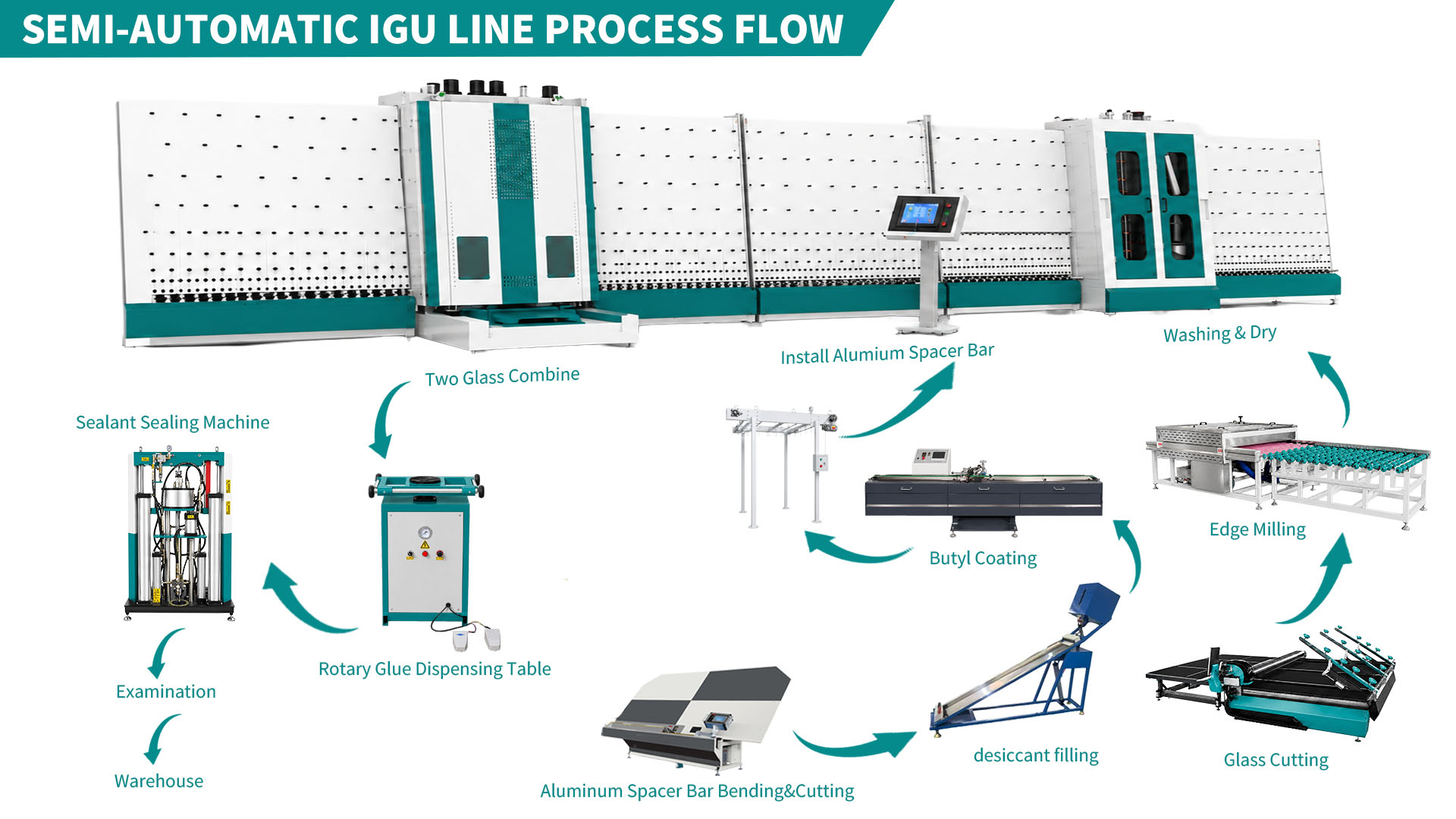
A semi-automatic line combines automatic glass washing and conveying with manual production steps.
Operators may still need to complete:
Spacer positioning
Glass assembly
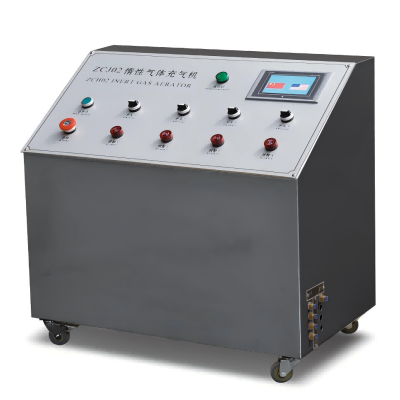
Argon gas filling
Secondary sealing
Glass handling and inspection
This solution usually requires a lower initial investment and is suitable for small factories, customized orders and businesses with sufficient labor.
However, production speed and finished product quality may depend more on operator experience.
What Is an Automatic IGU Line?
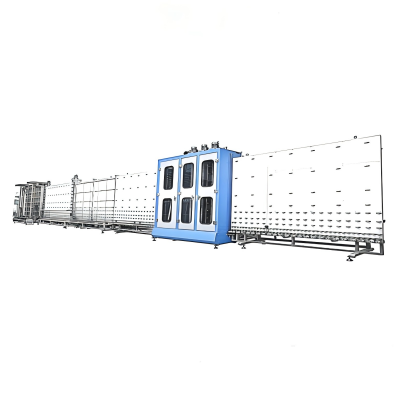
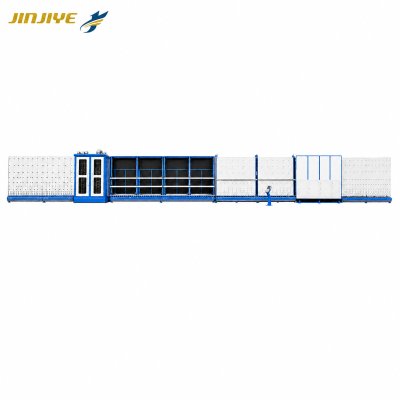
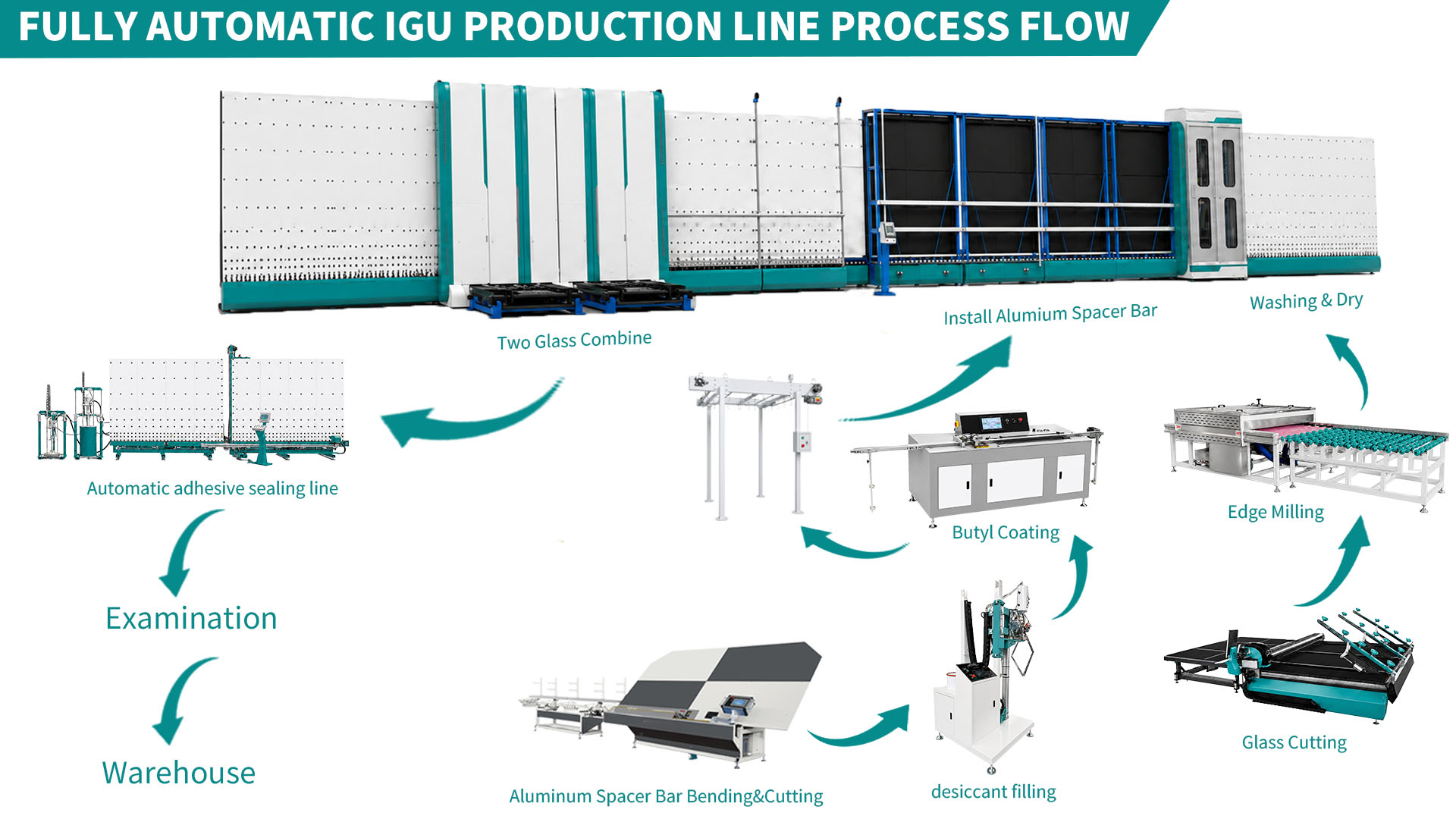
An automatic insulating glass production line connects several processes into one continuous system.
Depending on the configuration, it can automatically complete:
Glass washing and drying
Low-E glass detection
Glass size and thickness measurement
Glass assembly
IGU pressing
Online argon gas filling
Finished glass conveying
Additional equipment can include an automatic spacer bending machine, butyl extruder, sealing robot and protective film laminating machine.
Automatic production reduces manual handling and improves production consistency.
Main Differences
Investment
A semi-automatic line generally costs less because more production steps are completed manually.
An automatic line requires more sensors, control systems and coordinated working sections. The initial cost is higher, but it may reduce labor costs and increase long-term output.
Labor
Semi-automatic production requires more operators for positioning, assembly, gas filling and sealing.
With an automatic line, operators mainly load materials, monitor production, inspect finished products and maintain the equipment.
Production Capacity
Automatic lines are more suitable for continuous and high-volume production.
However, actual output also depends on:
Average glass size
Double or triple glazing
Frequency of size changes
Spacer preparation
Sealing speed
Material handling
The complete production process should be evaluated instead of comparing only machine speed.
Product Quality
Manual operations can lead to differences in spacer positioning, pressing, gas filling and sealant application.
Automatic measurement and positioning help reduce human error and improve product consistency.
This is especially important for architectural glass and projects with strict quality requirements.
Mixed-Size Orders
Semi-automatic equipment can be flexible for small customized orders.
For factories processing many different glass sizes every day, an automatic line with size measurement and intelligent positioning can improve efficiency.
Customers should provide a typical glass size list before requesting a proposal.
Which Factories Should Choose a Semi-Automatic Line?
A semi-automatic IGU line may be suitable for:
New or small glass factories
Lower daily production
Residential window glass
Customized or special-shaped orders
Markets with lower labor costs
Limited initial investment
Factories can begin with essential equipment and add automatic spacer bending, gas filling or sealing equipment later.
Which Factories Should Choose an Automatic Line?
An automatic IGU line may be more suitable for:
Medium and large glass factories
Continuous daily production
High labor-cost markets
Low-E glass production
Triple glazing
Large-size architectural glass
Factories planning future expansion
Automation reduces dependence on skilled operators and improves coordination between production processes.
Can an Existing Factory Be Upgraded?
Yes. It is not always necessary to replace the complete production line.
Common upgrade options include:
Automatic aluminum spacer bending machine
Online argon gas filling system
Automatic insulating glass sealing robot
Automatic protective film laminating machine
The best upgrade depends on the current production bottleneck.
Information Required for a Proposal
Before requesting a quotation, prepare:
Maximum and minimum glass size
Glass and IGU thickness
Double- or triple-glazing requirements
Required daily output
Low-E glass requirements
Argon gas filling requirements
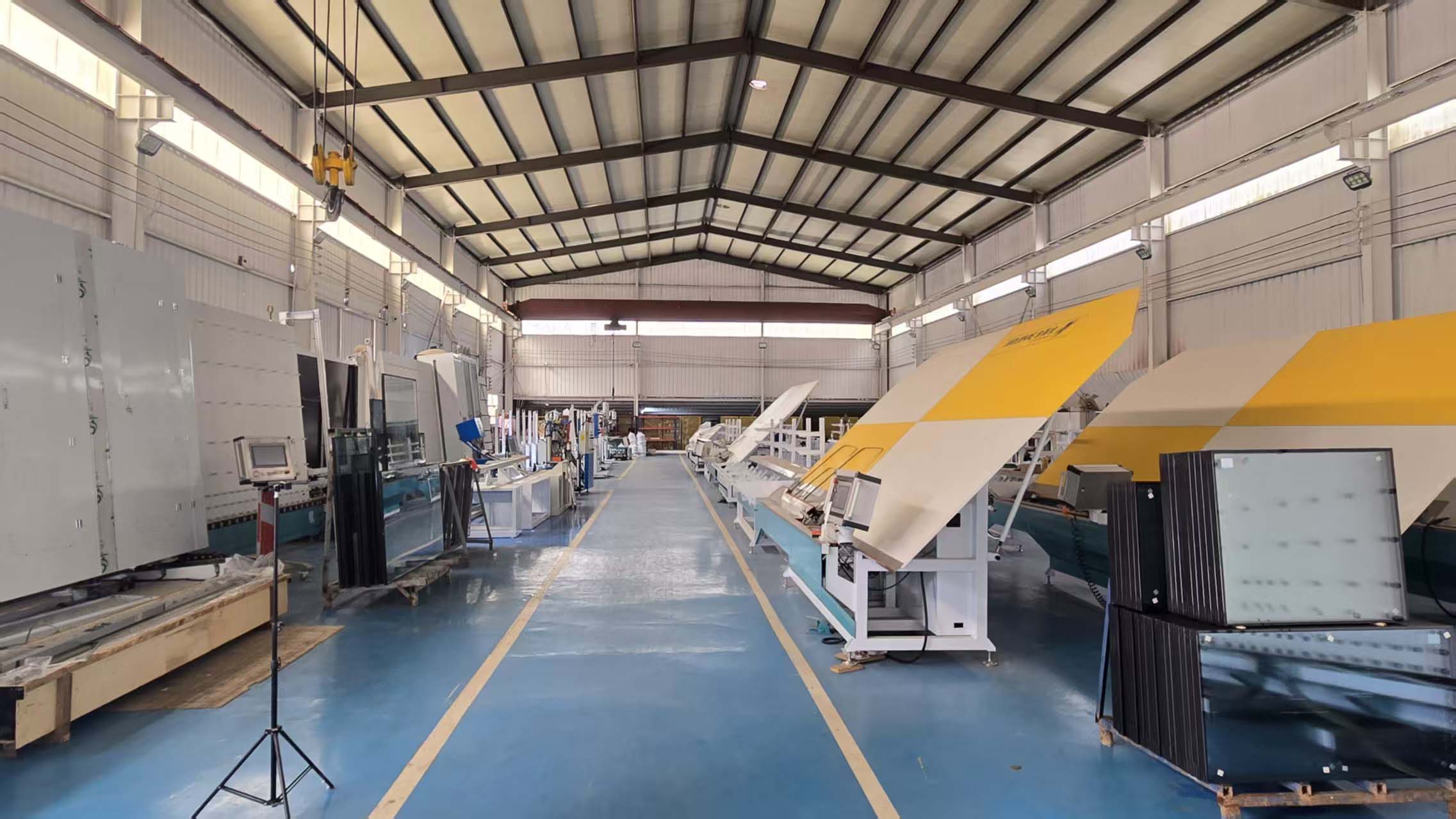
Factory dimensions
Local voltage
Existing equipment
Destination country
Complete information helps JINJIYE recommend a suitable equipment configuration.
Request a JINJIYE IGU Line Proposal
JINJIYE supplies automatic and semi-automatic insulating glass equipment for new factories and production line upgrades.
Send us your glass specifications, required output and factory dimensions. We will recommend a suitable IGU production solution for your project.
GET YOUR IGU LINE CONFIGURATION
Frequently Asked Questions
Is an automatic IGU line always better?
No. A semi-automatic line may be more suitable for a small factory with lower output and sufficient labor.
Can a semi-automatic line produce triple glazing?
Yes, provided the equipment supports the required IGU thickness, weight and assembly process.
Can automatic equipment be added later?
Yes. Spacer bending, gas filling, sealing and protective film equipment can often be added as production grows.