English
 Español
 Português
 Русский
 Deutsch
 Francés
 العربية
 한국어
 Türk
 日本語

IGU Sealing Robot Capacity: Allow for the Curing Queue
The space beside a sealing robot can fill up long before the shift ends. More units keep arriving, while glass sealed earlier is still waiting for its next permitted move. Bringing over another rack solves the immediate problem—until that rack fills too.
This can happen even when the robot is running well. Sealing has become faster, but the holding area hasn't gained any usable space.
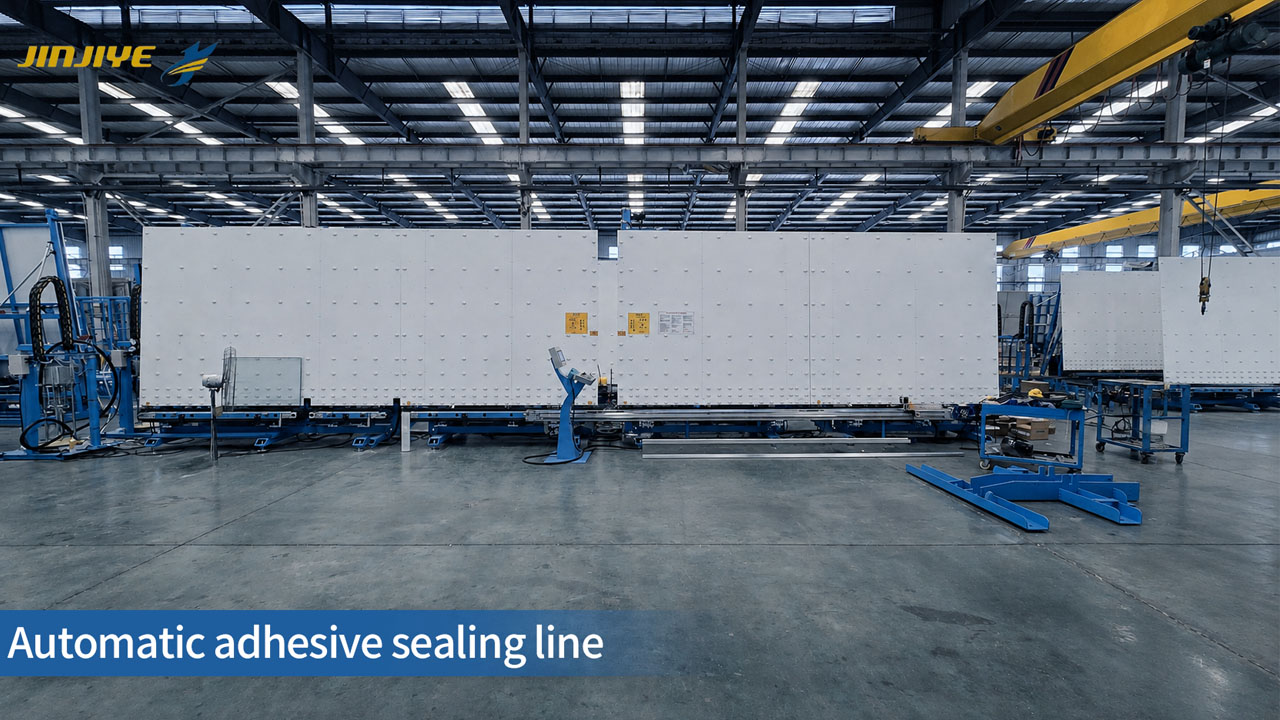
When planning an insulating glass production line, include the glass that will remain in the factory after secondary sealing. For units made with sealants that require curing, that stock can occupy a substantial part of the working area. While one batch waits, the robot may already be sending out the next.
First movement and final release are different decisions
Taking an IGU off the machine, moving it again later and releasing it for transport are separate handling stages. Being ready to come off the outfeed doesn't necessarily mean an IGU is ready for packing or delivery.
The applicable sealant instructions and your approved production procedure need to define the conditions for each move. The waiting time has to suit the sealant, the bonded surfaces and conditions in the curing area. It can't be taken from another product's data sheet. Even when the bead looks dry, the joint may still be short of the strength needed for the next move.
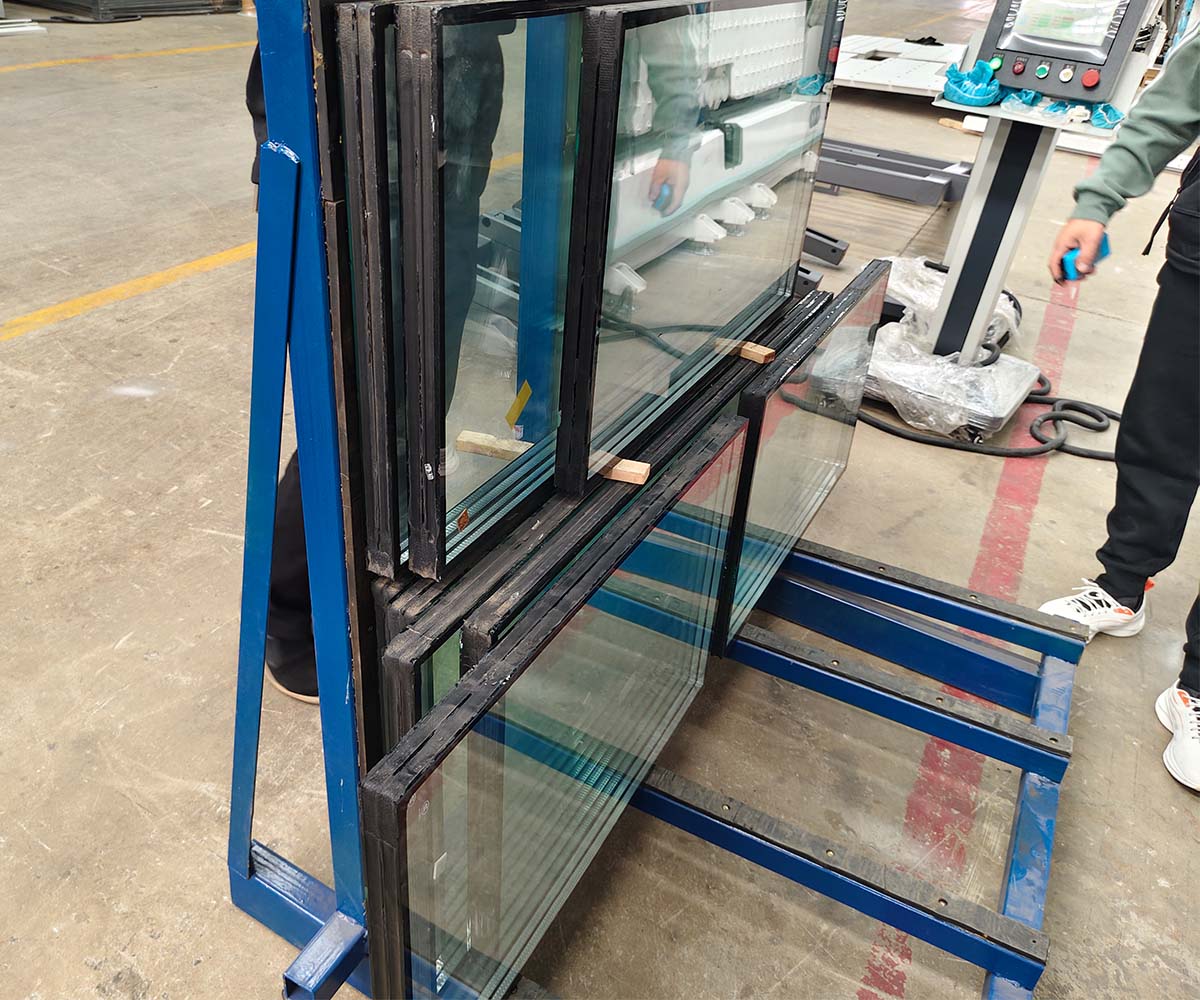
The rack and support arrangement belong in that discussion. A rack used for this waiting period has to support the unit without relying on the fresh seal to carry an unapproved load. Its contact materials must also suit the sealant. Those positions remain occupied until the next move is allowed.
Agree the handling and holding requirements with the material and process specialists, then use them to work out how the sealing station will be cleared.
Count arrivals before counting racks
Start with a period when the robot is producing and the holding area isn't releasing any glass.
Here is a hypothetical example. The sealer sends out 20 units an hour. For the next two hours, none of the occupied positions can be cleared. Another 40 IGUs therefore need somewhere to go. If 20 units were already waiting at the start, the area must accommodate 60 by the end of that period.
The two hours is simply the observation window in this example. It is not a recommended curing or release time.
Now put the actual orders against that count. If the next batch is large triple glazing, its thickness and weight may use up the available rack capacity sooner. Work from the dimensions and weights on the job list, leaving the spacing required by the approved support and storage arrangement.
Count the positions that can actually accept the incoming work. A rack elsewhere in the building may already be allocated to another order. A partly filled rack may have insufficient capacity for the next large unit. Its unused space isn't automatically available to the sealer.
The same applies to releases. An entry marked “ready” in the production record hasn't freed a position until the unit has been removed through the permitted handling process. If collection happens only at set times, the holding area has to carry the glass until then.
A few snapshots through an ordinary shift are useful: opening stock, new units received, units removed and the space still available. Include the busy overlap between orders. An area that looks generous first thing in the morning may be full well before the last batch is sealed
Put the holding area on the same drawing as the robot
Draw the unloading move on the IGU production line layout: the path from the outfeed to a waiting position, then the route for a full rack to leave and an empty one to arrive. Keep enough working room for that exchange. Space the operator needs for unloading can't also be counted as another storage place.
A rack parked in an aisle may make the immediate unloading possible while creating another move later. That extra handling needs people and time. If the same person also collects glass from another workstation, their availability affects how reliably the sealing outfeed can be cleared.
This is worth separating in the purchase discussion. The robot, unloading equipment, racks and any storage system may come from different suppliers or fall into different parts of the project. Identify who provides each part and who checks that the transfer arrangement suits the units being produced.
A short demonstration with empty racks can show the transfer. It won't reproduce a shift in which yesterday's glass still occupies part of the holding area. Review that situation on the layout and production schedule as well.
When comparing robot output figures, use a production rate that the rest of the factory can accommodate. Additional sealing capacity needs matching unloading and holding capacity, or the robot will spend part of its available time waiting for somewhere to put the glass.
For a proposal from JINJIYE, send a representative day's sizes and quantities, maximum unit weight, the available rack area and the established handling and release requirements. Include the glass that remains from the previous shift. That gives the discussion a realistic starting stock instead of an empty floor.