English
 Español
 Português
 Русский
 Deutsch
 Francés
 العربية
 한국어
한국어
 Türk
Türk
 日本語
日本語

The insulating glass production line is being reshaped by 4SG, TPA, and automation. Learn how IGU manufacturers are boosting yield to 99.5% and cutting energy use by 30%.
The Insulating Glass Line Is Changing Faster Than You Think – And It’s Not Just About Speed
If you still see an insulating glass production line as little more than a machine that seals two panes together, you’ve missed the biggest shifts of the past 18 months.
From mid‑2025 to mid‑2026, the global IGU industry has seen more transformation than in the previous decade. LiSEC delivered the world’s first 8×3.3m TPA line to Chongzheng Shengda. AGC invested in a new Fineo vacuum‑glass line in Belgium. Cleartherm Glass went from 300–400 units per week to over 4,000 with automation. NorthGlass won a full digital IGU project in China. These aren’t isolated upgrades – they signal a new era.
But the real question isn’t who bought what. It’s: why now, and why are so many fabricators still hesitating?
1. The Market Is Growing – but Unevenly
The global insulated glass market was ~$15.65B in 2025 and is forecast to reach $25.75B by 2034 (5.6% CAGR). The insulating window segment is growing even faster, at ~9% CAGR.
Yet these numbers mask a sharp divergence. Demand for intelligent, fully integrated lines is soaring – at GlassBuild and glasstec, buyers stopped asking “what does this machine do?” and started asking “does this line solve all my production problems?” At the same time, the customer base has flipped. Real‑estate developers used to order huge, identical batches. Today, end‑users – homeowners, building owners, curtain‑wall contractors – demand thermal/sound performance, no fogging, and long durability. That forces fabricators to move from volume to variety and from batch to custom.
2. The IGU Station – Still the Biggest Bottleneck
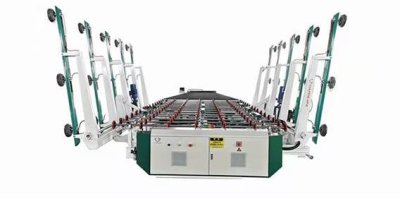
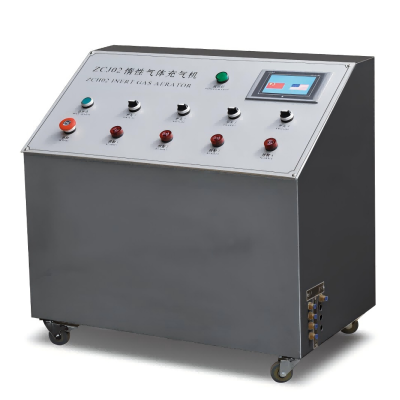
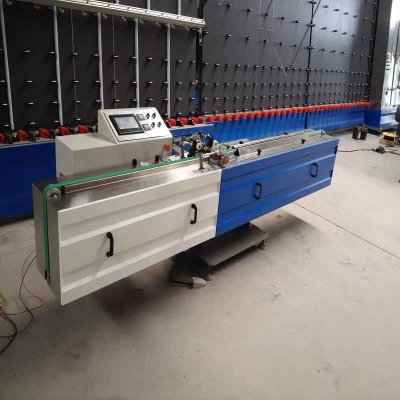
Cutting, edging, tempering – those are automated for years. But the assembly, gas‑fill, and sealing stage? In most shops, it’s still semi‑manual. Why? Because glass sizes vary, shapes get weird, orders are small‑batch and highly customised. And glass is heavy and fragile – every move risks scratches, edge chips, or ruined Low‑E coatings.
So the IGU stage becomes the line’s choke point. No matter how fast upstream runs, you’re waiting on manual handling and alignment.
Cleartherm’s story proves the payoff. After adopting Edgetech’s Super Spacer automation, they jumped from 300–400 units/week to over 4,000/week on an 8.5‑hour shift. Managing director David Laing: “Automation has been the real game‑changer … it eases the pressure of finding skilled labour.” Sales director Gareth Laing: “If I were talking to any IGU maker not using automation, I’d say: automate, automate, automate!”
3. 4SG and TPA – The Two Acronyms That Matter
4SG (fourth‑generation structural thermoplastic warm‑edge spacer) replaces metal spacers with a reactive material that chemically bonds to glass and silicone sealant. The old aluminium‑spacer problem is corner leakage – argon escapes slowly, and you don’t notice until years later. 4SG eliminates that with a seamless, welded corner, pushing argon retention above 80% even after 25 years. At GlassBuild 2025, Erdman Automation launched a CBHS line with H.B. Fuller’s 4SG, saving 15+ seconds per unit and delivering immediate green strength – no waiting to move units.
TPA (Thermoplastic Spacer Application) – LiSEC’s system applies spacer material directly onto the glass, eliminating frame bending and insertion. Benefits: no joints, sub‑mm precision, instant size changeovers, permanent chemical sealing, and up to 30% energy savings. In September 2025, the world’s largest TPA line (8×3.3m) went live in Zibo, handling everything from tiny 0.35×0.18m panels to giant custom shapes, including quadruple and quintuple glazing.
4. Automation Changes Everything – Not Just Output
Consistency: Machines don’t tire or vary between shifts. A well‑calibrated line cuts human error and keeps quality uniform across every batch.
Labour: With labour shortages everywhere, automation lets you produce more with fewer people – and shifts your team from heavy lifting to skilled operation and maintenance.
Energy: Chongzheng Shengda’s TPA line cut energy consumption by 30% and reduces idle time, lowering electricity use by >15%.
Other recent innovations: Forel’s FG Fast Grinder (high‑speed seaming, integrated into lines), LiSEC’s IG‑Sort system (automated wet sorting at 6° angle, preventing deformation), and Glaston’s VARIO TPS line (adopted by Fancy Windows in Canada). These are not standalone gadgets – they’re pieces of a connected, data‑driven workflow.
5. Thin Glass and Vacuum IGU – The Next Frontier
Beyond TPA/4SG, two trends are gaining traction:
Ultra‑thin glass (0.5–0.7mm) – automated lines now handle sheets up to 3200×2246mm, producing 400k–600k IGUs per year per line, with vibration‑free handling to minimise breakage. Forel’s triple‑thin IGU integrates 1mm glass into triple units, fitting into existing window frames without major modifications.
Vacuum Insulating Glass (VIG) – AGC’s Fineo, with a 0.1mm vacuum layer, matches triple‑glazing insulation but is thinner and lighter, ideal for retrofitting Europe’s old building stock. AGC is building two Fineo lines in Belgium (first starting Q2 2026). Vitro has a deal with VIG Technologies/LandVac for North America; Guardian and VELUX are co‑developing tempered vacuum glass; AeroShield is commercialising aerogel‑insulated glass with double the insulation of argon.
6. Digitalisation – MES Enters the IGU Shop
Hardware is only half the story. The other half is software. Between 2025–2026, MES (Manufacturing Execution Systems) started appearing in IGU facilities at scale. NorthGlass’s recent project for Shaanxi Hong Glass covers laser marking, cutting, grinding, tempering, laminating, and IGU – all linked through a smart factory platform.
The real value: closed‑loop information flow. Orders come from ERP, parameters are pushed to each PLC, materials are tracked, quality is traced back to each pane. Previously, operators read blueprints, set parameters by hand, moved glass, aligned, and inspected – all manual. Now, one click “start” and the system runs the show. Swisspacer’s Frame:racer (under‑20‑second frame production) and UKO Glass’s new line (3× faster production) are other examples of software‑driven efficiency.
7. Practical Advice for Buyers
If you’re evaluating a new IGU line, keep these five points in mind:
Know your size and output range – maximum/minimum dimensions, glass thickness, gas‑fill needs. A window shop and a curtain‑wall plant are not the same.
Wash‑and‑dry quality is non‑negotiable – it’s the most overlooked but critical section. For Low‑E, the system must clean effectively without damaging the coating.
Price is not the first filter – cheap steel, weak blowers, and outdated controls will cost you far more in downtime and spare parts than the initial savings. Compare build quality, component brands, and ease of use.
Plan for tomorrow – you may not need gas fill today, but customers will ask soon. You may process standard sizes now, but custom orders will grow. Choose a line that can be upgraded and expanded.
After‑sales support matters enormously – especially for overseas buyers. Installation guidance, training, spare parts availability, and remote troubleshooting can make or break your experience.
8. The Bottom Line
The IGU industry is moving from labour‑intensive to technology‑intensive – and fast. Early adopters of TPA, 4SG, automation, and digitalisation are already pushing yield above 99.5%, shrinking their workforce, and multiplying efficiency. Those still relying on manual records and gut‑feeling quality control are falling behind.
Gareth Laing’s words are worth repeating: “Without automation and making that investment, I don’t think we’d be where we are today.”
This is not a race about machines – it’s a race about business survival. The question is no longer if you should upgrade, but when – and whether you’ll lead the change or be forced to catch up.