English
 Español
 Português
 Русский
 Deutsch
 Francés
 العربية
 한국어
한국어
 Türk
Türk
 日本語
日本語

When to Upgrade Your IGU Production Line
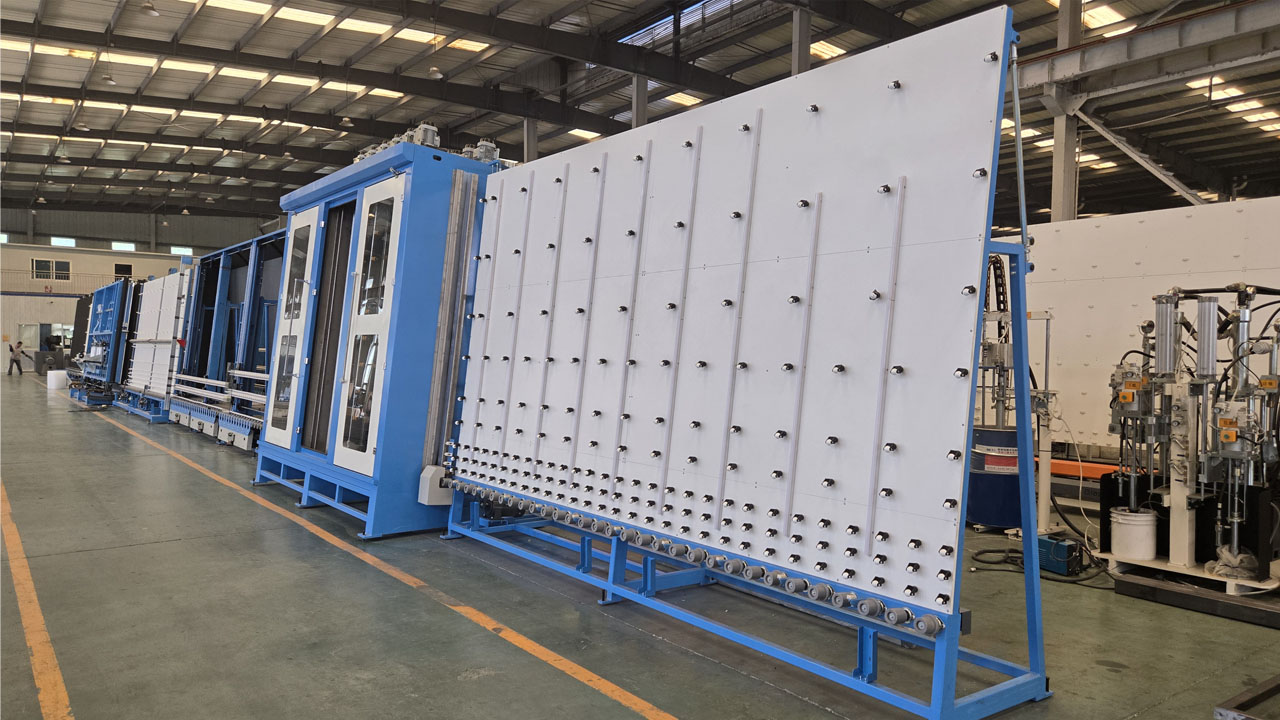
Replacing an entire insulating glass production line is not always the best way to increase factory output.
In many IGU factories, only one or two processes are limiting production. The glass washer may still work well, while spacer preparation is too slow. The main line may have enough capacity, but manual sealing creates a queue of finished units. In other cases, frequent mixed-size orders make manual measurement and handling increasingly inefficient.
Before investing in a completely new line, manufacturers should first identify where production time, labor and material are actually being lost.
Here are the main signs that an existing IGU production line may need an upgrade.
1. Production Stops Even When the Main Line Is Available
One of the clearest signs of an unbalanced factory is frequent waiting.
The main production line may stop because:
Spacer frames are not ready
Glass is waiting for washing
Operators are positioning frames manually
Argon filling takes too long
Finished IGUs are waiting for sealing
Heavy glass cannot be unloaded quickly enough
In this situation, buying a faster main line may not solve the real problem.
The first step should be to record where glass waits during a normal shift.
If the same workstation repeatedly creates a queue, that process is more likely to be the true production bottleneck.
2. Too Many Operators Are Needed Between Machines
Older IGU factories often use separate machines with manual handling between each process.
Workers may need to:
Move glass manually
Measure spacer bars
Prepare spacer frames
Position frames on glass
Fill argon offline
Rotate finished units
Apply secondary sealant manually
Each individual operation may seem simple, but together they create significant labor requirements.
More manual transfer also means more opportunities for:
Glass scratches
Wrong order sequencing
Incorrect spacer matching
Breakage
Production delays
An equipment upgrade should therefore be evaluated by how much manual intervention it removes, not only by machine speed.
3. Mixed-Size Orders Are Slowing Production
A factory producing the same glass dimensions repeatedly can operate very differently from a factory processing hundreds of customized window sizes.
Mixed-size production increases the need for:
Fast size recognition
Accurate spacer preparation
Correct order sequencing
Automatic positioning
Flexible machine adjustment
If operators frequently stop production to measure, adjust or search for the correct spacer frame, the problem may be production flexibility rather than maximum line speed.
For this type of factory, upgrading automatic measurement, spacer preparation or positioning can sometimes provide more value than simply increasing conveying speed.
4. Spacer Preparation Cannot Follow the Main Line
Spacer preparation is a common hidden bottleneck.
Manual spacer production requires measuring, cutting, bending or connecting frames before glass assembly.
As order variety increases, this process becomes harder to coordinate.
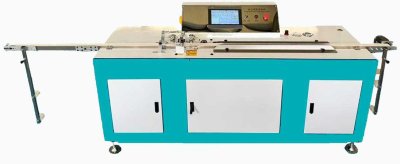
An automatic aluminum spacer bending machine can help factories process different frame dimensions with less manual measurement and more consistent geometry.
For factories considering this upgrade, important information includes:
Spacer width
Spacer thickness
Typical frame dimensions
Number of different sizes per shift
Required daily frame quantity
Double- or triple-glazing production
The machine should be selected according to the real order structure rather than only maximum production speed.
5. Manual Sealing Is Creating a Finished-Glass Queue
A factory can have an efficient washing, assembly and pressing line and still have poor daily output if secondary sealing cannot keep up.
Warning signs include:
Finished IGUs waiting beside the sealing station
Too many workers required for sealing
Different sealant quality between operators
Excess sealant consumption
Rework at corners
Large glass taking too long to process
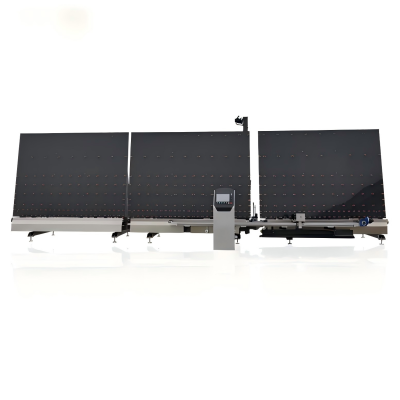
In this situation, an insulating glass sealing robot may be a more effective upgrade than replacing the complete production line.
Automatic sealing can improve process consistency, but the existing sealant supply system, glass dimensions and production flow should be evaluated together.
6. Argon Filling Requires Too Much Manual Handling
Manual or offline gas filling may be suitable for lower production volumes.
As output increases, however, moving finished units to a separate gas-filling station can add:
Extra handling
Additional operators
Longer production cycles
More work-in-progress glass
Increased floor-space requirements
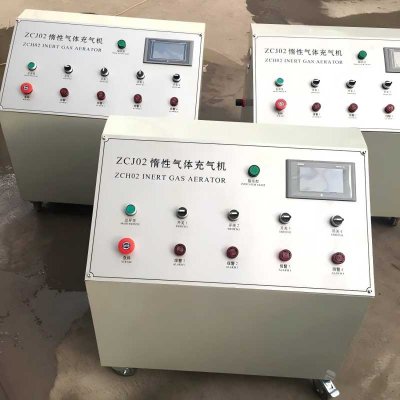
For suitable production conditions, integrating pressing and argon filling into the production flow can reduce unnecessary handling.
The correct solution depends on:
IGU dimensions
Cavity width
Double or triple glazing
Target production volume
Required gas-filling process
Upgrading gas filling should therefore be based on actual product specifications.
7. Large and Heavy Glass Is Increasing
Production requirements often change after a factory has operated for several years.
Customers may begin ordering:
Larger architectural IGUs
Laminated insulating glass
Triple glazing
Thicker glass
Heavier finished units
Equipment originally selected for smaller residential glass may then become difficult to operate efficiently.
The factory should review:
Maximum glass dimensions
Maximum glass weight
Conveying stability
Pressing capability
Glass handling
Finished-unit unloading
Sometimes the production line itself still has sufficient capacity, while the real upgrade requirement is better loading, unloading or handling equipment.
8. Quality Problems Increase as Output Increases
A production process that works at low volume may become unstable when operators are asked to produce faster.
Typical problems include:
Inconsistent spacer positioning
Incomplete butyl coating
Glass contamination
Unstable gas filling
Uneven secondary sealing
Glass surface damage
If defect rates increase when production increases, the factory should not simply ask operators to work faster.
The process should be evaluated to determine which manual operation is becoming difficult to control.
Automation is most valuable when it improves both capacity and repeatability.
Which Process Should You Upgrade First?
Do not begin with the most expensive machine.
Begin with the process causing the largest measurable loss.
A simple upgrade priority can be:
If spacer preparation delays assembly:
Evaluate automatic spacer bending and desiccant filling.
If glass cleaning quality is unstable:
Evaluate the washing and drying process.
If gas filling requires excessive handling:
Evaluate an integrated gas-filling solution.
If finished IGUs wait for sealing:
Evaluate automatic secondary sealing.
If large glass is difficult to move:
Evaluate loading, unloading and handling equipment.
The objective is to remove the bottleneck that limits the entire factory.
What Information Should Be Collected Before an Upgrade?
Before contacting an equipment supplier, prepare:
Current machine list
Maximum and minimum glass size
Typical daily order list
Daily production output
Double- and triple-glazing ratio
Number of operators
Current bottleneck
Current defect or rework problems
Workshop dimensions
Photos or videos of the production line
A short video showing one complete production cycle can be especially useful.
It allows the equipment supplier to see where operators wait, where glass accumulates and which process requires excessive manual handling.
Upgrade or Replace the Entire Line?
A complete replacement may be reasonable when:
The existing equipment is too old to integrate
Maximum glass size is no longer sufficient
Major mechanical systems are unreliable
Production requirements have changed significantly
The factory needs a much higher automation level
But if the main line remains stable and only one process is limiting production, a targeted upgrade may provide a better return on investment.
The decision should be based on actual production data rather than assuming that newer equipment automatically means higher factory output.
How JINJIYE Supports IGU Factory Upgrades
JINJIYE provides complete insulating glass production lines as well as standalone equipment that can be used for production upgrades.
Depending on the factory requirements, an upgrade may involve:
Automatic spacer bending
Desiccant filling
Butyl coating
Glass washing
Argon gas filling
Automatic secondary sealing
Glass handling
Protective film application
The appropriate solution depends on the existing production process, glass specifications, daily output and workshop conditions.
Request an IGU Factory Upgrade Evaluation
If your existing production line is still running but output, labor or quality has become a problem, replacing the entire factory may not be necessary.
Send JINJIYE:
Your existing equipment list
Typical glass sizes
Daily production target
Current number of workers
Factory layout
Photos or a production video
We can evaluate which production stage should be upgraded first.
GET YOUR IGU UPGRADE SOLUTION
FAQ
Do I need to replace my complete IGU line to increase capacity?
Not necessarily. If one standalone process is causing the bottleneck, upgrading that process may provide a better return than replacing the entire line.
Which IGU machine should be upgraded first?
The machine connected to the largest production loss should normally be evaluated first. This may be spacer preparation, washing, gas filling, sealing or glass handling.
Can new machines work with an existing production line?
It depends on the current equipment, production direction, dimensions, control method and workflow. The existing line should be evaluated before selecting new equipment.
What should I send for an upgrade proposal?
A machine list, factory layout, typical glass sizes, required output and a video of the current production process provide useful information for evaluation.