English
 Español
 Português
 Русский
 Deutsch
 Francés
 العربية
 한국어
한국어
 Türk
Türk
 日本語
日本語

Rotary Glue Coating Table for Insulating Glass Edge Sealing
Rotary Glue Coating Table: A Simple but Useful Machine for Insulating Glass Sealing
In insulating glass production, not every machine needs to be complicated. Some equipment is used every day in the workshop simply because it makes one step easier and more stable. The rotary glue coating table is one of these practical machines.
For many glass factories, the edge sealing process is still done manually or semi-manually, especially when producing different sizes of insulating glass units. Workers need to hold the sealant gun, control the glass position, and make sure the sealant is applied evenly around the edge. If the glass panel is large or heavy, this job becomes slower and less comfortable.
A rotary glue coating table helps solve this problem. It supports the glass during sealing and allows the operator to rotate the glass smoothly. With the help of foot pedal control, the worker can turn the glass without moving around the table again and again. This makes the sealing process easier to control and more suitable for daily production.
What Is a Rotary Glue Coating Table Used For?
A rotary glue coating table is mainly used for insulating glass edge sealing. After the insulating glass unit is assembled and pressed, the edge needs to be sealed with sealant. The table gives the glass a stable support surface, while the rotary function allows the operator to seal different sides more conveniently.
It is often used together with a manual sealant gun, two-component sealant machine, or other IG glass sealing equipment. In a small or medium glass processing workshop, it can be placed near the production line as an auxiliary workstation.
The machine is suitable for:
Insulating glass production
Window and door glass sealing
Glass processing factories
Manual sealing workstations
Curved or special-shaped glass handling
Different glass sizes used in daily production
For factories that do not need a fully automatic sealing line, this rotary coating table can be a more flexible and economical choice.
360-Degree Rotation Makes Sealing Easier
One of the main features of the rotary sealant coating table is its 360-degree rotation. When the glass is placed on the table, the operator can rotate it while applying sealant along the edge.
This sounds simple, but it is very useful in real production. Without a rotary table, workers often need to walk around the glass or change their body position many times. This can affect the speed and the consistency of the sealant line.
With smooth rotation, the operator can stay in a more comfortable position. The glass turns instead of the worker constantly moving. This helps improve the working rhythm, especially when sealing many pieces of glass in one day.
For insulating glass manufacturers, stable operation is more important than a complicated function. A smooth rotary table can help workers finish the edge sealing step in a cleaner and more controlled way.
Foot Pedal Control for Hands-Free Operation
The rotary glue coating table is equipped with foot pedal control. During operation, the worker can use the pedal to control rotation or related working actions. This allows both hands to remain free for holding the sealant gun and adjusting the glass position.
This design is very practical for workshop use. The operator does not need to stop frequently to press buttons by hand. When the pedal is pressed, the glass can rotate. When released, the rotation stops. The process is easy to understand and does not require complicated training.
For factories with different workers operating the same machine, simple control is an advantage. It reduces the learning time and makes the machine easier to use in daily production.
Stable Support for Different Glass Sizes
Glass sealing work requires a steady support surface. If the glass is not stable during sealing, the operator may find it difficult to apply sealant evenly. The rotary coating table is designed to provide support during manual sealing, helping the glass stay in position while rotating.
It can be used for different glass sizes commonly found in window, door, and building glass production. The machine can also assist when working with curved glass or irregular glass shapes, depending on the actual production requirements.
For many glass factories, orders are not always the same. One day they may produce standard window glass, and the next day they may handle custom architectural glass. A flexible rotary table is useful in this kind of mixed production environment.
Practical Structure for Workshop Use
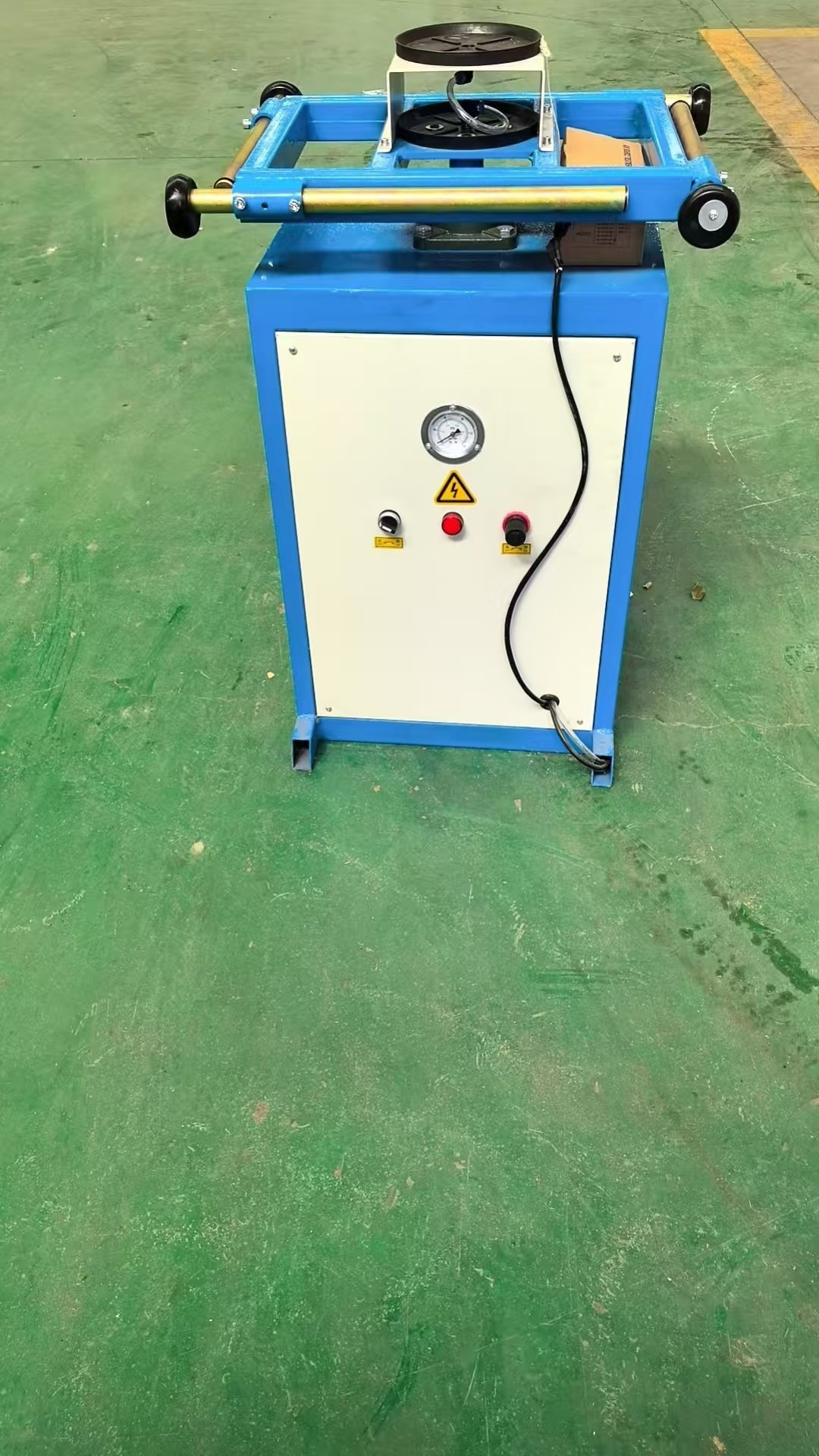
This machine has a compact structure and does not take up too much space. It can be placed near an insulating glass production line, beside a sealing area, or in a small manual processing section.
The main structure includes a rotary table, guide rollers, control switches, pressure gauge, cabinet body, base structure, and foot pedals. These parts are arranged for simple operation and stable daily use.
The cabinet-style body makes the machine look clean and practical. The base provides support during operation. The pressure gauge allows the operator to check working status more easily. The guide rollers help with glass movement and positioning. These details are not complicated, but they are useful for real workshop conditions.
Technical Parameters
Model: JJY-XZT01
External Dimensions: 650 × 570 × 960 mm
Voltage: 380V / 50Hz
Power: 0.55 kW
Air Pressure: 0.3–0.5 MPa
Rotation Angle: 360°
Load Capacity: 200 kg
These specifications make the rotary glue coating table suitable for common insulating glass sealing work. It is not designed to replace large automatic sealing equipment, but it works well as a support machine for manual or semi-automatic production.
Why This Machine Matters in IG Glass Production
In an insulating glass factory, production efficiency does not only depend on large machines. Small auxiliary equipment can also make a difference. If the sealing step is slow or uncomfortable, the whole production flow may be affected.
A rotary coating table helps workers handle the glass more smoothly. It reduces unnecessary movement, supports different glass sizes, and improves the convenience of manual sealing work.
For factories that produce IG units every day, this can help create a more organized sealing process. The operator can focus more on the sealant line and less on moving around the glass. Over time, this improves both work comfort and production efficiency.
Suitable for Glass Processing Workshops
The rotary glue coating table is a good choice for glass factories that need a simple and reliable support machine for insulating glass edge sealing. It is especially useful for workshops that produce different glass sizes or still rely on manual sealing for certain orders.
It can be used in:
Small insulating glass factories
Window and door glass workshops
Architectural glass processing plants
Manual sealing stations
Customized glass production areas
The machine is easy to place, easy to operate, and practical for daily use. For many customers, these points are more important than adding too many unnecessary functions.
Conclusion
The rotary glue coating table is a practical auxiliary machine for insulating glass sealing. With 360-degree rotation, foot pedal control, stable support, and compact structure, it helps workers complete edge sealing more easily and efficiently.
For glass factories looking for a simple support machine for manual IG glass sealing, this equipment can be a useful addition to the production area. It is suitable for different glass sizes, window and door glass, architectural glass, and daily workshop sealing work.
If you need more information about the rotary glue coating table, technical specifications, product photos, or quotation details, you can contact us with your glass size and production requirements.