English
 Español
 Português
 Русский
 Deutsch
 Francés
 العربية
 한국어
한국어
 Türk
Türk
 日本語
日本語

Argon Filling for Triple Glazing: Check What Each Cavity Contains
A triple-glazed sample can leave the trial with a gas percentage written beside its number and a tick in the pass column. But beside the percentage, there's no note saying which gas space was tested.
It could describe one cavity or a result covering both. Whoever reviews the sheet later will have to go back to the original test record to find out.
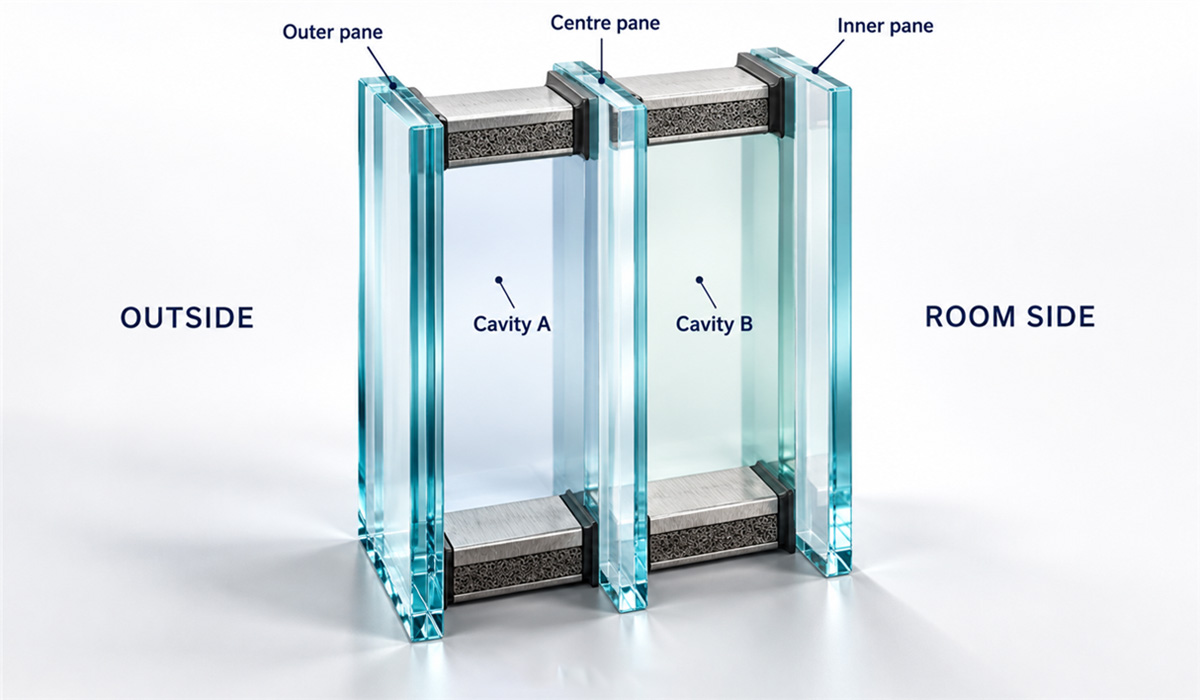
Three panes leave two separate gas spaces. A satisfactory result for the first doesn't establish what's in the second. If you're adding argon filling for triple glazing, this belongs in the equipment discussion before the trial samples are made.
Put Both Cavities on the Drawing
The filling equipment supplier needs the complete glass build-up. Total unit thickness leaves too much out: three pane thicknesses, two cavity widths and any laminated construction all sit inside that one measurement.
A sketch helps. It only needs to show the three panes, the spaces between them and where the coatings sit. Mark the outside and room sides, then give each cavity a label—A and B will do.
Keep that sketch with the sample's test record. When the tester is positioned against the glass, note which face it's on. Later, you'll need to relate the instrument's cavity numbers to A and B on your drawing; don't assume the labels follow the same order.
The two gaps may also have different widths. They need to appear in the filling setup and the measurement information used for that construction. Writing only “triple glazing” on the job sheet doesn't tell either supplier enough.
Read the Labels Beside the Percentages
A screen with several gas percentages can look more conclusive than it is. The useful question is how each value was obtained.
For example, Sparklike's Laser Portable result guide explains that the instrument measures the combined result for both cavities and the first cavity, then calculates the second cavity's result using those measurements and the cavity thicknesses. Its guidance treats the second-cavity result as indicative, complementing the other results.
That is one instrument's method. Another tester may work differently, so use the instructions for the actual model brought to the trial.
A combined result can't tell you on its own how evenly the two cavities were filled. Nor should a calculated result be written up as a separate direct measurement. A form carried over from double-glazing production may have room for just one percentage. For triple glazing, give each reported value its own labelled field, including whether it was measured or calculated.
Save the instrument's result file with the sample record. A clear photo of the full results screen is useful too, provided it can be traced to that unit. Copying a number by hand can leave out the label beside it—the part you'll need when reviewing the test later.
The Test Method Has to Suit the Glass
A tester used for your double-glazed orders may not cover the triple-glazed construction you're about to make. Its suitability needs checking against the panes, coatings and cavities on that drawing.
For optical measurement, coating position matters as well as coating type. Sparklike's technical explanation of laser measurement describes how the glass structure affects the returning signal. A reading through clear glass still leaves a question about the coated units on your order list.
Perhaps the sample available for the demonstration is clear glass throughout. Your order drawing, though, specifies Low-E coatings and a laminated outer pane. The person bringing the tester needs to know that before arriving. Send over the drawing with the glass specifications. They can then establish whether their instrument will cover the job and arrange another agreed method if it won't.
The gas target and the way results will be accepted also need settling beforehand. Put the job's gas requirement beside the proposed test method. If the supplier quotes a fill percentage, have them explain exactly what it describes. Does it apply to each cavity? Is it a combined result? What glass and test conditions were used to obtain it? Those details belong with the figure.
You may still be deciding whether to fill in the press or use a separate station. Our online and offline argon-filling comparison goes into that choice. For the trial, ask the supplier to set aside a triple-glazed unit from the run for testing. You'll want to see the gas results for the glass you've just watched being filled.
Keep the Filling Run and the Test Together
During the demonstration, give each sample an identity that stays with it through filling and testing. The selected filling program, glass build-up and test result should all lead back to that same unit.
Timing matters here too. A unit taken straight from the filling process may give readings that vary while the gas is still moving and settling. Sparklike discusses this in its guidance for inline measurement, including how readings are used to follow the filling process over time. That doesn't supply a universal waiting time for every tester. Agree on the measurement stage and procedure for the equipment being used, and record them with the result.
If a reading needs investigating, keep it. Record the repeat result beside it, along with anything that changed. A report containing only the best reading won't explain why the sample had to be tested again.
When discussing a JINJIYE gas-filled IGU production line, work through one of your triple-glazing jobs with the supplier. How will that unit be assembled and both cavities filled? Then settle who brings the tester, who carries out the checks and what results you'll receive. Any equipment or testing service you're paying for should appear in the quotation.
Before the trial ends, pick one finished unit and go through its report with the person who tested it. You should be able to match the glass to the drawing, identify both cavities and understand what each result means. If any of that needs explaining, sort it out while the sample and the people involved are still there.