English
 Español
 Português
 Русский
 Deutsch
 Francés
 العربية
 한국어
한국어
 Türk
Türk
 日本語
日本語

A Fast CNC Glass Cutting Machine Can Still Waste Glass
A cutting plan can look packed to the rafters and still leave you short. One pane breaks during breakout. The offcut gets chucked on a rack with no label. Two days later an urgent remake lands, nobody can find the right remnant, and someone opens a fresh sheet.
Been there? Then you already know the cutting head isn’t the whole story.
Your CNC might be running perfectly. The savings just leak away between the nest and the next step.
If you’re cutting annealed float glass and waste is still high after buying a CNC glass cutting machine, start there. What happens after scoring? What happens to the pieces after that?
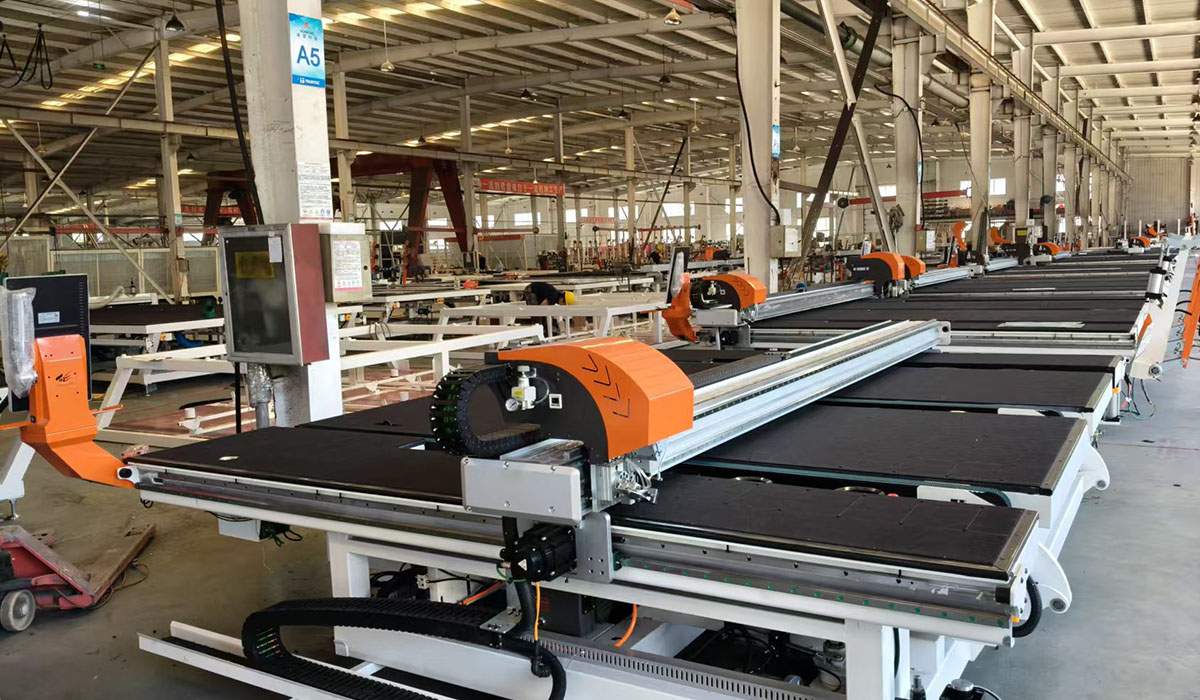
Check the Breakout Before Judging the Cutting Layout
When you watch a demo, don’t walk away once the head finishes. Stay until the sheet is broken out and the pieces are on racks. That’s where a layout meets the real shop.
Ask the operator to talk you through the breakout sequence. Which cuts open first? Which strips have to come off before anything else? Is there a piece that’s awkward to support or lift with the gear you’ve got?
A tight nest deserves a closer look if it keeps making ugly separations. Edge trim, piece sizes, breakout order — they all have to suit the glass and the equipment. There’s no magic minimum strip width you can copy from some article online.
Keep a bad layout. Then run a revised one with the same glass. Watch both all the way through. If one version means more repositioning or more broken pieces, count that too.
Also, don’t mix up cutting faults with planning faults. A chipped edge doesn’t automatically mean the nest is wrong. Check the scoring setup, wheel condition, support and handling under the supplier’s procedure. Otherwise you’ll spend an afternoon rewriting layouts around a machine problem.
The number on the optimiser screen is only part of it. The panes that make it to the next process are what you can actually sell.
Keep Glass Offcuts Identifiable and Ready to Reuse
“We’ll use that later” is easy to say. It gets expensive when the piece sits on a rack for weeks.
A usable remnant needs an identity:
Glass type
Thickness
Size
Condition
Where it lives
For coated or patterned glass, add whatever’s needed to keep orientation and handling right.
The next person should be able to grab it without playing detective.
That’s the practical idea behind residual-stock management: tie a leftover sheet to a known rack spot and make it available to later cutting plans. But the system only works if the record matches the glass that’s actually sitting there.
For a small shop, start with labels and a controlled inventory. If the software handles remnants, test it. How do you enter sizes? How do jobs pick them? How does stock update after use? Don’t assume “optimisation software included” means all of that is in the box.
And know when to stop keeping stuff. A damaged piece, or one that’s hard to handle and unlikely to fit another job, eats rack space and time. Set a retention rule based on your real orders and handling costs. Then stick to it.
Match Cutting Plans to the Next Production Step
A layout can mix panes from several orders to use the sheet well. Fine. But those panes still have to get where they’re going.
Say one job is needed at the IGU line this morning. Another goes to edging tomorrow. Combining them might save glass. It can also create a sorting mess if the unloading racks and labels don’t match the plan. Check that before you cut.
Production sequence, rush orders and remakes are normal inputs in cutting optimisation systems. What matters is how the software you pick handles those inputs with your machines and your operators.
Ask for a demo of an ordinary interruption. Add an urgent pane. Mark a piece as broken. Show how the replacement enters the cutting queue and how the operator spots it.
That tells you more than watching the same easy layout run twice.
If cut panes feed an insulating glass production line, check whether the matching glass combinations reach assembly together. A rack full of cut glass doesn’t help much when the other pane for the next unit is missing.
Test a CNC Glass Cutting Machine With Your Real Orders
When you compare a glass cutting machine, bring a real order list. Include the sizes that cause trouble, the thicknesses you run most, and the small jobs that keep interrupting normal production.
Ask for a run that follows those jobs from loading through scoring, breakout and identification. Compare planned material use with the pieces accepted at the end. Look at the remnants. Do they have a realistic route back into production?
Then check the quote against what you saw. Optimisation, labelling, remnant handling and loading arrangements vary by model and option. Confirm every function you need in the proposed configuration.
The wider industry is talking about this same link between cutting and material recovery. The glasstec organiser’s coverage of resource-efficient processing includes returning offcuts to stock for future cutting plans.
For a buyer, the test is simple: can the setup turn your normal sheets into the right usable pieces, in an order the rest of the factory can handle?