English
 Español
 Português
 Русский
 Deutsch
 Francés
 العربية
 한국어
한국어
 Türk
Türk
 日本語
日本語

Online or Offline Argon Filling: Which Setup Fits Your IGU Production Line?
Online or Offline Argon Filling: Which Setup Fits Your IGU Production Line?
Choose online argon filling when gas filling needs to remain inside a coordinated automatic assembly and pressing process. Consider offline filling when adding the function to an existing line, handling lower or irregular volumes, or keeping a separate filling station available. Neither method is automatically better. The correct choice depends on the factory’s product mix, required output, available operators, floor space and quality-control method. Most importantly, the filling system must be matched with a documented way to check the finished IGU. Installing a gas filler alone does not prove that every unit has reached the required result.
What Does Online Argon Filling Mean?
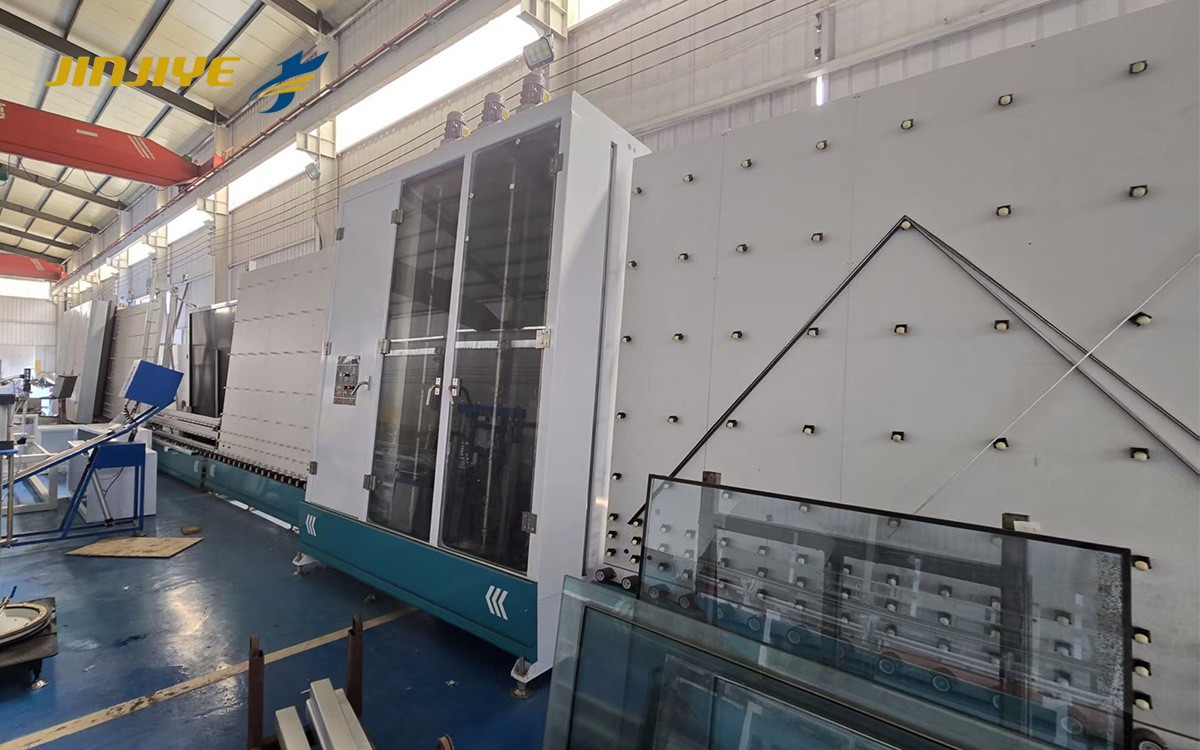
In this article, online filling means that the gas-filling function is integrated into the production line’s assembly or pressing process.
The glass moves from washing and inspection into assembly. Gas filling and pressing are then completed as part of the coordinated machine cycle before the unit continues to the next stage.
This arrangement is worth considering when a factory:
Is installing a new automatic line
Produces repeated batches of gas-filled IGUs
Wants to reduce manual transfer between stations
Has limited operators available for separate filling
Wants the filling step coordinated with assembly and pressing
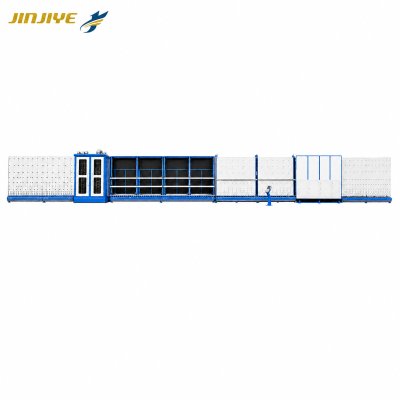
JINJIYE lists several models in its automatic gas-filled IGU production line category. The exact filling process and supported IGU structures must still be confirmed for the selected model.
The Main Trade-Offs of Online Filling
Integration can make the workflow more continuous, but it also connects gas filling to the rhythm of the main line.
If the filling section stops, the interruption may affect assembly and pressing as well. The buyer should therefore compare the complete production cycle rather than looking only at the conveying speed shown in a quotation.
Compatibility also matters. Ask the supplier to demonstrate the actual products the factory plans to make, especially when orders include different dimensions, triple glazing, more than one cavity or unusual constructions.
Do not assume that a line described as “automatic” supports every product without a configuration change.
What Does Offline Argon Filling Mean?
Offline filling uses a separate gas-filling machine outside the main automatic assembly cycle. Depending on the factory’s approved process, an assembled or prepared IGU is transferred to the station and connected to the filling equipment.
A standalone insulating glass argon filling machine may be practical when a factory:
Already owns an IGU line without integrated filling
Produces gas-filled units only for certain orders
Wants to introduce the process without replacing the main line
Needs a separate station for special production or backup
Has enough space and operators for additional handling
The investment may be easier to introduce into an existing workshop, but the workflow needs careful planning.
The Main Trade-Offs of Offline Filling
Every additional movement takes time. Finished or partially completed units may need to wait near the filling station, and operators must keep different orders correctly identified.
If the independent station cannot keep pace with assembly, a queue can develop. That queue occupies floor space and increases the amount of work in progress.
Offline filling may also rely more heavily on the operator following a consistent connection, filling and completion procedure. The machine manual and the factory’s approved process should define these steps.
Quick Comparison for IGU Factories
| Production factor | Online filling | Offline filling |
|---|---|---|
| New automatic production line | Easier to plan as an integrated configuration | Usually requires a separate station |
| Existing line without gas filling | May require a larger line modification | Often easier to evaluate as an addition |
| Repeated gas-filled orders | Supports a more continuous workflow | Requires separate handling capacity |
| Occasional gas-filled orders | Integrated equipment may not always be fully used | Provides production flexibility |
| Operator involvement | Can reduce separate transfer work | Usually requires more handling |
| Filling-station interruption | May affect the main line cycle | Can be isolated from the main line |
| Future expansion | Must match the line’s configuration | Capacity may be added separately |
| Quality verification | Still required | Still required |
This table is a starting point, not a universal buying rule. The actual decision should be based on production data from the factory.
Filling Method Is Not the Same as Filling Quality
Online equipment is not automatically more accurate, and a standalone machine is not automatically less reliable.
Gas-filling quality can be influenced by the IGU construction, filling procedure, equipment condition, connections, process settings and how quickly the unit moves to the required next step. The factory should use the equipment and material supplier’s approved instructions.
Before purchasing, define:
The required gas and target concentration
The products covered by that requirement
The inspection or measurement method
Sampling frequency
Responsibility for recording results
Action required when a unit does not pass
Calibration or verification requirements for measuring equipment
The required value should come from the customer specification, certification program or applicable standard. Avoid copying a general percentage from another website and using it for every market.
FGIA’s insulating-glass certification information lists gas fill as one part of the complete IGU system and identifies recognized methods for evaluating gas concentration. This is an important reminder: filling and verification should be planned together.
Compare Capacity Using Your Real Product Mix
A supplier may demonstrate gas filling with one convenient glass size. That does not show how the system will perform across an entire working shift.
Give the supplier a realistic production list containing:
Minimum, maximum and common IGU dimensions
Pane and finished-unit thicknesses
Percentage of double and triple glazing
Number of cavities that require gas filling
Typical number of units in each order
Frequency of product changeovers
Required output per shift
Existing assembly and sealing equipment
Available operators and workshop space
Ask for a calculation or demonstration based on these products. For an integrated system such as the JINJIYE automatic CNC gas-filling IGU line, confirm which functions are standard and which require a different configuration.
For offline filling, compare the time spent moving, connecting, filling, checking and releasing the units. The standalone machine may be fast enough, but the surrounding manual work can still determine actual output.
Look at the Whole Production Flow
The best filling arrangement should keep the product moving without creating a new bottleneck.
An integrated system may suit a new factory that wants a coordinated line with fewer manual transfers. An independent filler may be a more practical first step for a factory that already owns washing, assembly and pressing equipment.
Some factories may also keep a standalone station for products that do not fit the normal automatic sequence. Whether that is practical depends on the equipment limits and the factory’s approved production method.
The decision should be based on acceptable finished units per shift—not simply on which machine has the more impressive brochure.
Frequently Asked Questions
Does online argon filling always use less gas?
Not necessarily. Gas use depends on the filling design, IGU size and construction, settings, leakage control and operating procedure. Ask for test evidence based on your products.
Can offline filling achieve the required gas concentration?
It can when the equipment, procedure and quality checks meet the factory’s requirements. The location of the machine does not determine the result by itself.
Can one filling system process both double and triple glazing?
It depends on the machine configuration and how each cavity is filled. Send representative product drawings to the supplier and request a test before ordering.
Can an independent argon filler be added to an existing IGU line?
Often it can, but the factory must check the production sequence, sealing method, available space, handling requirements and required capacity.
How should two quotations be compared?
Compare the included equipment, supported IGU structures, realistic output, operator requirements, gas-consumption test method, quality verification, training, spare parts and upgrade options. Do not compare price alone.
Choose the Process Before Choosing the Machine
Begin with the factory’s actual orders. If most units require gas filling and the factory is purchasing a new automatic line, integrated filling may create a cleaner workflow. If gas-filled products represent only part of production or the existing line will remain in service, a standalone unit may offer a more manageable upgrade.
Send JINJIYE your glass dimensions, IGU structures, expected product mix, factory layout and required quality checks. The team can then help you compare an integrated gas-filled IGU production line with a separate filling station based on your production needs.