English
 Español
 Português
 Русский
 Deutsch
 Francés
 العربية
 한국어
한국어
 Türk
Türk
 日本語
日本語

Automatic Glass Loading Machines: Allow for the Rack Change
Watch a demo of an automatic glass loader and you’ll normally see a full rack sitting next to it. Glass is ready. Pickup position set. Floor clear. Under those conditions, it’s easy to see how the machine handles pane after pane.
The next rack? That part usually stays off-camera.
Back in your own plant, getting that rack to the loader might be the loading operator’s job. Could be a shared forklift. Could be a tight aisle. Could be a rack that still needs sorting before it’s allowed near the line. None of this changes how fast the loader picks up glass. It changes how steadily glass reaches the washer.
So if you’re comparing machines for an IGU line, don’t rush the demonstration. Leave time for a rack exchange. The gap between the last pane of one load and the first pane of the next tells you plenty.
Glass Loading Area: Leave Room for Rack Changes
Picture a replacement rack parked beside the loading station, ready to go. Looks handy, right? Now ask a less convenient question: when the current rack is empty, can it actually come out past the full one?
If not, someone has to shift the replacement, pull the empty rack, then bring the replacement back. What looked like a time-saving spot has just created another handling step.
That’s why the loading area should be checked with the racks drawn in—including how they come in and how they leave. Don’t forget the equipment that moves them. A trolley and a forklift won’t take the same line through a tight corner.
You also need a place for a partly used rack. Orders change. The rack leaving the station won’t always be empty. Park it in the first open gap and you may block the next delivery or lose track of the glass still on it.
We cover the wider workshop layout in our factory-layout guide. At the loading end, try a simple exercise: trace one replacement rack from storage to the machine. Then trace the outgoing rack back out. Include doors, columns, and any nearby work areas.
Will Your Existing Glass Racks Fit the Loader?
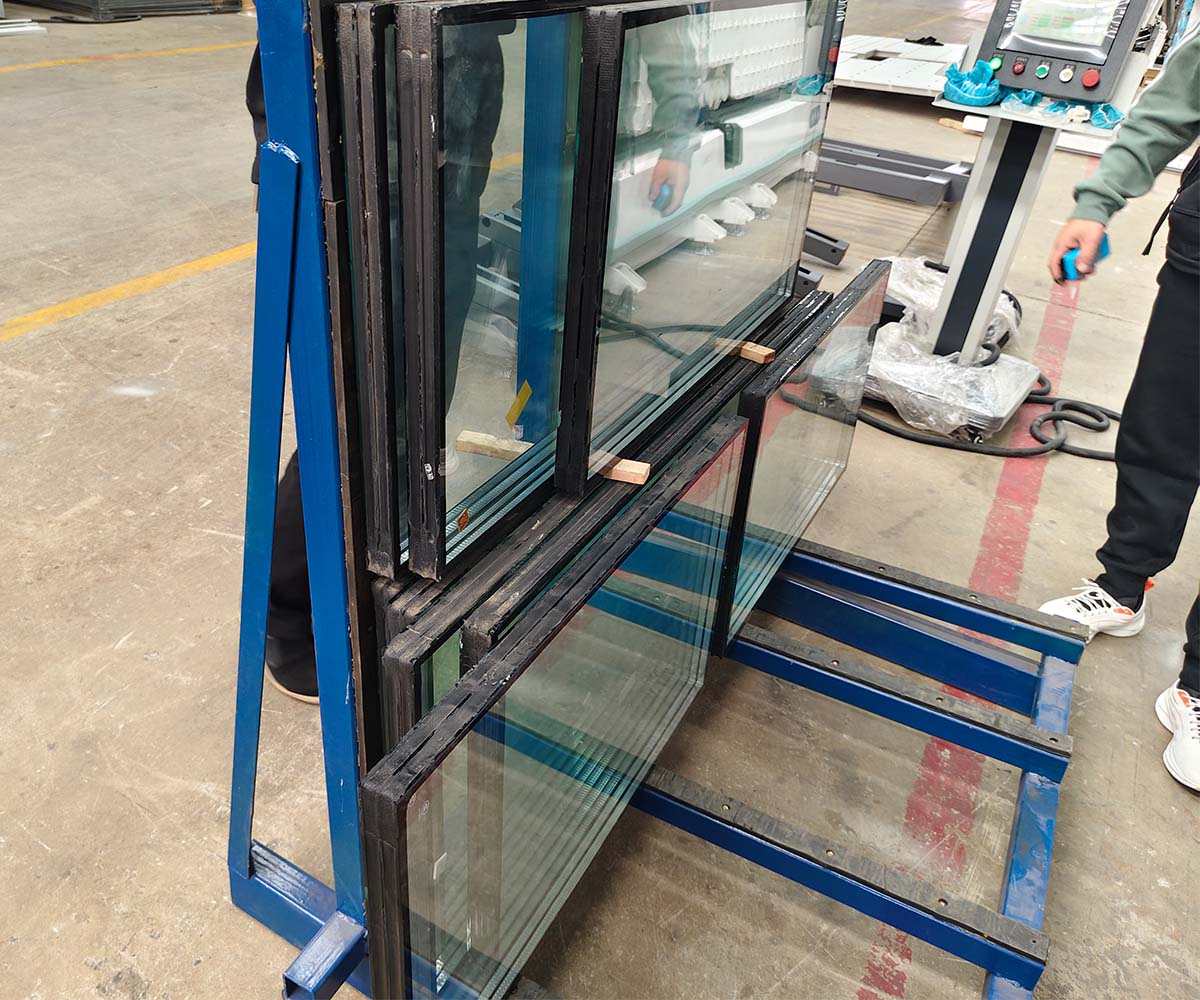
A rack used in a supplier’s demo may hold the same glass size as yours and still feed the loader differently.
The bottom supports might sit at another height. The glass could lean at a different angle. A base that sticks out might limit where the rack can sit relative to the machine. Those things are easy to miss in a straight-on photo.
Send a side view, not just a front view. Add dimensions for the rack and its supports. If you use several rack designs, the supplier needs details for each one you expect the loader to handle.
Settle this early and you can price the whole arrangement properly. Maybe your existing racks will work. Maybe you’ll need locating fixtures or new racks. Either way, those items should be discussed before the machine shows up.
Two loading positions are worth a closer look, too. They may let you reach different glass batches, but that doesn’t mean one can be reloaded while the other is running. The guarding and access have to allow it. During the demo, ask the supplier to walk through the exchange procedure for the exact setup being offered.
Rack Changeover Time and Washer Waiting Time
During a rack exchange, glass already on the line may keep moving through the washer. For a while, the loading stop may not show up downstream at all.
Then the last waiting pane goes through.
If fresh glass arrives before the washer runs out of panes, the exchange may cause no waiting. If it arrives after, production gets a gap. A stopwatch focused only on rack movement won’t catch that difference.
For trial notes, mark two visible events: the last pane leaving the old rack, and the first pane from the replacement reaching the receiving section. Also note any time the next process is ready but has no glass. The exchange should follow the supplier’s normal procedure—access checks, restart steps, and all. Those take time, too.
And who fetched the replacement? In a demo, a helper may have it waiting while the operator finishes the old rack. If your factory plans to hand both jobs to the loading operator, account for that.
This matters even if you’re still comparing a powered loading table with an automatic loader. Our glass loading machine comparison covers those options. Either way, someone still has to bring the next load.
Keep Matching Glass Ready for the Same Order
Take a clear-and-coated double-glazing order. Two sets of panes have to reach the loading section. The clear glass waits beside the loader. The matching coated panes sit on another rack farther down the shop.
Bringing the clear rack closer hasn’t prepared the whole batch.
On paper, those panes belong together. In the trial, start with them on the racks you’d normally use. The operator may need to sort before loading, or the machine may be able to pull each glass type from a separate position. Ask the supplier to show how a few complete units are supplied. Any sorting done before the demo still has to be done by someone in your factory. Coating orientation is part of that prep.
A partly used rack may not come back until the next shift. Its label has to tell that operator what’s left: quantity, glass specification, and any panes reserved for another job. An old count can leave the next batch short even when the paperwork says the glass is there.
Bring the job sheet your operator actually uses. A mixed batch shows the work between pickups—reading the next entry, finding its rack, checking the glass. If those steps will be manual in your plant, put them in the trial. If the demo relies on automatic identification, ask whether you’re being quoted for that system or for a machine where the operator makes the selection.
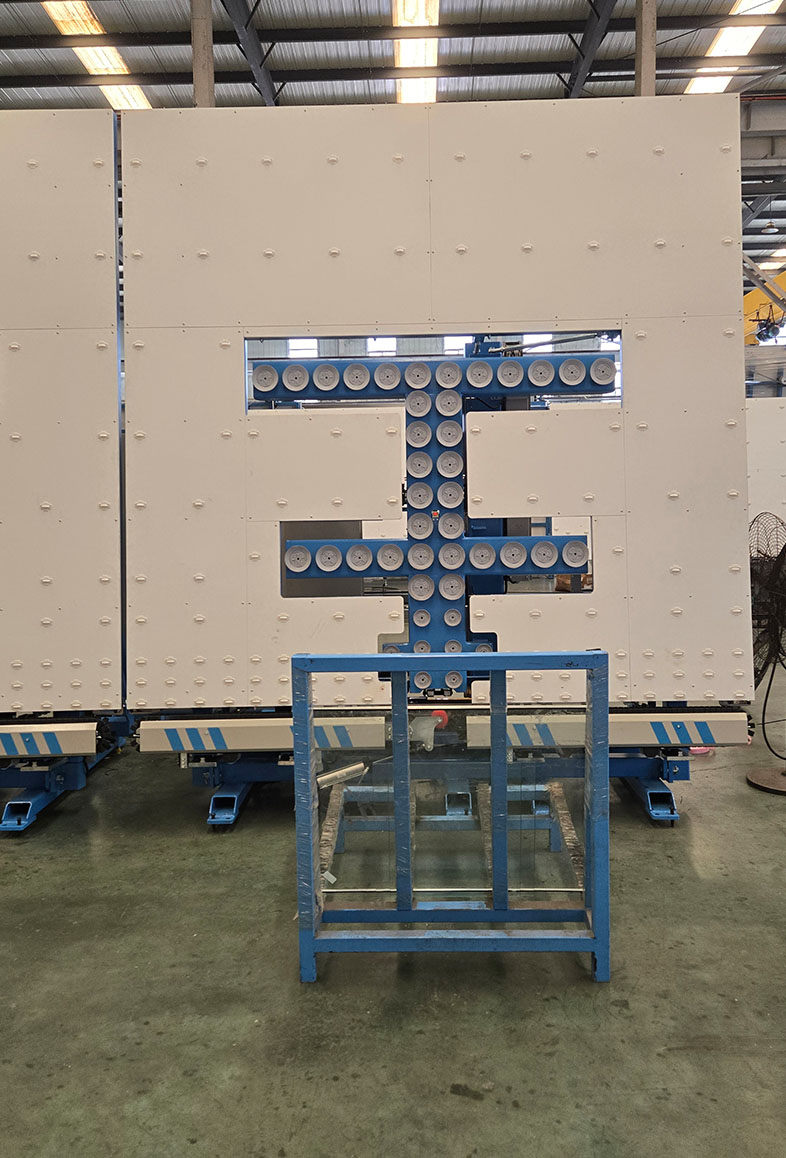
What Comes with the Glass Loading Station?
When you ask JINJIYE about glass loading and unloading equipment, send them a photo of the entire loading bay. Include the glass sizes and weights with the photo. And don't crop out the columns and workstations—the supplier needs to see how a rack will actually get to the machine. Explain who brings the glass, too. If the operator also unloads finished units, they have to leave that work to fetch a rack. Those trips belong in any discussion about how many people the setup needs.
Keep your rack details right next to the quotation as you compare. That way, you can quickly check which of your current racks will work, whether locating fixtures are included, and how many loading positions are covered by the price. Rack recognition and production-software connections may be extras. Seeing them work on the demo machine doesn’t prove they’re included in yours.
Maybe the next load is sitting ready in storage, but no one goes to get it until the loader stops. In that case, the delivery delay is the first thing to sort out. Asking for the rack earlier can help, sure—but whoever is moving it still needs time to get there. And if the operator ends up swapping partly used racks back and forth during a single order, take a step back. Check which panes are actually needed next and where they’re kept. Preparing the batch differently might cut those moves. If it doesn’t, you have a real reason to talk with the supplier about another loading position.
Keep watching after the replacement rack reaches the machine. Watch the operator complete the restart and feed the first few panes of the next batch. That’s the part of the visit that shows how the proposed equipment handles a change you’ll be making all week.