English
 Español
 Português
 Русский
 Deutsch
 Francés
 العربية
 한국어
한국어
 Türk
Türk
 日本語
日本語

Glass Loading Machine for IGU Production: Automatic Loader or Loading Table?
The loading section is the first place where a glass factory decides how much manual work will enter the production process.
If the operator has to lift every pane, search for the correct rack position and move the glass by hand, the rest of the line may wait. When the glass is large or heavy, repeated manual handling can also increase the risk of edge damage and uneven transfer.
This is why many factories compare an automatic glass loading machine with a traditional loading table before upgrading their IGU production line. The right choice depends on the glass range, order mix, available labor and the way the loading station connects with the next machine.
Start With the Loading Job
Before comparing machine names, describe the actual loading job in your factory.
Prepare the following information:
Minimum and maximum glass size
Glass thickness and weight range
Daily glass quantity
Percentage of Low-E glass
Position of the existing glass racks
Distance between storage and production
Required loading direction
Whether the station must connect with cutting, washing or IGU equipment
A factory processing a few different sizes each day may value flexibility. Another factory producing hundreds of repeated panels may benefit more from automatic handling and a connected workflow.
Automatic Loader or Loading Table?
| Item | Automatic Glass Loading Machine | Glass Loading Table |
|---|---|---|
| Best suited to | Repeated production and heavier glass | Mixed orders and flexible manual work |
| Labor requirement | Lower after setup | Higher during loading |
| Changeover | Program or position adjustment | Usually quick manual adjustment |
| Line connection | Suitable for linked production lines | Often works as an independent station |
| Space requirement | Requires planned rack and transfer space | Usually simpler to install |
| Investment level | Higher initial investment | More accessible for smaller factories |
| Main advantage | Stable handling and reduced manual lifting | Flexibility for changing orders |
Neither option is automatically better for every factory. The production pattern matters more than the machine label.
When an Automatic Loader Makes Sense
An automatic glass loader becomes more useful when the factory handles large quantities, large glass sizes or repeated orders.
It can help when:
One operator spends much of the shift lifting glass
Heavy panes must be moved from racks to the line
The washing or cutting section waits for loading
Glass sizes follow a limited number of regular programs
The factory wants to reduce manual contact with Low-E surfaces
The loading station will be connected to other automatic equipment
JINJIYE provides several types of glass loading and unloading equipment, including vertical and horizontal configurations.
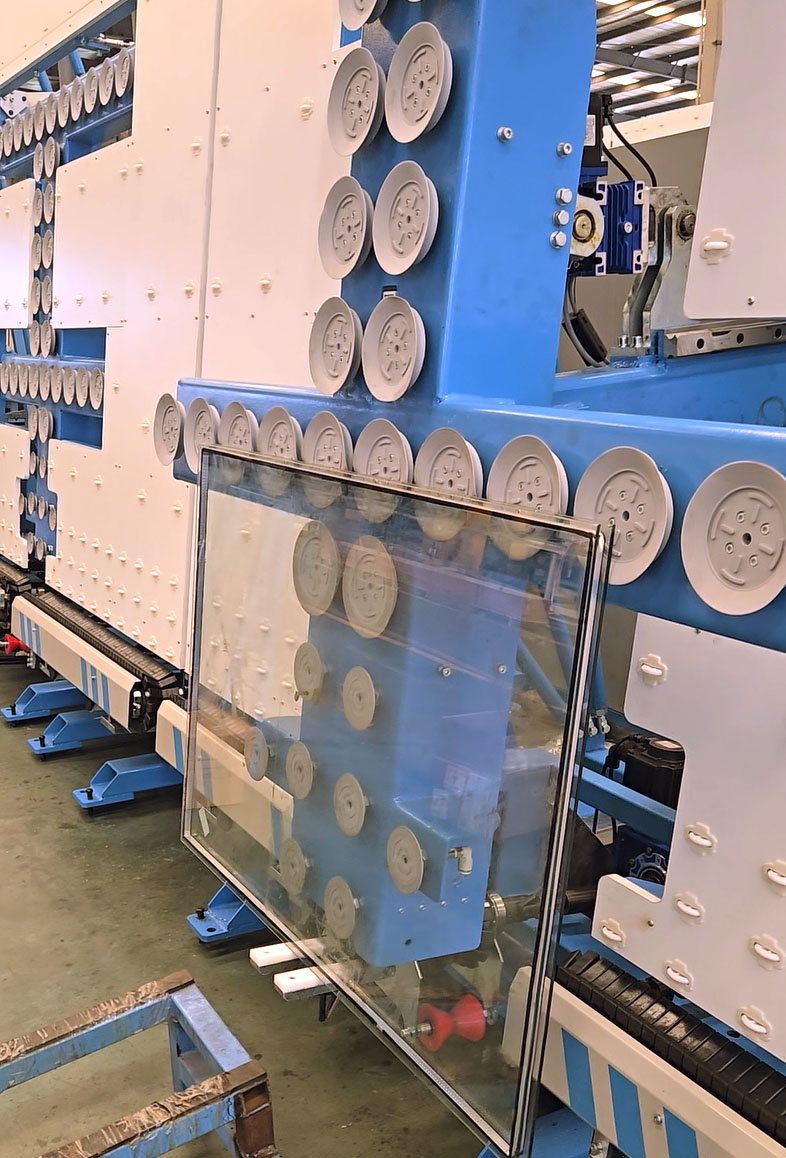
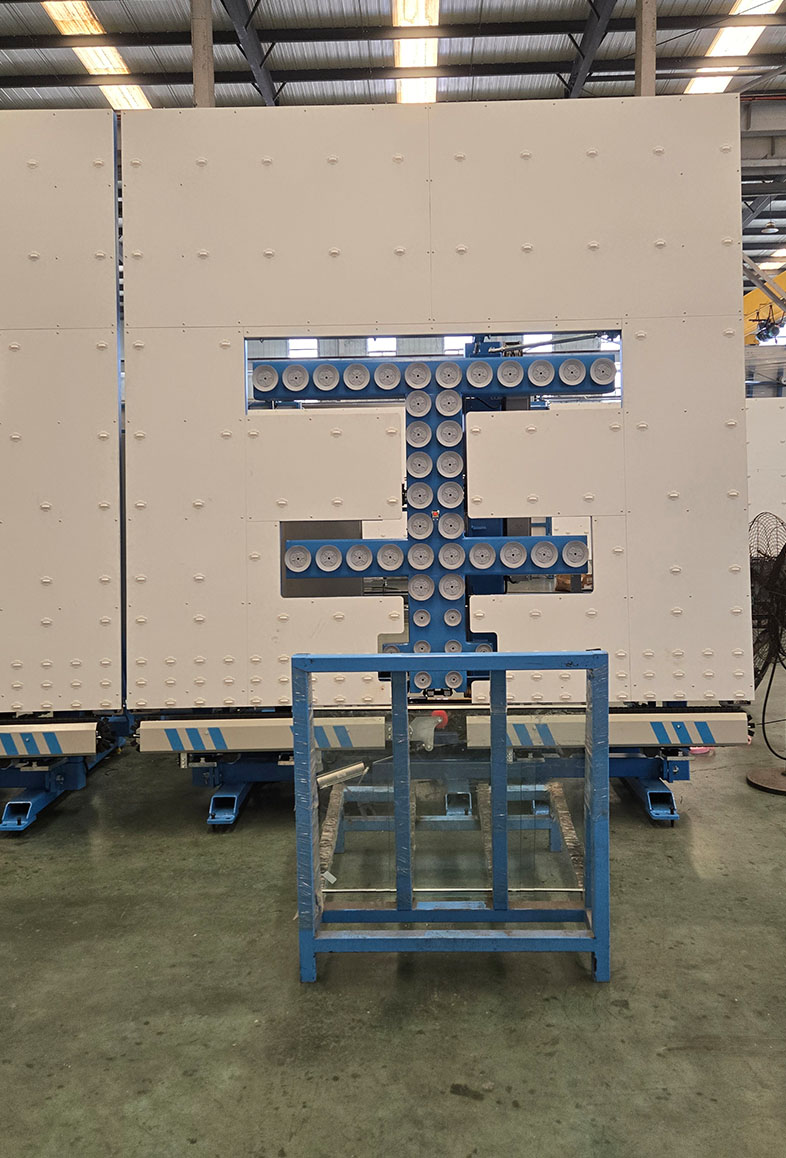
For factories using vertical racks or a vertical IGU process, an automatic vertical glass loading machine may provide a more direct transfer route. The suitable model still depends on the actual pane dimensions, thickness and rack position.
When a Loading Table Is More Practical
A loading table can be a practical choice when orders change often and the factory does not need a fully connected automatic process.
It may suit a factory that:
Produces many small batches
Handles unusual or changing glass sizes
Needs a simple solution for manual cutting and breaking
Has limited production space
Is upgrading one station at a time
Wants the operator to control each piece directly
A tilting table can help the operator move glass from a vertical rack to a horizontal working surface. The double-sided tilting glass loading table is one example of a configuration used for different glass sizes and loading conditions.
The table should still be evaluated for lifting weight, working height, air supply, rack access and operator safety. A simple machine can create difficulties if the glass rack is too far away or the working height does not match the operator’s position.
Technical Points Buyers Often Miss
Glass Size and Weight
The largest glass size is only one part of the specification. The supplier also needs the smallest regular size, the common production size and the weight of the thickest pane.
A loader designed around one large sample may be inconvenient when the factory changes to narrow or smaller pieces. Ask how the machine supports the complete working range.
Suction and Glass Surface
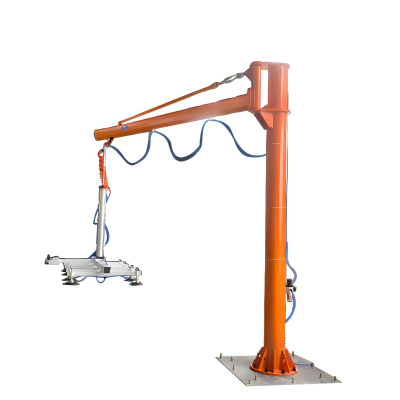
Vacuum cups, lifting arms and support points must match the glass surface and weight. Low-E glass, laminated glass and coated surfaces may require different handling precautions.
Ask the supplier to test representative glass instead of relying only on a standard clear-glass sample.
Transfer Direction
The loading direction should match the next process. A vertical loader may be suitable for a vertical washing or IGU line, while a horizontal loader may work better with a horizontal cutting or washing system.
JINJIYE also provides horizontal automatic glass loading equipment for factories that need horizontal transfer.
Line Speed
The loader should keep pace with the next machine without forcing the operator to rush. A high theoretical speed has little value if the glass rack cannot be replenished or the following washer cannot accept the panes at the same rate.
Check the complete cycle:
Pick up the glass
Move it to the transfer position
Release it safely
Return to the next pane
Prepare for the following cycle
The slowest repeated step determines the useful loading capacity.
Utilities and Maintenance
Confirm the required voltage, compressed air, vacuum system and floor conditions before ordering. Ask about suction cup replacement, filter cleaning, sensor adjustment and emergency-stop operation.
The maintenance team should know which parts are consumed regularly and which parts require supplier support.
How to Test a Glass Loading Machine
A short demonstration with one easy glass size does not show enough.
Before placing an order, test at least:
A small regular pane
The most common production size
A large or heavy pane
Low-E glass, if used in daily production
A size that requires a position or program change
Watch the glass from rack pickup to release. Look for sudden movement, suction loss, edge contact, vibration or unnecessary manual correction.
Record the complete cycle time and the number of operator actions. Also check whether the glass arrives at the next station in the correct direction and position.
Plan the Loading Area With the Complete Line
The loader should be planned together with the glass rack, operator walkway, washing machine and production line.
Leave enough space for:
Loading the rack
Replacing suction cups
Inspecting the glass
Moving rejected panes
Cleaning the floor
Accessing the control cabinet
Handling an emergency stop
For a complete IGU project, the loading station should match the rest of the automatic insulating glass production equipment. The supplier should review the glass flow before confirming the final position.
Final Thoughts
The choice between an automatic glass loading machine and a loading table should follow the factory’s real production pattern.
Automatic loading is useful when the factory needs stable handling, lower manual lifting and a connected process. A loading table remains practical when order sizes change often and the operator needs direct control over each pane.
Before ordering, send the supplier the actual glass dimensions, thickness range, rack layout, daily output and downstream equipment. Test representative glass and judge the complete transfer process rather than looking only at the machine’s maximum speed.
Frequently Asked Questions
Is an automatic glass loading machine suitable for small factories?
It can be suitable when the factory handles heavy glass, repeated orders or frequent manual-lifting problems. A small factory with highly varied orders may prefer a loading table or a gradual upgrade.
Can the same loader handle Low-E glass?
Many machines can be configured for Low-E glass, but the suction cups, support points and transfer method must be checked against the actual glass specification.
What is the difference between a loading table and an automatic glass loader?
A loading table normally gives the operator more direct control and flexibility. An automatic loader reduces manual handling and can connect with other machines in a continuous production process.
What information should be sent before requesting a quotation?
Provide the glass size range, thickness, weight, Low-E percentage, daily output, rack position, required loading direction, available utilities and the machines connected after the loading station.
Should the loader be tested with the buyer’s own glass?
Yes. Testing the buyer’s regular and difficult glass sizes gives a more realistic result than testing only a standard sample.