English
 Español
 Português
 Русский
 Deutsch
 Francés
 العربية
 한국어
한국어
 Türk
Türk
 日本語
日本語

Why Does Glass Feed Sideways in a Horizontal Glass Washer?
Why Does Glass Feed Sideways in a Horizontal Glass Washer?
When glass travels diagonally through a horizontal washer, the cause is usually uneven contact somewhere along its path. The pane may have entered at an angle, one side may be slipping on a dirty roller, or a pressure roller may be pushing harder on one edge. A height or alignment difference between two machine sections can produce the same symptom.
Befor changing several settings, watch one test pane from a safe position. Note exactly where it begins to turn. That location is often more useful than the direction in which the glass finally exits.
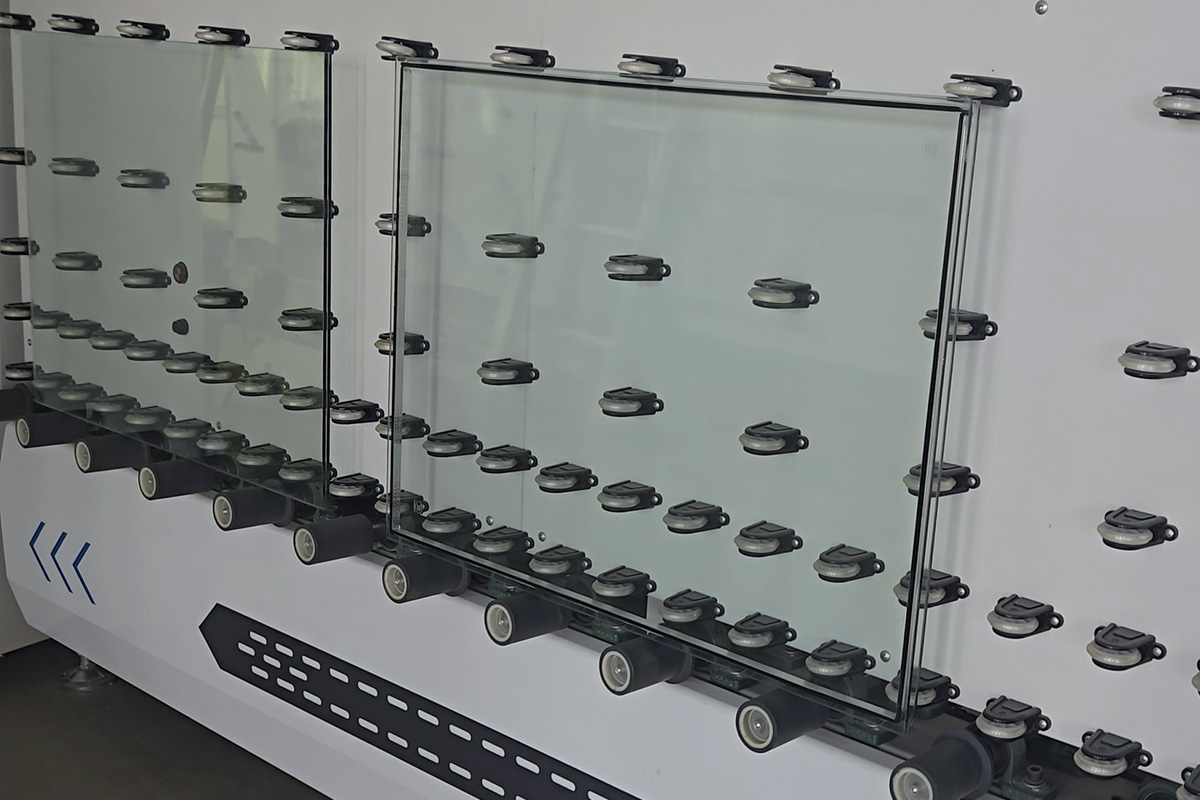
Start With the Point Where the Glass Changes Direction
Do not judge the fault only after the glass reaches the output table. Watch the whole trip.
| What happens | Where to look first |
|---|---|
| The pane enters the machine diagonally | Loading position and entry rollers |
| It enters straight but drifts inside the washing section | Roller grip, pressure rollers and brush contact |
| Its direction changes between two sections | Section height, roller alignment or transfer speed |
| Only narrow pieces wander | Minimum supported glass size and roller contact |
| Every pane moves toward the same side | Repeating mechanical or alignment difference |
Use a representative test pane that is within the machine’s permitted size and thickness range. Record its size, thickness, loading position and operating speed. This gives you a baseline for later tests.
1. Check How the Pane Enters the Washer
A pane that starts slightly crooked may continue moving at that angle, especially when it has limited contact with the entry rollers.
Make sure the leading edge is reasonably square to the conveying direction. The operator should not keep pushing one corner after the rollers have already taken hold of the glass. Also check whether a loading table or an upstream machine is sending the pane toward the washer at an angle.
If the problem begins before the washing chamber, opening the washer and changing brush settings will not correct it.
2. Look for Unequal Grip Across the Conveyor
Two rollers can appear identical while producing different grip.
Water, detergent residue, adhesive labels, glass powder or wear can change the effective contact on one side. A roller that turns poorly may also hold back one part of the pane while the other side continues moving.
With the machine isolated according to its manual and the factory’s approved energy-control procedure, inspect accessible rollers for:
Deposits or pieces of label
Cuts, flat areas or uneven wear
Rollers that do not rotate freely
Loose drive components
Visible differences in roller height
Glass fragments near contact points
Clean rollers only with a method approved by the equipment manufacturer. Do not reach into the conveyor or washing chamber while it is running.
3. Inspect Pressure Rollers and Brush Contact
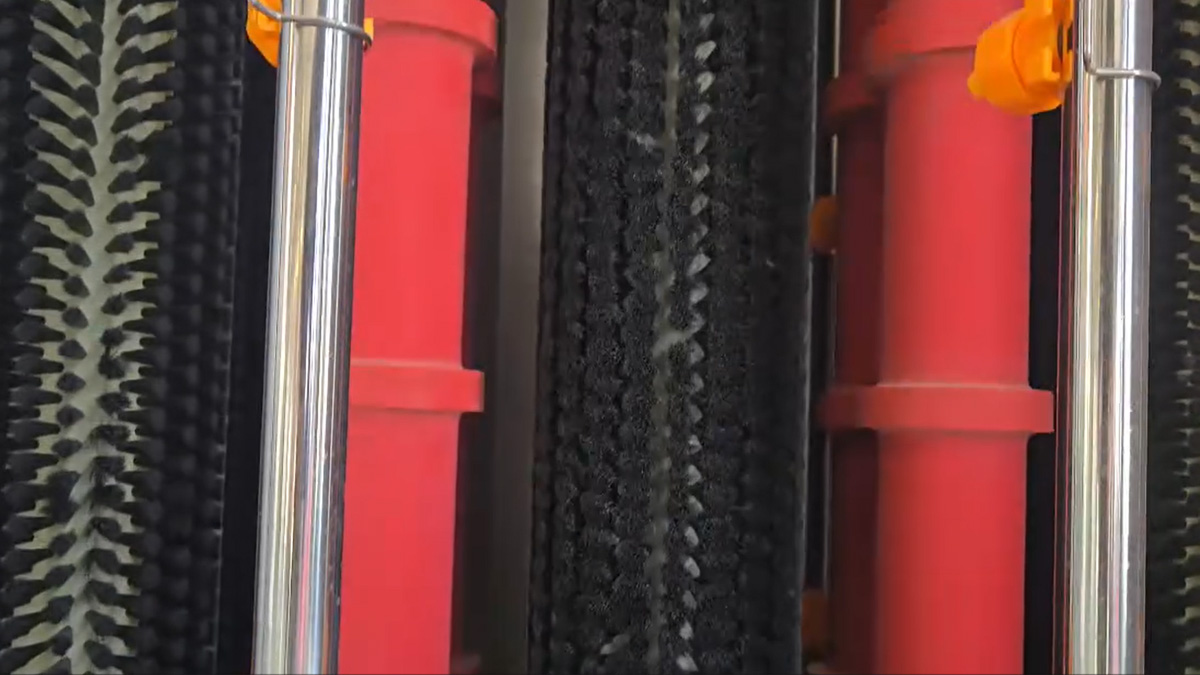
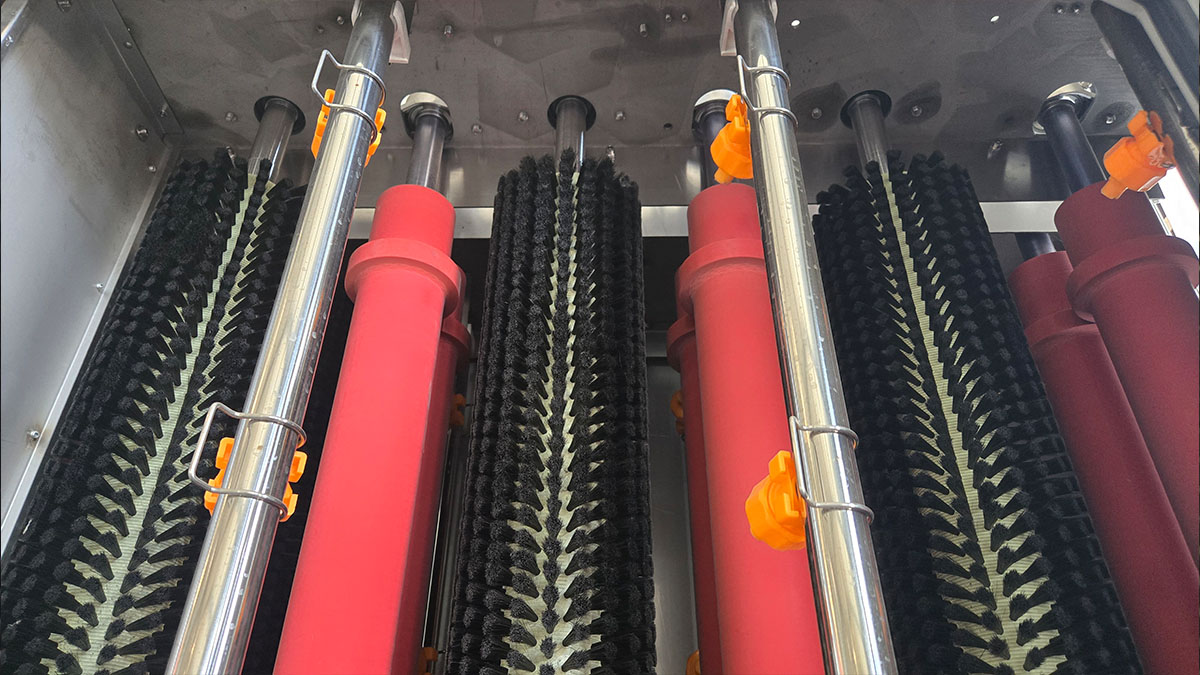
The upper components should hold and process the glass without steering it sideways.
Confirm that the thickness setting matches the test pane. Look for a pressure roller that sits lower on one side, moves reluctantly or carries contamination. Uneven brush contact may also introduce a sideways force, particularly if the problem starts only after the leading edge reaches a specific brush set.
Do not increase pressure just because the glass is slipping. Extra pressure may hide one symptom while creating another. Use the manufacturer’s adjustment procedure and confirm the result with a short test.
4. Check the Transfer Between Machine Sections
A horizontal washer normally includes an entry area, washing section, drying section and output area. The pane should cross each transition without a sudden lift, drop or change of direction.
If the glass always turns at the same transfer point, have a qualified technician check whether the adjoining sections are level, parallel and correctly positioned. This deserves particular attention after installation, machine relocation or foundation work.
Also examine the connection to any upstream or downstream equipment. For an IGU factory, the washer may be only one part of a longer process. A misaligned loading table can make a correctly adjusted washer appear faulty.
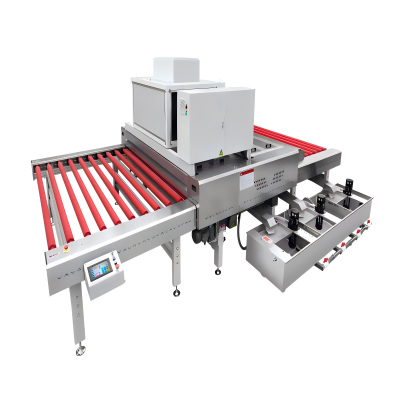
You can review JINJIYE’s horizontal Low-E glass washing and drying machine when comparing the required working width, glass thickness range and conveyor arrangement.
5. Do Not Use Speed as the First Diagnosis
Slowing the conveyor may make a pane wander less, but that does not prove the original setting was too fast. Lower speed can simply give a slipping roller more time to recover its grip.
First correct visible contamination, damage or section-position problems. Then test one approved speed change while keeping the glass size, loading position and other settings unchanged.
If the pane moves correctly at one speed but turns at another, record the exact point where the change begins. That information can help the equipment supplier examine the drive and transfer relationship.
6. Check Whether the Glass Is Properly Supported
Narrow or unusually small panes may contact fewer rollers than standard production glass. If the glass is below the machine’s specified minimum size, it may not remain stable through every section.
Do not use a general online recommendation as the size limit. Check the specification for the exact model. JINJIYE lists several machines with different working ranges in its glass washing machine product category.
For a new purchase, send the supplier your smallest, largest and most frequently processed glass sizes—not only the maximum width.
A Short Test Sequence for the Maintenance Team
A useful troubleshooting sequence is:
Record which glass sizes drift and which run normally.
Identify the first section where the direction changes.
Inspect and clean the related rollers after safe isolation.
Confirm the glass-thickness setting.
Check the connection between adjacent sections.
Run one test pane using the recorded baseline settings.
Change only one approved variable before the next test.
A short video filmed from a safe location is valuable when requesting remote support. Include the complete entry and exit path instead of showing only the final position of the pane.
Frequently Asked Questions
Will reducing the conveyor speed stop glass from moving sideways?
It may reduce the visible movement, but it does not necessarily remove the cause. Check loading, roller condition, pressure and transfer alignment before treating speed as the solution.
Can dirty conveyor rollers make glass move to one side?
Yes. If one side has less or more grip than the other, the pane may rotate slightly as it travels. Repeating movement toward the same side is a reason to inspect fixed contact points.
Why does the problem happen only with narrow glass?
A narrow pane contacts fewer supporting components. Confirm that its dimensions are within the specified working range and that it is loaded in the recommended position.
Should operators realign the rollers themselves?
Only adjustments covered by the machine manual and factory procedure should be performed by trained personnel. Drive, pressure and section-alignment work may require an authorized technician.
Can glass tracking problems affect later IGU production?
Yes. A pane that leaves the washer at an angle can interrupt transfer or positioning before assembly. If edge contact or breakage is also occurring, see JINJIYE’s guide on reducing glass breakage during IGU production.
Need Help Identifying the Cause?
If your horizontal glass washer pulls glass toward one side, send JINJIYE the machine model, glass dimensions, thickness, operating speed and a video showing where the movement begins.
JINJIYE can help you review the application and select a suitable horizontal glass washing machine for your glass range and production process