English
 Español
 Português
 Русский
 Deutsch
 Francés
 العربية
 한국어
한국어
 Türk
Türk
 日本語
日本語

Before Buying an Insulating Glass Production Line
Before You Buy an Insulating Glass Production Line
Start with last month’s production sheet, not the supplier’s brochure.
That sheet tells you what really moves through the factory: the glass sizes ordered most often, the awkward jobs that slow everyone down and the number of times operators change from one specification to another. These details are far more useful than a long list of optional functions.
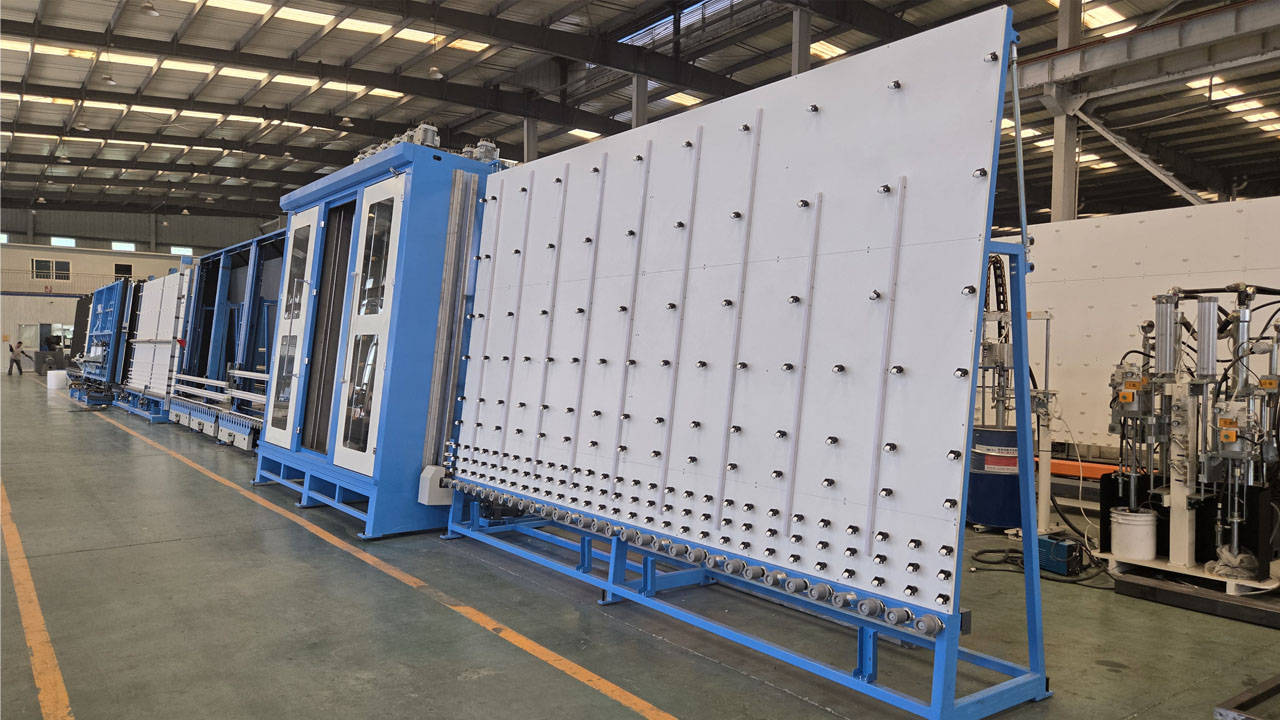
An insulating glass production line should fit that daily workload. If most orders are standard double-glazed windows, the factory has one set of priorities. A business producing Low-E panels, triple glazing and large curtain-wall units has another. Buying the same line for both situations would make little sense.
What Happens on the Line?
The basic job is easy to describe. Glass enters the line, gets washed and dried, and moves to an inspection area. A prepared spacer is positioned between the panes. The unit is assembled, pressed and finally sealed.
The work behind those steps is less simple.
Take washing as an example. A fast glass washing machine looks good during a demonstration, but speed means little if moisture remains around the edges. Dust, oil or fingerprints left on the surface may not be noticed until the IGU has already been sealed.
Low-E glass brings another concern. The brushes and transport system must handle the coated surface correctly. It is better to test this with your own glass than to depend on a sentence in a product catalog.
Spacer preparation also affects the pace of the whole line. Some factories use manually assembled frames because their orders change frequently. Others use an automatic spacer bending machine to keep up with larger batches. The useful question is not which method looks more advanced. It is whether the frame will be ready when the washed glass arrives.
For a conventional rigid-spacer system, the spacer is filled with desiccant and coated with butyl before assembly. The butyl bead should remain even around straight sections, corners and joints. Those are the areas worth checking during a machine trial.
After the panes are assembled, the unit is pressed to its required thickness. Gas filling can be added when needed. The secondary seal is then applied with a two-component extruder or an automatic sealing robot.
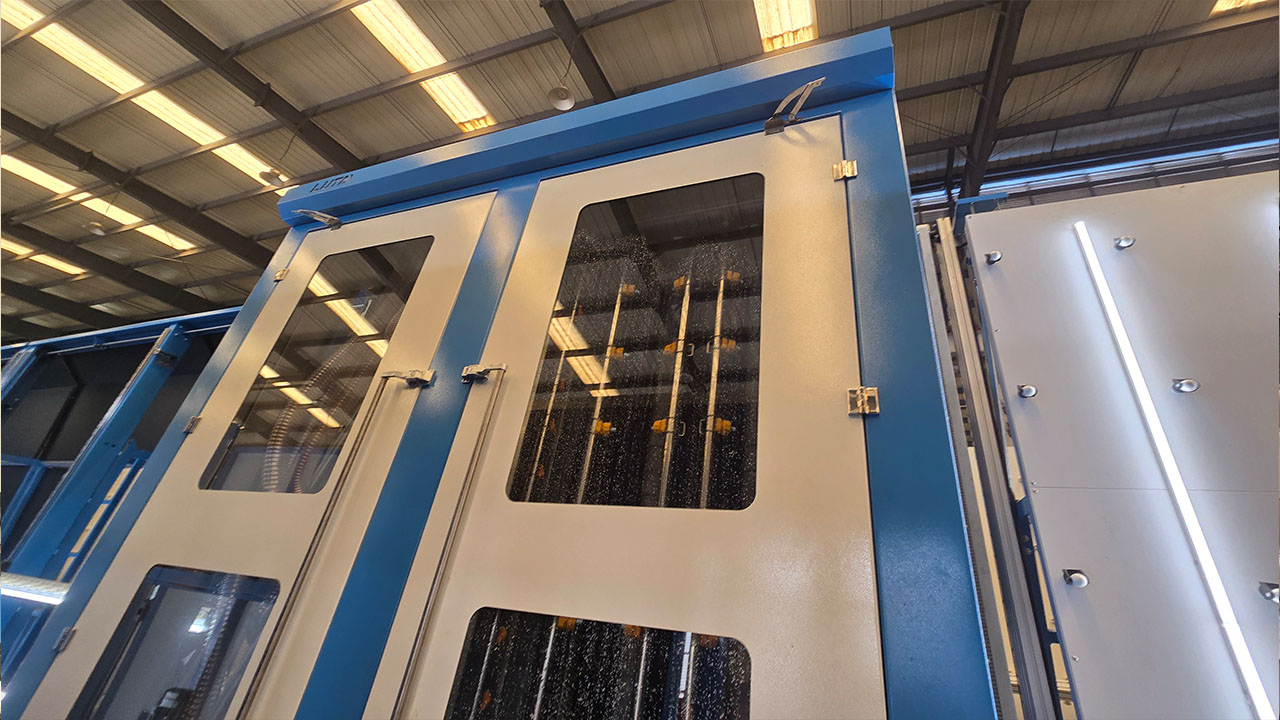
Do You Need a Fully Automatic Line?
Maybe. Maybe not.
A fully automatic IGU production line is attractive when a factory makes similar products in steady volumes. It reduces manual handling and can make the process more consistent.
Mixed production is different. If sizes change every few units, operators still need time to prepare frames, check specifications and organize materials. In that situation, a flexible semi-automatic setup may perform better than expected.
There is also the question of bottlenecks. A faster washer will not increase finished output if spacer preparation cannot keep up. Adding automation at the front of the line may simply create a larger queue at the sealing station.
Ask suppliers to estimate production using your normal order mix. “Pieces per shift” is more useful than the highest conveyor speed shown in a brochure.
Check the Products Before the Machine
Prepare several real production examples before discussing a configuration. Include an everyday unit, the largest unit you regularly make and a product that operators find difficult.
The supplier needs to know the minimum and maximum glass dimensions, individual pane thickness, finished IGU thickness and spacer width. Mention triple glazing, stepped glass, Low-E coatings and gas filling where relevant.
Do not rely on phrases such as “suitable for many glass types.” Put the required product range into the technical agreement. If a particular specification matters to your business, ask to see the equipment process it.
Floor space deserves the same attention. A machine may fit on the drawing while leaving too little room for loading, maintenance or material movement. Mark operator access, electrical connections, compressed air and water treatment on the layout before approving it.
Why Quotations Are Difficult to Compare
Two prices may describe two very different projects.
One quotation might cover the machines only. The other may include export packing, transportation, commissioning, operator training and a starter package of spare parts. Unless the scope is separated clearly, the lower price can become the more expensive purchase later.
Ask the supplier to show the base line and every optional module separately. Installation, travel expenses, freight and training should have their own entries. The quotation should also say what is not included.
Check the electrical specification as well. Voltage, frequency, safety components and documentation must suit the destination country. Changing these details after manufacturing has started can affect both cost and delivery time.
The Supplier Matters After the Machine Ships
A demonstration shows how the equipment runs when everything has been prepared in advance. It does not show what happens when a sensor fails during production or an operator cannot clear an alarm.
That is where references become useful. If possible, speak with a factory producing units similar to yours. Ask about installation, training, spare parts and the speed of technical support. A short conversation with an existing user may reveal more than another hour in the showroom.
For an overseas order, find out who will answer technical questions after commissioning. Time zones matter when the line is standing still. So does language. Agree on the support contact, response hours and remote troubleshooting method before shipment.
Warranty wording also deserves a careful read. Check which components are covered and who pays for labor, travel and freight. “One-year warranty” sounds clear until those details are missing.
Think About Monday Morning Maintenance
The less glamorous parts of the line often decide how smoothly it runs.
Washer filters need checking. Brushes and nozzles become dirty. Transport wheels collect residue. Butyl temperature can drift, and sealant equipment must be cleaned before cured material creates a larger problem.
None of this is unusual, but the work needs to be easy enough for operators to complete. During the machine inspection, look at access panels, cleaning points and the position of routine service parts.
Request the operating manual, electrical drawings and maintenance schedule before shipment. If the documents arrive only with the technician, the local team has lost valuable preparation time.
Send a Better Inquiry
A useful inquiry does not need to be long. It does need to be specific.
Send the supplier your typical glass sizes, thickness range, spacer type, sealants and required output per shift. Add a factory drawing, local voltage and the final delivery address. Explain whether installation and training are required.
Photos of existing production can also help when the new insulating glass equipment must connect with machines already in the factory.
The more accurate the information, the less room there is for assumptions on either side.
A Final Thought
An insulating glass production line should not be chosen like an item from a catalog. It becomes part of the factory’s daily routine, and small mismatches can remain inconvenient for years.
Look at the orders you actually produce. Test representative glass. Check what the quotation leaves out, and settle the support arrangements while everyone is still paying attention to the sale.
Planning a new IGU line? Send us your glass specifications, expected output and factory layout. We can review the requirements and recommend a suitable equipment configuration.