English
 Español
 Português
 Русский
 Deutsch
 Francés
 العربية
 한국어
한국어
 Türk
Türk
 日本語
日本語

Choosing a Molecular Sieve Filling Machine for Insulating Glass Production
On an insulating glass production line, the desiccant filler rarely receives as much attention as the washer, press or sealing robot. It is smaller, its working cycle looks straightforward, and it does not handle large panes of glass.
That does not make it unimportant.
If the spacer is not filled correctly, the problem may be difficult to see during production. Inconsistent filling, damaged desiccant or poorly closed filling holes can affect the quality of the finished insulating glass unit. This is why a molecular sieve filling machine should be evaluated as part of the complete IGU process rather than as a simple auxiliary machine.
What Does the Machine Actually Do?
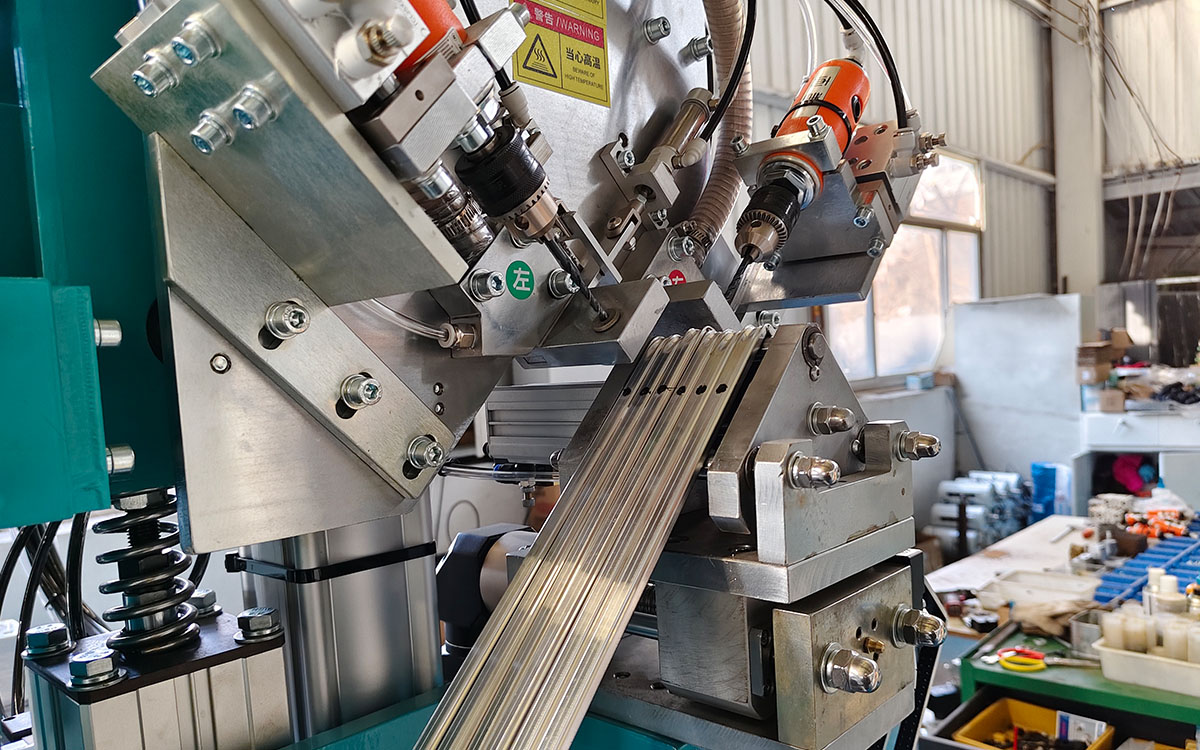
In a conventional rigid-spacer system, molecular sieve is placed inside the hollow spacer frame. Its job is to adsorb moisture remaining inside the sealed unit and help keep the cavity dry.
Manual machines normally rely on gravity, vibration or pneumatic assistance to move the material into the spacer. The operator handles much of the positioning and filling process.
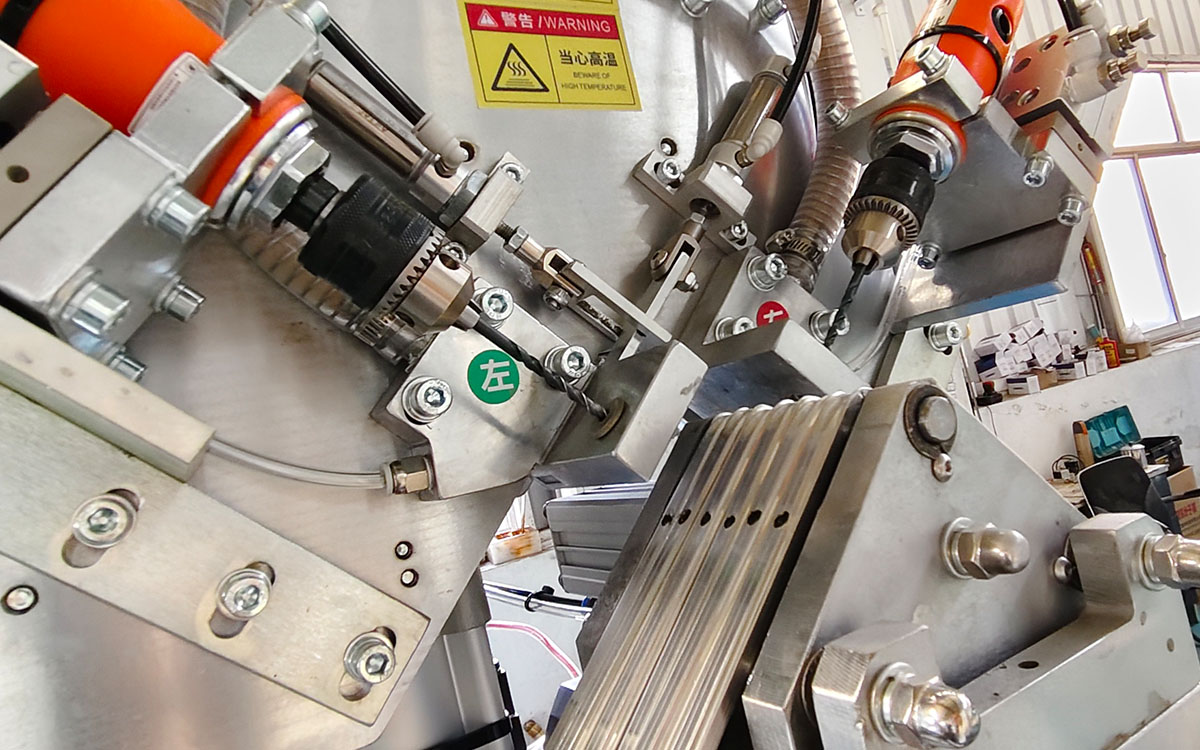
An automatic desiccant filling machine can complete more of the cycle itself. Depending on the design, it may position the frame, drill filling holes, introduce the desiccant, detect when filling is complete and close the openings.
Not every machine includes all these functions. The scope should be confirmed in the supplier’s technical specification.
Filling Speed Is Only Part of the Story
Speed is the obvious figure to compare, but it does not tell you how the machine behaves during a normal shift.
A quick filling cycle loses its value if the operator spends extra time adjusting the frame, clearing blocked material or cleaning beads from the work area. Refilling the hopper and changing between spacer sizes also affect real output.
During a demonstration, watch a complete working cycle. Do not stop the test as soon as the first frame is filled. Check what happens when the operator loads another size, replenishes the material or restarts the machine after a pause.
The finished frame should also be inspected. Look for obvious leakage around the filling holes and confirm that the material has reached the required sections of the spacer.
Match the Machine to Your Spacer System
A molecular sieve filling machine is often designed for specific spacer materials and size ranges. Before asking for a quotation, collect the details of the spacers used in your factory.
The supplier will need to know:
Spacer material;
Minimum and maximum spacer width;
Typical frame dimensions;
Molecular sieve particle size;
Bent or cut-and-connected frame construction;
Required filling direction;
Rectangular or special-shaped frames.
If you use both automatically bent frames and frames assembled with corner keys, confirm that the machine can handle each type.
Special shapes need extra attention. A supplier may offer filling for curved or unusual frames as an option, but this capability should be tested rather than assumed.
How Does the Machine Know the Frame Is Full?
Different machines control the filling process in different ways. Some rely mainly on a preset filling time, while others use sensors or feedback from the material flow.
Ask the supplier to explain the control method in plain language. How does the machine respond if the spacer is partly blocked? Does it stop automatically? Can the operator see that one side of the frame has not filled correctly?
These questions are more useful than simply asking whether the machine uses a PLC.
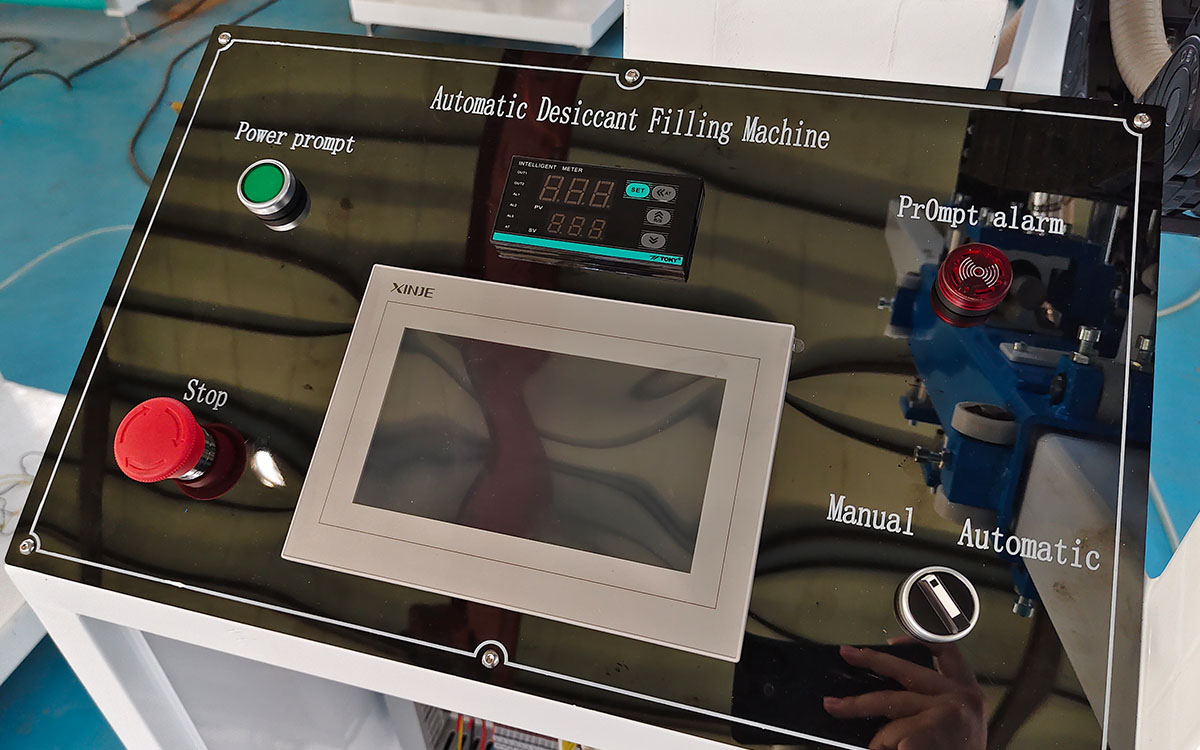
The control screen should make routine adjustments easy. Operators should be able to change the frame size or filling settings without working through several unclear menus.
Keeping the Desiccant Dry Before Filling
Once the bag or hopper is opened, molecular sieve starts picking up moisture from the workshop air—moisture that should be captured inside the finished IGU, not before the spacer is filled.
The hopper therefore deserves a closer look. Is it properly closed, or left exposed each time more material is added? Some machines also use controlled heating or automatic feeding. During a trial, ask the operator to show you how the hopper is refilled, whether the cover seals correctly and where the remaining desiccant goes when the shift ends.
The filling system should also avoid excessive dust and unnecessary damage to the beads. Check the hoses, vibration system and material path during the machine trial. Areas that require frequent cleaning should be easy to reach.
Automatic or Manual Filling?
A manual or semi-automatic machine may be enough for a factory making smaller quantities of insulating glass. The investment is lower, and the equipment is usually straightforward to operate.
Automatic filling becomes more attractive when spacer frames are produced continuously or when the filler must keep pace with an automatic spacer bending machine.
The decision should be based on the number of frames prepared during a normal shift. A machine that is oversized for the actual workload may spend most of the day waiting. One that is too slow can leave the bending machine or assembly area waiting for completed frames.
Look at the flow between machines, not only the speed of the filler itself.
Details That Matter During Daily Use
Check where the operator stands and how the frame is supported. Large frames need stable handling, while small frames should not require awkward repositioning.
The wear parts are not difficult to identify: drill bits become dull, hoses age, seals harden and sensors collect dust. Find out which items the supplier expects you to keep on the shelf and how quickly less common parts can reach your factory.
Check the utilities before the order is signed. The voltage and frequency must suit the plant, while the available compressed-air supply must meet the machine’s demand. This is especially important for an export order; correcting the specification after the machine has been built is both expensive and inconvenient.
Ask for the operating manual, wiring diagrams and recommended spare-parts list before shipment. Your maintenance team should have time to study the documents before the machine arrives.
Comparing Prices and Suppliers
A low machine price may not include the feeding system, spare parts, export packing, installation or operator training. Ask for these items to be shown separately in the quotation.
A useful machine test should include more than one easy frame. Bring or specify a small frame, a typical production size and one of the larger frames regularly made by the factory.
Watch how the machine handles each frame. Check the filling result, operating steps and time required to change sizes.
For international orders, also ask who will provide technical support after delivery. A filling problem can often be diagnosed remotely, but only if the supplier responds and the local operator can explain what the machine is doing.
Information to Send With an Inquiry
For a more accurate proposal, provide:
Spacer type and width range;
Minimum and maximum frame dimensions;
Molecular sieve specification;
Frames required per shift;
Manual or automatic loading preference;
Factory voltage and frequency;
Available compressed-air supply;
Required frame types;
Delivery destination;
Installation and training requirements.
Photos or samples of the spacer can prevent misunderstandings, particularly when several profiles are used.
Final Thoughts
A molecular sieve filling machine performs a narrow task, but it sits at an important point in the insulating glass process. The right machine should fill the spacer consistently, protect the desiccant during handling and fit naturally into the pace of frame production.
Do not select it by filling speed alone. Test your spacer sizes, look closely at the completed frames and find out how the machine will be maintained after installation.
Need a molecular sieve filling machine for a new or existing IGU line? Send us your spacer specifications, frame sizes and expected output. We can help you review the application and recommend a suitable configuration.