English
 Español
 Português
 Русский
 Deutsch
 Francés
 العربية
 한국어
한국어
 Türk
Türk
 日本語
日本語

Protective Film Is Wrinkling on the Glass. Here’s Where to Look
Protective Film Wrinkles or Bubbles on Glass: What Should You Check First?
If the protective film starts to wrinkle or trap air, do not immediately assume that the laminating machine is faulty. The cause is often something fairly simple: dust on the glass, a film roll damaged during storage, film entering the rollers at a slight angle, or settings that do not suit the material.
Put the rejected panel aside before changing anything. Look at where the defect begins. A crease along one edge, a long air channel or a mark that returns in the same place on every sheet can give the operator a useful clue about where to start checking.
Keep the First Defect as Evidence
Before removing a defective film, record:
The film brand, type, width and batch.
The glass type, coating side and dimensions.
Whether the defect appeared at startup or after continuous running.
The side and distance from the leading edge where it began.
The machine settings used for the last acceptable panel.
If a permitted short test produces the mark in the same place, inspect the related roller, guide and contact area. A randomly changing position points the investigation toward surface condition, film or handling.
Read the Defect Pattern Before Adjusting the Machine
The following patterns are clues, not final diagnoses.
| What you see | First area to inspect |
|---|---|
| Small isolated bubbles, sometimes with a visible center | Dust, fibers, fingerprints, dried residue or particles on a contact surface |
| Long air channels running in the film direction | Film tracking, tension, film suitability and how air exits at the application point |
| A diagonal crease growing from one edge | Roll seating, guide alignment and whether the film enters the application area squarely |
| A repeating line or mark at the same position | A roller, guide or contact point with contamination, wear or damage |
When several defects appear together, correct one confirmed cause at a time instead of changing speed, pressure and tension together.
Check the Glass Surface First
Dust can create a raised point under protective film. Moisture, grease or cleaner residue can also change adhesion.
Use the cleaning method approved by the glass and film suppliers. Also inspect the last support that touches the glass; a clean pane can be contaminated again during transfer.
Protective-film application guidance generally requires a clean, dry surface without grease or dust. It also shows why material-specific instructions matter instead of relying on one setting for every film.
Do not copy a wet-application procedure for a machine designed for dry protective film. Low-E and other coated glass may have separate handling restrictions. Confirm the coating side and approved cleaning materials before production.
Inspect the Film Roll, Not Only the Machine
Check for a crushed core, damaged roll edge or unsuitable film before loading it.
Match the film to the glass or coating, required protection period and downstream environment. Test a new film on representative glass and keep a labeled sample for removal checks.
Storage matters as well. Follow the film supplier’s requirements for temperature, moisture, sunlight and roll position. A roll that has been damaged or stored incorrectly may not feed like the approved production sample.
Avoid assuming that settings from one film can be reused for another. A change in film thickness, stiffness, adhesive or roll width may require a new supplier-approved setup.
Trace Wrinkles Back Through the Web Path
Wrinkles can appear downstream from their source. A film entering a roller out of square may drift before the crease becomes obvious. Roller-handling research also shows that a misaligned roller can introduce tracking changes and wrinkles farther along the web path.
With the machine safely isolated according to its manual, inspect roll seating, guide condition, roller cleanliness and accessible alignment points. Do not reach into the moving web path.
For the next permitted test, return to a recorded baseline and change one variable only. Use a short sample at an approved operating condition, examine the result, and write down what changed. Random adjustment makes a defect harder to reproduce and can hide the real cause.
Decide Whether the Fault Follows the Film or the Machine
A simple comparison can narrow the search:
If one film batch fails on several glass sizes, isolate that batch and review it with the film supplier.
If different approved films show a defect at the same machine position, inspect the related contact and alignment points.
If the issue appears only on one coated-glass type, review film compatibility and surface preparation.
If defects begin after a roll change, compare roll mounting and setup with the recorded baseline.
Choose Equipment Around Real Samples
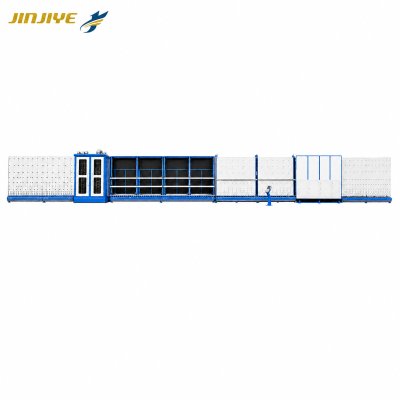
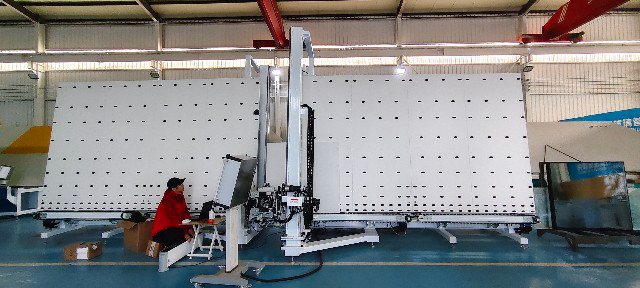
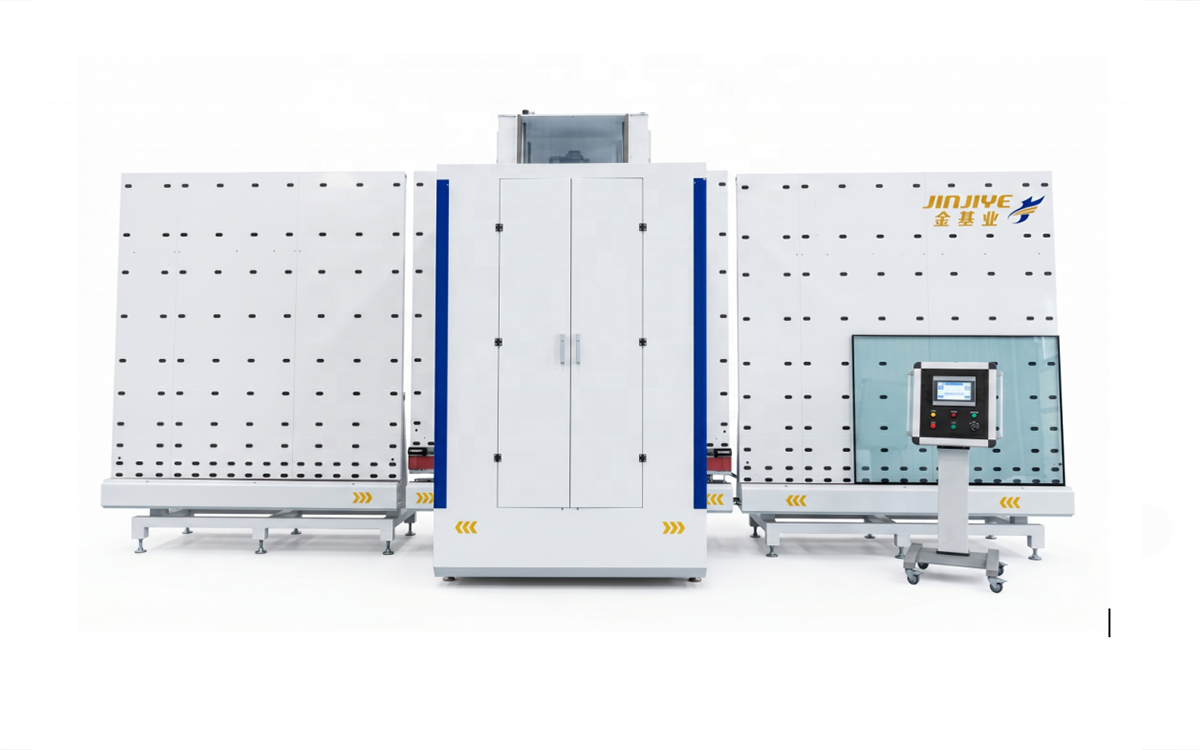
When evaluating a vertical glass film laminating machine, send the supplier actual film information and representative glass dimensions. Include narrow panels, common sizes and the largest panel regularly processed.
JINJIYE also lists a horizontal glass protective film machine. Select the orientation around factory layout and glass flow. Confirm the exact functions for the quoted model.
A trial should document the film, glass, settings and finished appearance. Ask about roll loading, material range, edge treatment, cleaning access and operator training. More JINJIYE equipment is available in the product center.
Buyer FAQs
Can an Automatic Machine Eliminate Every Bubble?
No. The machine can move and apply the film more consistently than a manual process, but it still needs clean glass and a suitable, undamaged film roll. Dust, moisture or the wrong material combination can still leave bubbles behind.
Why Do Wrinkles Sometimes Appear Along Just One Edge?
Start with the film roll. It may not be sitting squarely on its shaft, or the film may be drifting as it passes through the guides. A dirty roller can create a similar mark. Watch where the crease first begins, then inspect that part of the film path before changing other settings.
Should We Reduce the Speed First?
Not automatically. Record the current condition, check the surface and web path, then follow the supplier’s approved setup procedure. If a speed trial is appropriate, change only that variable and compare a short sample.
Can the Same Protective Film Be Used on Low-E Glass?
Sometimes, but it should not be assumed. Low-E coatings are not all the same, and a film that works well on ordinary glass may behave differently on a coated surface. Ask the coating supplier and film supplier to confirm compatibility, then test a small sample under the storage and removal conditions expected for actual orders.
Send JINJIYE Your Film and Glass Details
If bubbles or wrinkles are slowing production, send JINJIYE photographs of the defect, the film specification, glass type, size range and current application method. With those details, the team can discuss whether the process needs a setup review or a different film-laminating-machine configuration.