English
 Español
 Português
 Русский
 Deutsch
 Francés
 العربية
 한국어
한국어
 Türk
Türk
 日本語
日本語

Why Glass Breaks During IGU Production
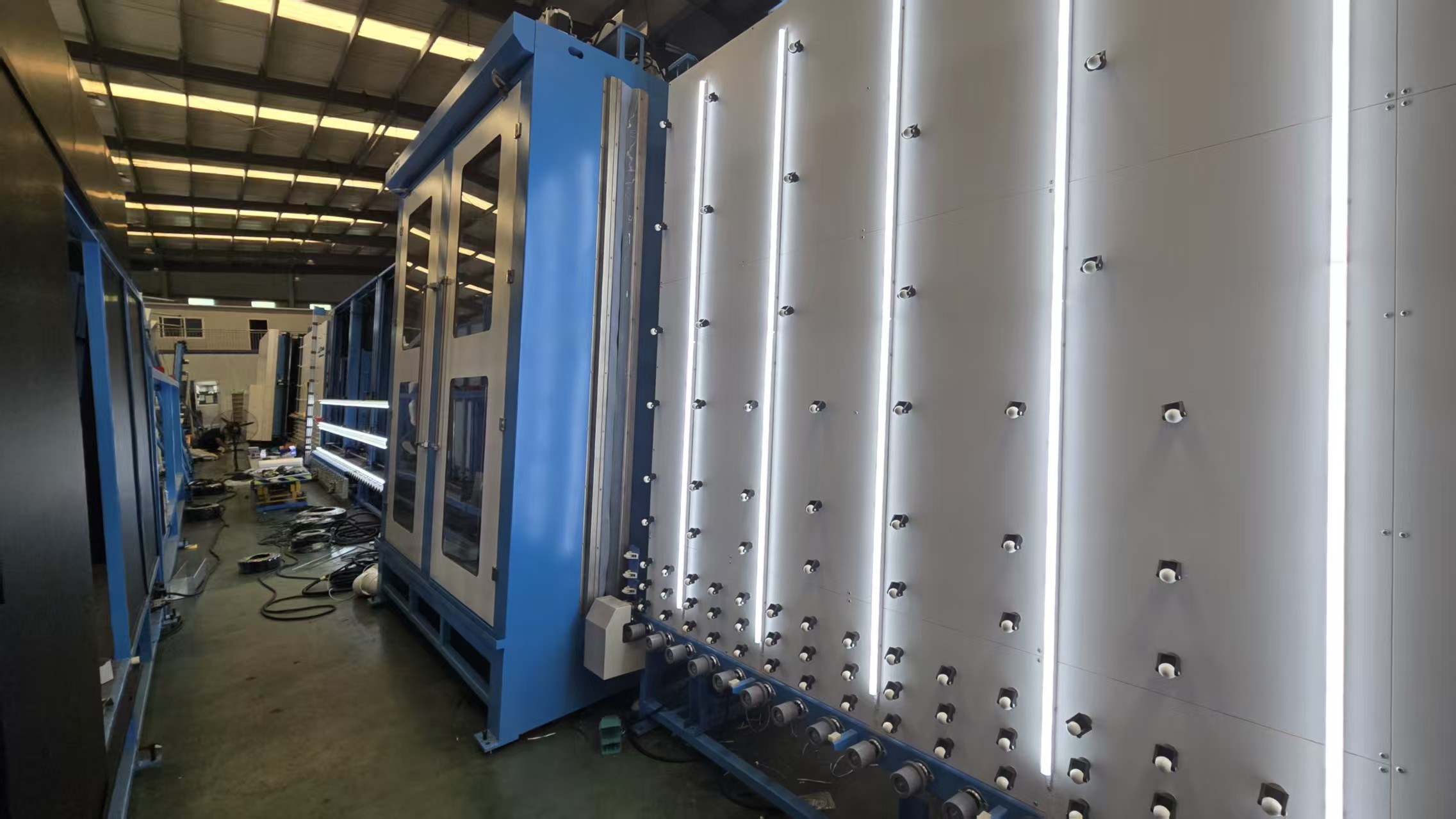
Glass breakage in an insulating glass factory is not always caused by the glass itself.
A pane may enter the production line without visible damage but break later during loading, washing, conveying, pressing or unloading. In many cases, the real cause is small mechanical contact, poor support or incorrect machine adjustment earlier in the process.
For factories trying to reduce IGU glass breakage, the most effective approach is to identify exactly where the first damage occurs.
1. Check the Glass Before Loading
Not every crack starts on the production line.
Small edge chips, scratches or damage from storage can weaken a pane before it enters production.
Before loading, operators should check:
Glass edges and corners
Storage rack condition
Separation between panes
Contact points during lifting
Existing scratches or chips
This is especially important for large, laminated or coated glass.
If damaged glass enters an automatic line, vibration or pressure later in the process may turn a small defect into complete breakage.
2. Loading Can Create Hidden Edge Damage
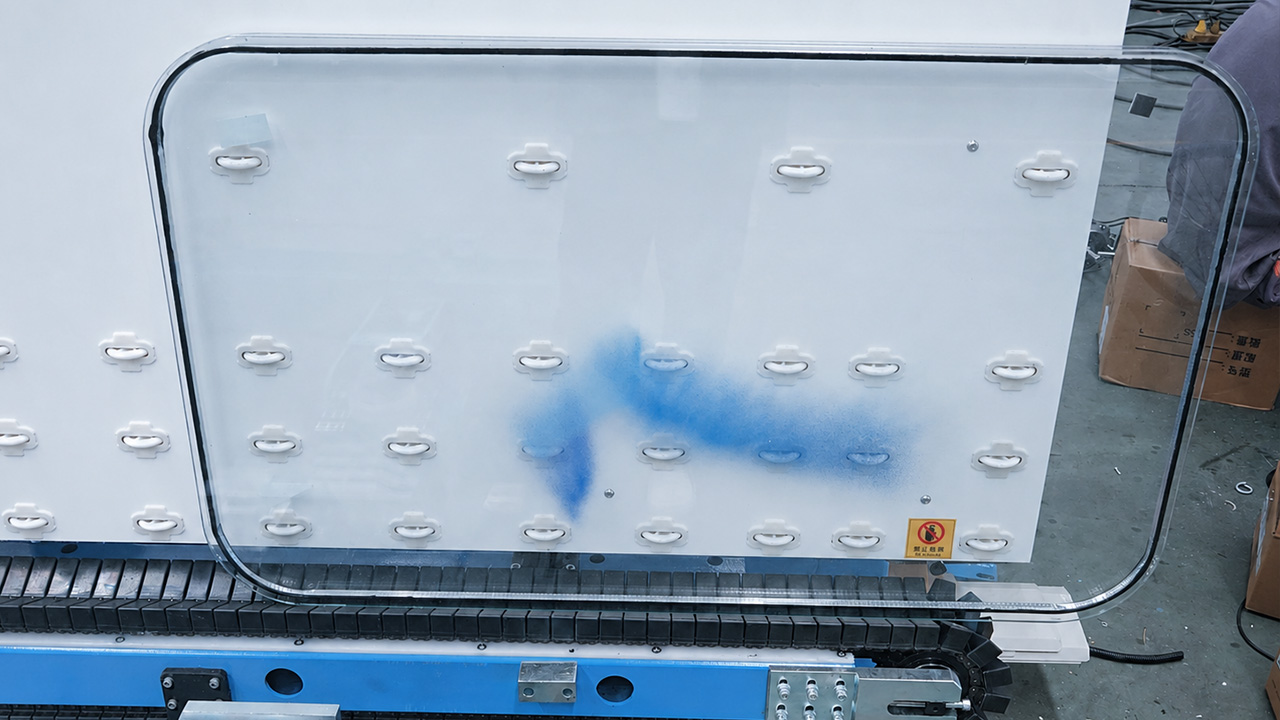
Glass edges are sensitive to concentrated impact.
During manual or automatic loading, problems may occur if the pane contacts:
Metal structures
Rollers
Support blocks
Another sheet of glass
Misaligned conveying components
The glass may not break immediately.
A small edge impact can remain unnoticed until the pane reaches washing or pressing.
For this reason, a glass loading machine should provide stable support and controlled transfer rather than simply moving the glass quickly.
3. Check the Washing Section Carefully
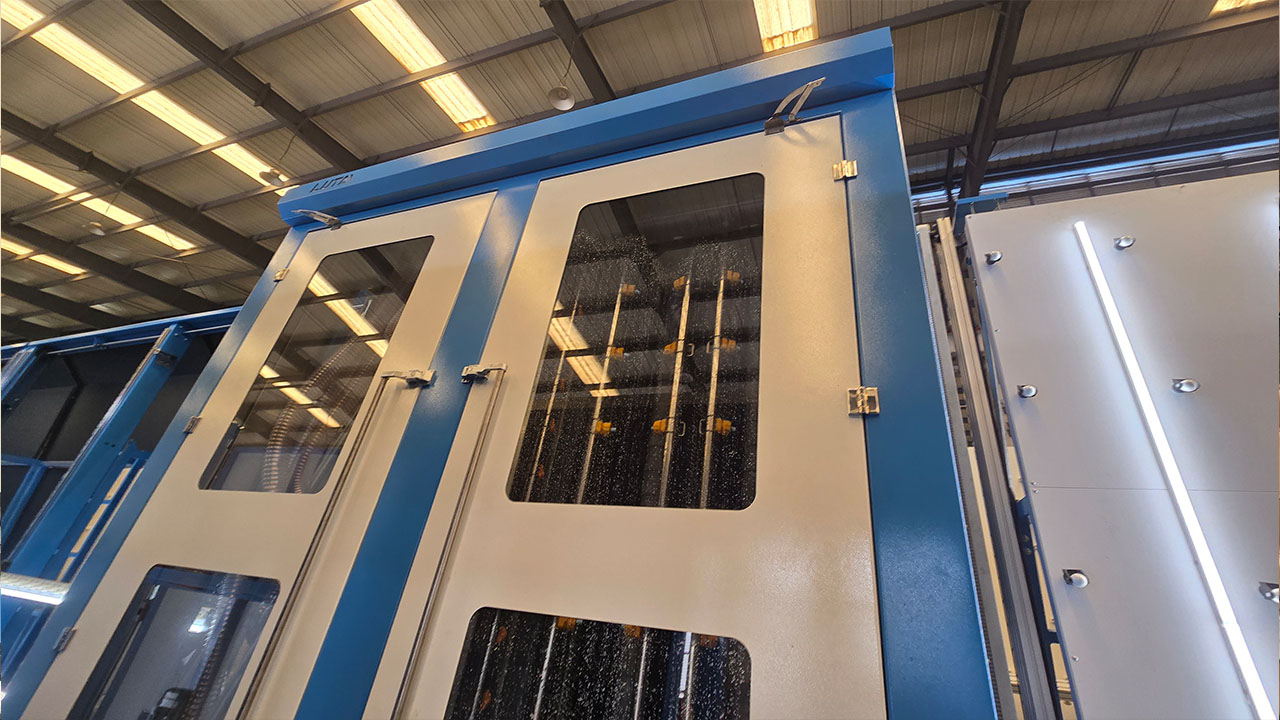
Glass washing machines contain brushes, rollers, water systems and drying components that work close to the glass surface.
If rollers are damaged, contaminated or incorrectly adjusted, glass may experience uneven support during conveying.
Factories should regularly inspect:
Conveyor rollers
Brush condition
Roller alignment
Glass support points
Foreign material inside the machine
When breakage repeatedly occurs around the washing section, do not immediately assume that the brushes are the only cause.
The complete conveying path should be checked.
4. Large Glass Needs Better Support
As glass size increases, the pane becomes more sensitive to bending during transfer.
If support points are too far apart or the glass moves unevenly between machines, temporary bending can increase stress.
This is especially important when processing:
Large architectural glass
Laminated glass
Thicker glass
Heavy Low-E glass
Large insulating glass units
A stable IGU production line should maintain controlled support throughout conveying, not only at the main processing stations.
5. Conveyor Alignment Matters
A production line may contain several connected sections.
If two sections are not aligned correctly, glass can experience impact or twisting when moving from one machine to another.
Warning signs include:
Glass suddenly changing direction
One edge contacting the frame
Uneven roller contact
Vibration during transfer
Breakage occurring near the same position repeatedly
If similar glass breaks at the same point several times, the machine position and conveying alignment should be inspected before changing production speed.
6. Pressing Parameters Must Match the IGU
The pressing section handles an assembled glass unit, so the product is already heavier and more complex than a single pane.
The process should match the actual:
Glass size
Glass thickness
IGU thickness
Spacer structure
Double- or triple-glazing configuration
Incorrect positioning or unsuitable pressing conditions can increase stress on the finished unit.
Factories should avoid using one setting for every product structure without checking whether adjustment is required.
7. Finished IGUs Can Break After Production
Breakage does not stop when assembly is complete.
Finished IGUs may still be damaged during:
Unloading
Turning
Temporary storage
Manual movement
Rack placement
This is common when the production line can process large glass faster than operators can safely remove it.
The unloading area should therefore have enough space and suitable support for the actual glass size and weight.
8. Find Patterns Instead of Guessing
When breakage occurs, record the details.
Useful information includes:
Glass dimensions
Glass thickness
Glass type
Exact breakage location
Production stage
Machine speed
Whether the same position has failed before
A repeated pattern usually gives more useful information than changing several machine settings at once.
For example, if different glass sizes repeatedly break at the same transfer point, the problem is more likely related to equipment alignment or support than to the glass specification itself.
How to Reduce IGU Glass Breakage
A practical inspection routine should follow the glass through the complete process:
Storage → Loading → Washing → Conveying → Assembly → Pressing → Sealing → Unloading
Check where the first scratch, chip or abnormal movement appears.
The goal is not simply to make the production line run slower. It is to remove the mechanical condition that creates unnecessary stress on the glass.
JINJIYE IGU Production Solutions
JINJIYE provides insulating glass production equipment for different glass dimensions and production requirements.
When evaluating a glass breakage problem, useful information includes:
Glass size
Glass thickness
Glass type
Breakage position
Existing equipment
Production speed
Photos or video of the process
A short production video can often help identify whether the problem occurs during loading, conveying, washing, pressing or unloading.
Experiencing Frequent Glass Breakage?
If glass frequently breaks at the same position in your production process, send JINJIYE your glass specifications, equipment information and production video.
We can help evaluate the process and identify which section should be checked first.
GET AN IGU PRODUCTION SOLUTION
FAQ
Why does glass break after leaving the loading section?
The pane may already have small edge damage that becomes worse during later conveying, washing or pressing.
Can machine speed cause glass breakage?
Speed can contribute, but alignment, support, impact points and glass condition should also be checked.
Why does large glass break more easily during transfer?
Larger panes require more stable support and controlled conveying because they can experience greater bending during movement.
What should be checked first when breakage repeats?
Record where the breakage occurs and inspect the glass support, rollers, machine alignment and transfer points around that position.