English
 Español
 Português
 Русский
 Deutsch
 Francés
 العربية
 한국어
한국어
 Türk
Türk
 日本語
日本語

Low-E Glass Coming Out Scratched? Check the Washer First
How to Wash Low-E Glass Without Scratching the Coating
When a sheet of Low-E glass comes out of the washer with a faint line across the coating, the brush usually gets blamed first. Sometimes that is the right diagnosis. Just as often, however, the problem started earlier—with a small glass chip on a conveyor roll, a blocked spray nozzle or a drop in water pressure.
That is what makes Low-E washing problems frustrating. The damage may appear simple, but changing one setting without checking the rest of the process can make matters worse.
If you want to wash Low-E glass without scratches, start by identifying the defect. Then work backwards through the washer instead of immediately reducing speed or replacing every brush.

First, Make Sure It Is Actually a Scratch
A scratch and a water mark can look surprisingly similar until the glass is viewed under angled light.
A narrow line that follows the direction of travel often points to contact with a brush, roller or trapped particle. If the line appears at exactly the same height on several consecutive sheets, look for a fixed contamination point inside the machine.
White spots or streaks are more likely to come from the rinse or drying sections. A cloudy film may be detergent residue, dirty recirculated water or contamination that the washer was never designed to remove.
Before adjusting the machine, clean one affected area by hand using a method approved by the glass supplier. If the mark disappears, it probably is not permanent coating damage. This simple check can prevent hours of unnecessary adjustment.
Look at the Loading Area Before Opening the Washer
The cleaning process begins before the first spray nozzle.
Glass chips left on the loading table can attach themselves to a roller and travel into the washer. Edge-seaming residue and dust can create the same problem. In a busy factory, these areas are easy to overlook because they do not appear to be part of the washing chamber.
Check the loading table, support rollers and glass edges at the beginning of each shift. Operators should also confirm which side carries the coating and load it according to the glass supplier’s instructions and the machine configuration.
The coated surface should not be allowed to rub against contaminated support components. Because vertical and horizontal machines hold glass differently, the correct loading direction should be confirmed during commissioning and displayed clearly at the loading station.
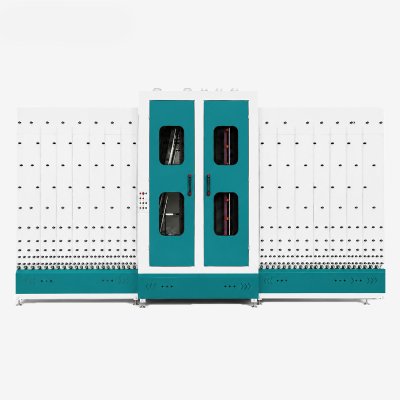
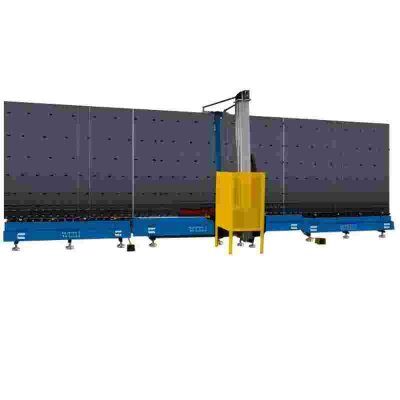
Factories processing coated architectural glass can review the configuration of a vertical Low-E glass washing and drying machine when comparing brush layout, glass support and inspection access.
A “Low-E Brush” Label Does Not Tell the Whole Story
Buying a soft brush does not automatically make a washer safe for every Low-E coating.
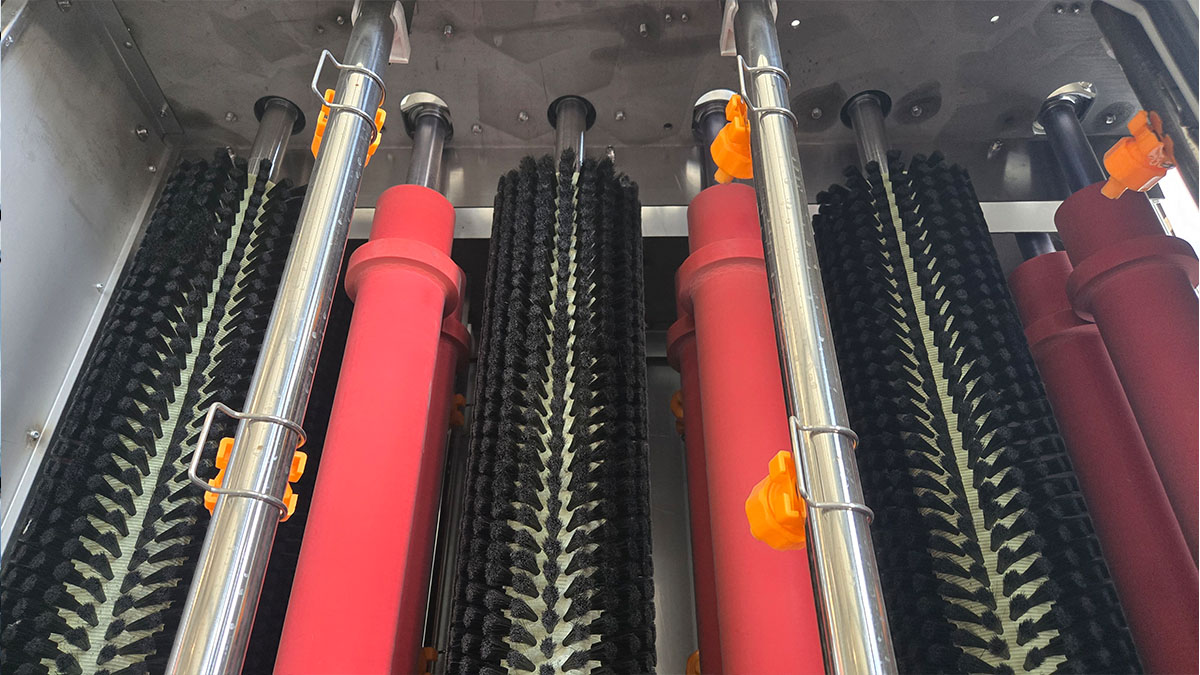
Bristle material, diameter, cleanliness, pressure and water flow all affect the result. A suitable brush can still scratch the coating if it picks up glass particles or runs with too little water.
Vitro’s machine-washing guidance recommends a bristle diameter of approximately 0.15–0.23 mm for the MSVD coated products covered by its document. That range should not be treated as a universal specification for every glass brand. Always compare it with the instructions supplied by the coating manufacturer.
Brush pressure deserves the same care. More contact does not always mean cleaner glass. Use the minimum pressure that gives a consistent result, and test the adjustment before returning to full production.
A marker test is useful after maintenance or brush replacement. It can show whether contact is even across the sheet and whether one side of the brush is pressing harder than the other.
Water Problems Often Leave Their Fingerprints on the Glass
When spots appear only after drying, look at the final rinse before blaming the coating.
The quality of this water matters because it is the last liquid to touch the glass. For the coated products addressed in its technical guide, Vitro recommends final-rinse water with total dissolved solids no higher than 20 ppm. Other glass suppliers may specify different limits, so their instructions should take priority.
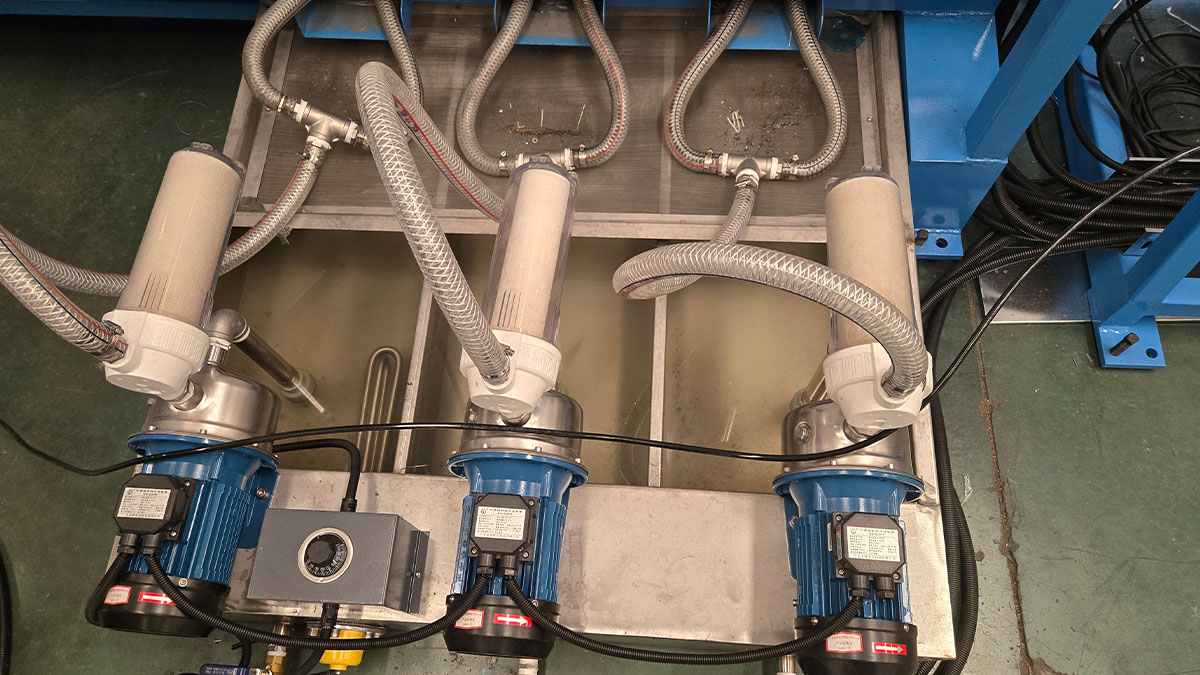
A TDS meter is helpful, but it is only part of the check. Operators should also inspect tank cleanliness, filter condition, nozzle pattern and water flow. A good reading at the tank does not help if a blocked nozzle leaves one section of the brush almost dry.
Detergent should be handled cautiously. Do not assume that a general glass cleaner is suitable for coated glass. Use a product approved by the glass supplier, test it on sample sheets and make sure it rinses away completely.
Do Not Chase Output by Increasing Speed Too Early
When orders begin to pile up, increasing conveyor speed looks like an easy way to gain capacity. It only works if the glass still leaves the washer clean and fully dry.
Faster movement reduces the time available for prewashing, brushing, rinsing and air-knife drying. Sheets positioned too close together may also affect water and airflow around their edges.
More importantly, glass should not stop beneath the brushes or inside the drying section. If a coated sheet remains in one position while the brush continues to touch it, even a short interruption can leave a concentrated mark.
When the line is restarted, allow water pressure and airflow to return to their normal operating levels before feeding another sheet.
The best production speed is not necessarily the maximum figure shown on the control panel. It is the highest stable speed that repeatedly produces clean, dry glass.
A Five-Minute Check Can Save a Batch of IGUs
The easiest defects to correct are the ones found before the spacer is positioned and the unit is pressed.
At the beginning of each shift, operators can perform a short routine:
Check the loading table and rollers for glass particles.
Confirm that tanks, filters and nozzles are clean.
Watch the spray pattern before loading production glass.
Inspect the first sheet under bright, angled light.
Record any setting change instead of relying on memory.
The first sheet should be checked on both sides, including the edges. Look for repeating lines, haze, water droplets and areas that dry more slowly than the rest of the surface.
This washing inspection should be treated as part of the complete insulating glass production process, not as an isolated machine task.
What Should You Ask When Buying a Low-E Glass Washer?
A machine demonstration is more useful when the supplier washes your actual glass rather than a clean sheet selected for the test.
Send representative Low-E samples together with the glass thickness, maximum size and expected daily output. During the test, pay attention to the result after several sheets have passed through, not only the first one.
Ask the supplier practical questions:
How is brush pressure adjusted?
Can the operator monitor water flow?
How easy is it to clean the tanks and nozzles?
What happens to glass already inside the washer after an alarm?
Which brushes, filters and other wear parts should be kept in stock?
Can the machine be tested with different Low-E products?
If the washer will become part of an automatic insulating glass production line, also check whether its speed matches the inspection, assembly and pressing sections. One fast machine does not create a fast production line if the following process cannot keep up.
Frequently Asked Questions
Why does Low-E glass keep scratching at the same position?
A repeated scratch at the same height usually suggests a fixed source. Inspect the corresponding brush area, roller, nozzle and glass-support point for trapped particles, wear or misalignment.
Can ordinary detergent be used on Low-E glass?
Not without confirmation. Use only a detergent accepted by the glass or coating supplier. Run sample sheets first and check for residue or coating changes before full production.
Why is the glass clean but still covered with water spots?
The likely causes include high mineral content in the final rinse, contaminated water, inadequate rinsing, dirty air filters or poor air-knife adjustment.
Should the washer always run at its maximum speed?
No. The correct speed is the one that produces consistently clean and dry glass. Nominal speed is less important than first-pass quality and stable output.
Final Thought
Low-E washing does not depend on one “perfect” machine setting. It depends on several ordinary things being right at the same time: clean rollers, suitable brushes, enough water, controlled pressure, good rinse quality and a consistent inspection routine.
When those basics are documented and checked every shift, scratches become easier to trace—and far less likely to reach the finished IGU.
For help selecting a Low-E glass washer based on your coating type, glass size and production target, send JINJIYE your sample specifications and required daily capacity.