English
 Español
 Português
 Русский
 Deutsch
 Francés
 العربية
 한국어
한국어
 Türk
Türk
 日本語
日本語

What Should Buyers Test During an IGU Line Acceptance Run?
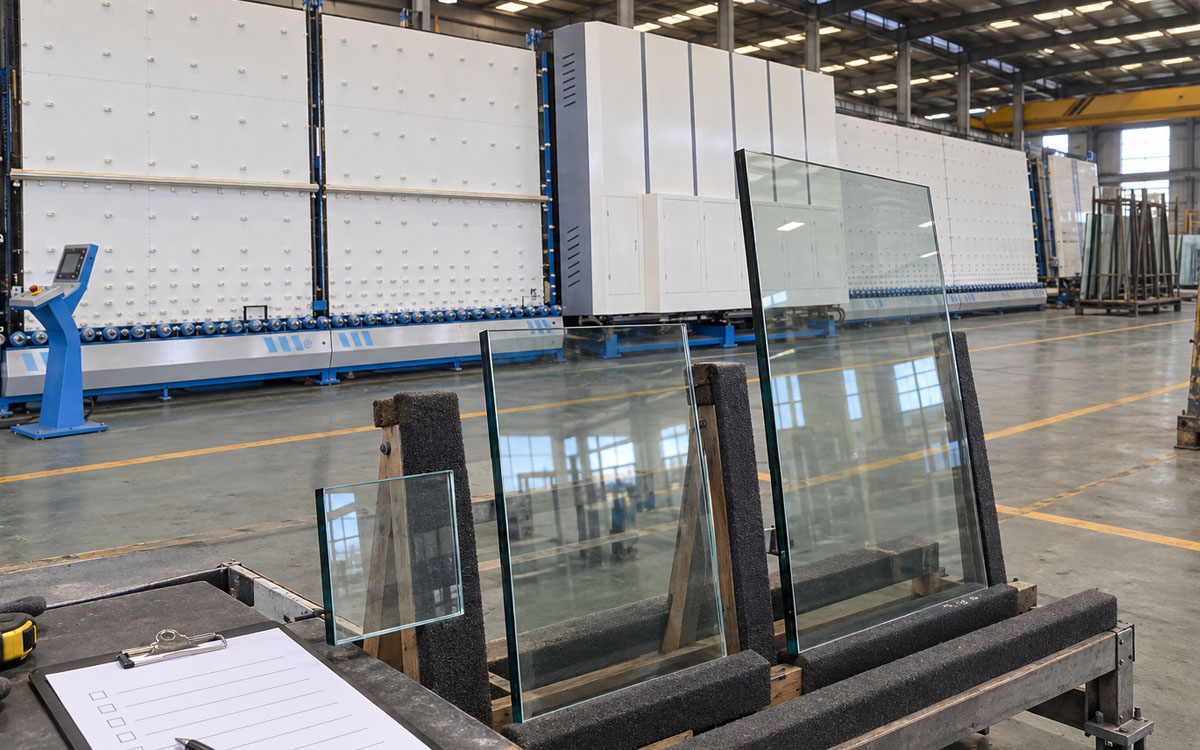
Before accepting an IGU production line, run the machine with glass that represents your real orders—not only the supplier’s easiest demonstration pane. The test should cover washing and drying, size changes, assembly, pressing, every purchased optional function and an approved stop-and-restart procedure.
Record the glass specification, selected program, completed units, waiting time, defects and operator intervention. One successful pane proves very little. A useful acceptance run shows that the complete line can repeat the required result across several relevant products.
Agree on the Test Plan Before the Machine Starts
The acceptance criteria should be discussed before the test day. If the buyer and supplier wait until the line is running, they may judge the same result differently.
Prepare a written list covering:
Glass samples to be tested
Functions included in the purchased configuration
Required product constructions
Inspection method
Evidence to be retained
Person responsible for approving each stage
Items that require correction or another trial
Acceptance limits should come from the purchase agreement, approved technical documents, material suppliers, customer requirements or applicable certification program. Do not copy an unrelated online tolerance into the test sheet.
A factory acceptance test at the supplier’s facility and an on-site test after installation serve different purposes. The first checks the manufactured equipment before shipment. The second confirms the installed line, utilities, direction and surrounding workflow.
Build the Test Around Your Real Product Range
Send representative glass before the acceptance run whenever practical.
A useful sample set may include:
A commonly produced size
A smaller approved size
A larger regular size
Typical pane thicknesses
Clear and Low-E glass, when both are required
Double glazing
Triple glazing, if included in the ordered configuration
Gas-filled units, if gas filling was purchased
The spacer widths normally used by the factory
Do not test an option that was not included in the agreed machine configuration. At the same time, do not approve a purchased function simply because the control screen displays its name.
Factories comparing available configurations can first review the JINJIYE insulating glass production line range.
Test One Complete Production Route
Testing each motor separately is not the same as producing an acceptable IGU.
Run representative panes through the complete purchased process. Observe how the glass enters each section, whether it remains supported during transfer and whether the next station receives the correct product information.
A practical test record can include:
| Test area | What to observe | Evidence to keep |
|---|---|---|
| Washing and drying | Surface and edges are clean and dry | Photos under inspection light |
| Glass transfer | No abnormal contact, drift or hesitation | Short video of each transfer |
| Changeover | Correct program and reasonable operator steps | Start and finish time |
| Assembly and pressing | Glass and spacer remain correctly positioned | Photos of completed sample |
| Optional gas filling | Purchased function completes its approved cycle | Machine record and agreed check |
| Stop and restart | Product location and program remain controlled | Video and operator notes |
| Repeat run | Result remains consistent across several samples | Individual inspection results |
Use the inspection method agreed for the product. An attractive machine demonstration should not replace measurable evidence.
Check Washing and Drying on More Than One Pane
The first pane may pass through a clean, freshly prepared washer. The result after several panes can be more useful.
Inspect both surfaces and all edges under suitable lighting. Look for remaining droplets, water marks, particles and unexpected contact traces. When Low-E glass is included, confirm the loading orientation and handling procedure for the coating being tested.
The test should use the normal production path. Do not accept a special manual cleaning step that will not exist during daily production.
For a line equipped to process large, double- or triple-glazed products, buyers can compare its scope with a fully automatic vertical insulating glass production line. Exact functions must still be confirmed in the quotation.
Include a Controlled Product Change
Many production problems appear during changeover rather than steady running.
Move from one representative order to another. Record which information the operator enters, what the machine detects automatically and which adjustments remain manual.
Check whether:
The correct program is selected
Old order information has been cleared
The new glass is identified correctly
Operators understand the required steps
The first product after changeover is inspected
Unnecessary trial pieces are produced
Glass remains in the correct order
Do not change several products and settings at once. A controlled sequence makes it easier to identify where an error begins.
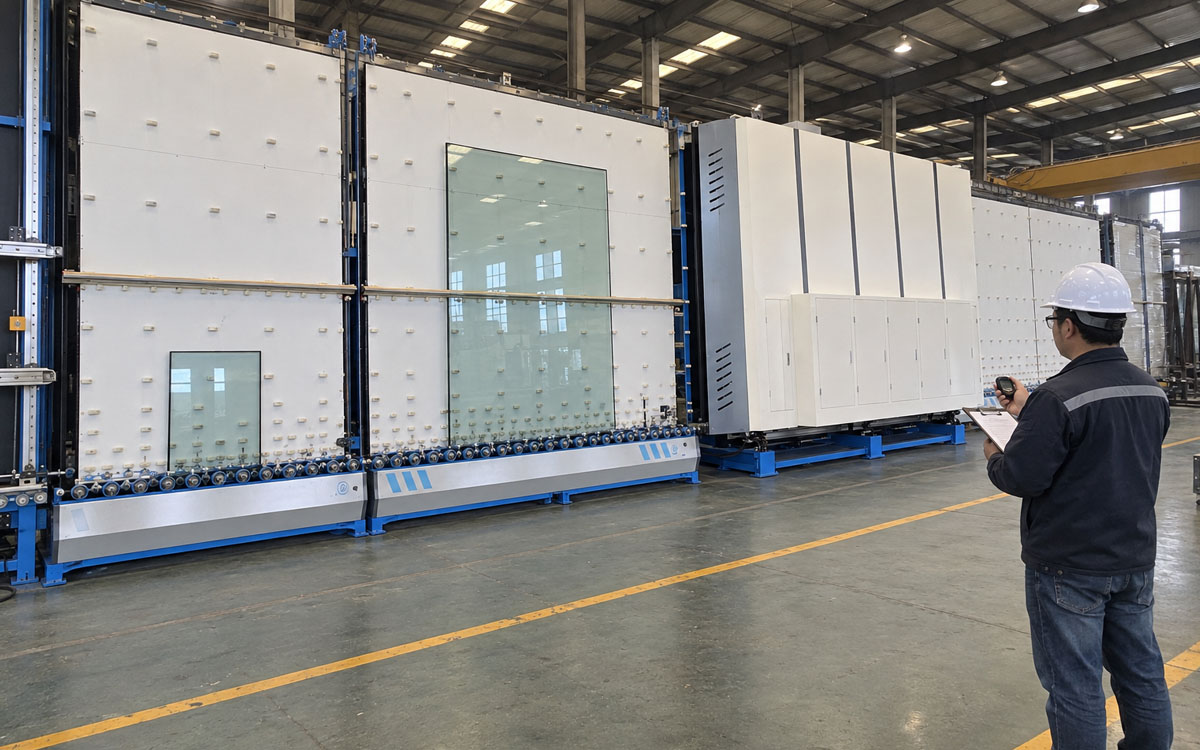
Test Assembly, Pressing and Purchased Options
A pane moving through the washer does not prove that the finished unit will be assembled correctly.
Inspect spacer position, glass alignment and the condition of the unit after pressing. If the ordered line supports several product structures, test the structures named in the purchase agreement.
For a line with integrated gas filling, test the agreed product types and verification method. A buyer considering this configuration can review the automatic CNC gas-filling IGU production line.
Do not invent an acceptance level from a marketing article. Gas content, dimensional tolerances and visual criteria must follow the agreed product and applicable quality requirements.
Ask for an Approved Stop-and-Restart Demonstration
Daily production includes pauses, alarms and order interruptions. The operator needs to know what happens to glass already inside the line.
Ask the supplier to demonstrate only approved procedures, such as a normal pause, a supported alarm condition or an emergency-stop recovery covered by the machine documentation.
Confirm:
Where each pane remains
Whether the selected program is retained
Which sections must be cleared
How the line confirms that downstream equipment is ready
Whether the product must be inspected again
Which actions require a trained technician
Never bypass a safety interlock or intentionally create an uncontrolled fault for an acceptance test.
Measure Finished Output, Not Only Conveyor Speed
Maximum conveying speed is not the same as completed IGUs per shift.
During a representative trial, record:
Test start and finish time
Number of completed acceptable units
Product sizes and constructions
Changeover time
Planned and unplanned stops
Operator interventions
Rework or rejected samples
A short trial cannot prove long-term reliability, but it can reveal whether the quoted production concept matches the buyer’s actual product mix.
Keep a Clear Acceptance File
Before approval, collect the final machine configuration, manuals, electrical information, maintenance schedule, wear-parts list, training record and unresolved-item list.
Keep photos and videos under the same test number as the written results. If a correction is required, record what changed and repeat the affected test instead of replacing the original result.
Frequently Asked Questions
Is one successful IGU enough to approve the line?
No. One unit may not reveal repeatability, size-change problems or differences between glass types. Use several representative samples and keep individual results.
Should buyers provide their own glass for the test?
Yes, when practical. The supplier needs advance information about the glass, coating, sizes, thicknesses and product constructions so the test can be prepared safely.
Must every purchased option be tested?
Every function included in the agreed configuration should have an appropriate acceptance check. The method should be agreed before the trial.
Does a factory acceptance test replace on-site commissioning?
No. Factory testing checks the equipment before shipment. On-site commissioning also confirms installation, utilities, working direction, operator training and the surrounding production flow.
Can a short acceptance run guarantee long-term output?
No. It provides evidence that the machine performs the agreed functions under the tested conditions. Long-term performance also depends on maintenance, materials, operators, utilities and production planning.
Final Advice
A strong IGU production line acceptance test is not designed to make the machine fail. It is designed to remove uncertainty before normal production begins.
Use real products, test the complete route, change one condition at a time and keep the evidence. If the line performs only with one convenient glass size and constant manual help, the test has not yet answered the buyer’s most important question: can this equipment handle the factory’s daily work?
To prepare an acceptance plan with JINJIYE, send your glass range, Low-E requirements, double- and triple-glazing ratio, purchased options and typical order mix before the test date.