English
 Español
 Português
 Русский
 Deutsch
 Francés
 العربية
 한국어
한국어
 Türk
Türk
 日本語
日本語

Why IGU Factories Waste Too Much Sealant
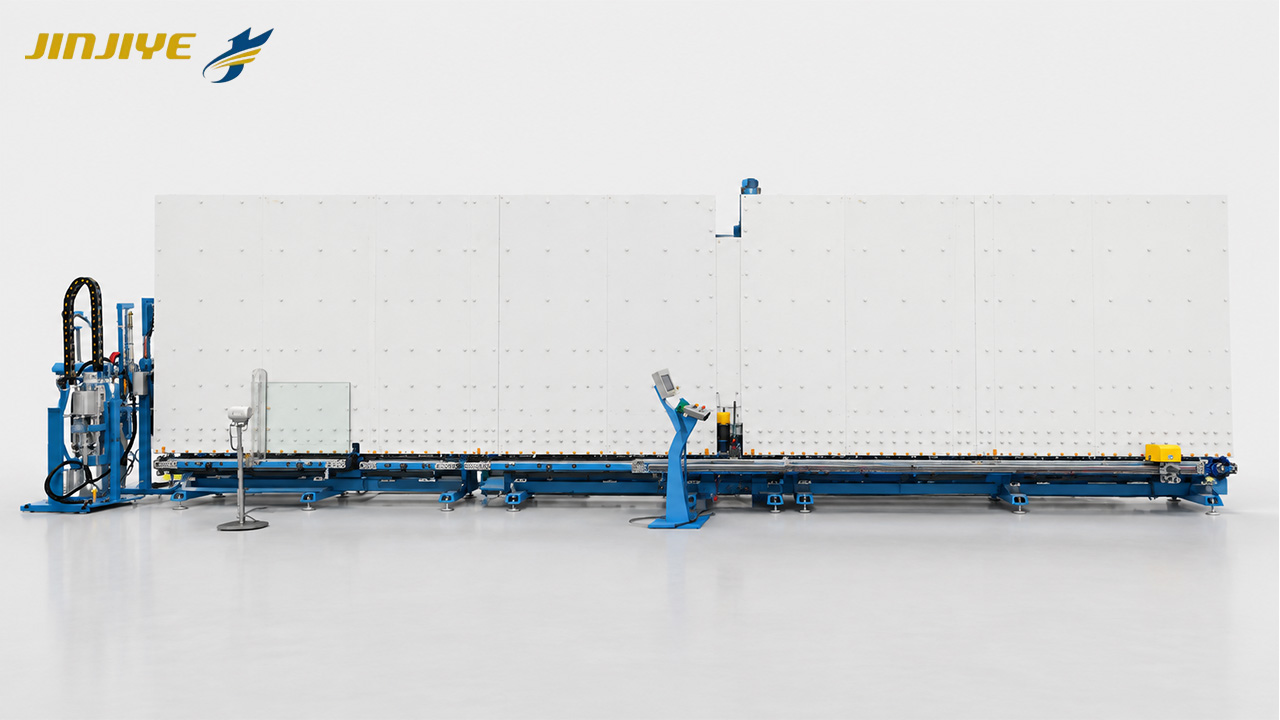
Secondary sealant is one of the major consumables in insulating glass production.
Many factories notice that actual sealant consumption is higher than expected. The first assumption is often that the machine is using too much material, but excessive consumption can come from several parts of the sealing process.
Understanding where the sealant is being lost can reduce production cost without reducing sealing quality.
1. The Sealant Joint Is Too Large
A wider or deeper sealing joint requires more material.
If spacer positioning is inconsistent or the glass cavity varies from unit to unit, the sealing volume can also change.
Factories should check whether the actual sealing depth matches the product requirement instead of simply applying more sealant for safety.
More material does not automatically mean better sealing.
2. Too Much Sealant at Corners
Corners are a common source of unnecessary consumption.
During manual sealing, operators may slow down and apply extra sealant at each corner to make sure the joint is completely filled.
Over hundreds of IGUs, this small amount of extra material becomes significant.
Automatic sealing can help control the extrusion path more consistently, especially when processing repeated orders.
3. Unstable Two-Component Mixing
Two-component sealants require the base material and curing agent to be supplied and mixed consistently.
Problems with pumps, pressure, valves or the mixing system can result in:
Unstable extrusion
Incorrect material ratio
Excessive purging
Poor curing
Sealant that must be removed and applied again
Material lost during rework is often more expensive than the visible waste around the glass edge.
4. Frequent Start and Stop Creates Waste
Factories producing many small or mixed-size orders may stop the sealing process frequently.
Every restart may require additional material to stabilize pressure or confirm the mixture.
If production scheduling is poorly organized, the machine may experience unnecessary:
Start-stop cycles
Purging
Pressure adjustment
Material remaining in hoses or mixers
Grouping similar orders where possible can reduce these losses.
5. Incorrect Extrusion Settings
Sealant pressure and extrusion speed should match the glass size, sealing depth and production speed.
If pressure is too high, excess material may be pushed outside the required joint.
If the machine moves too slowly while extrusion remains high, the same problem can occur.
Operators should avoid increasing material output simply because a thicker sealant bead looks safer.
The target should be a completely filled and consistent joint.
6. Poor Maintenance Increases Consumption
Sealant systems need regular maintenance.
Worn seals, blocked mixers, dirty valves or unstable pumps can affect material delivery.
Common warning signs include:
Uneven sealant flow
Pressure fluctuations
Frequent machine adjustment
Excessive material during startup
Different sealant volume on similar IGUs
Routine inspection can prevent a small mechanical problem from becoming a daily material loss.
7. Rework Is Hidden Sealant Waste
The largest waste is not always visible beside the machine.
If an IGU must be resealed because of incomplete filling, contamination or curing problems, the factory loses:
Sealant
Operator time
Production capacity
Cleaning time
Finished-product value
Reducing sealing defects can therefore save more material than simply reducing the amount applied to each unit.
How to Check Sealant Consumption
Factories can begin with a simple comparison.
Record:
Number of IGUs produced
Total glass dimensions
Sealant used during the shift
Number of machine starts
Amount of purge material
Number of reworked units
Compare this information over several production days.
If similar orders use very different amounts of sealant, the factory should investigate machine settings, operator practices and equipment condition.
JINJIYE Sealing Solutions
JINJIYE provides insulating glass sealing equipment and two-component sealant solutions for different IGU production requirements.
When evaluating a sealing process, useful information includes:
Maximum glass size
Glass thickness
Spacer width
Sealant type
Daily production volume
Current sealing method
Existing sealant consumption
The objective is not simply to use less sealant. It is to achieve a stable joint while reducing unnecessary material loss.
Reduce Your IGU Sealing Cost
If your factory is using more sealant than expected, check the complete sealing process before simply changing the material.
Send JINJIYE your glass specifications, sealant type, current equipment and production requirements.
GET AN IGU SEALING SOLUTION
FAQ
Why does sealant consumption vary between shifts?
Different machine settings, operators, glass sizes, start-stop frequency and sealing depth can all affect consumption.
Does more sealant improve IGU quality?
Not necessarily. The sealing joint should be completely filled according to the required structure. Excess material only increases cost.
Can automatic sealing reduce sealant waste?
Automatic control can improve extrusion consistency and reduce overfilling, especially in higher-volume production.
What should be checked first if sealant use suddenly increases?
Check sealing depth, extrusion pressure, machine condition, mixing stability and recent production changes.