English
 Español
 Português
 Русский
 Deutsch
 Francés
 العربية
 한국어
한국어
 Türk
Türk
 日本語
日本語

How Does an Automatic Molecular Sieve Filling Machine Work?
So you've bent the frame. Looks good. You're about to send it to the butyl machine.
Stop. What's missing?
The desiccant. That hollow profile is still empty inside.
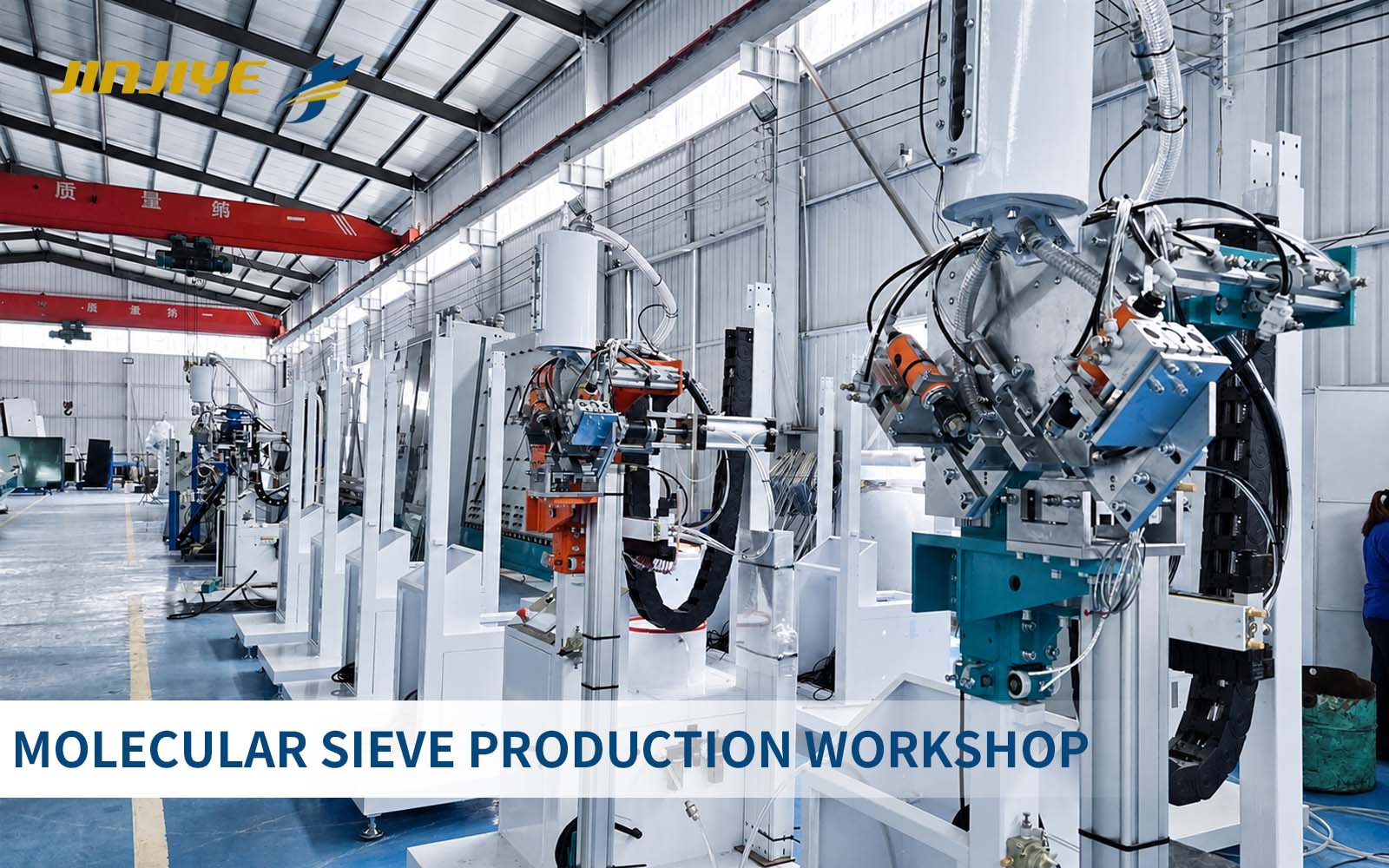
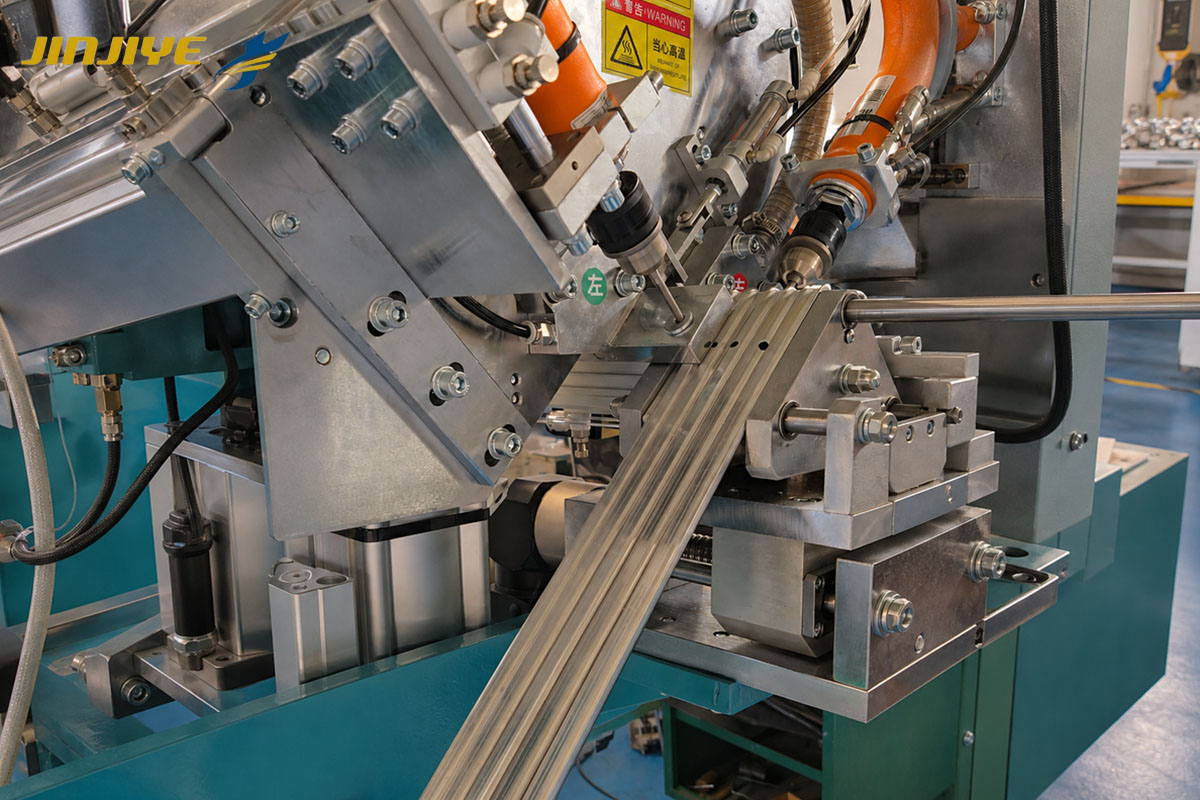
The automatic molecular sieve filling machine is what handles that. On a standard aluminum frame setup it does four things — holds the frame, opens the holes, fills the sieve, closes the holes.
Looks easy. It's not. The tricky part is how those four steps actually line up in the real world. And how the machine decides when it's done.
Where the Filling Machine Fits in IGU Production
Your line goes something like this:
Bend the frame
Fill the desiccant
Butyl coat
Assemble the IGU
That's the route for the JINJIYE automatic desiccant filler. The sieve sits inside the spacer and soaks up moisture in the glass gap. Skip this step and the frame is basically junk.
One thing though — this is for bent aluminum frames. If you're running a different spacer system, the prep might be different. Just so you know.
Getting the Frame to Sit Right
The frame has to sit tight against the locating points. Clamp it down. Then the head punches or drills the holes.
And here's the thing nobody tells you.
A number on the screen doesn't prove the frame is sitting where it should. The supports, the clamps, the working head — they all have to match the spacer you're running. If they don't, you'll find out the hard way.
Feeding the Sieve and Knowing When to Stop
The system pulls sieve from the hopper, sends it to the filling head, drops it into the spacer.
It's enclosed, so dust stays down and you don't spill much. But you still have to handle the material properly. Open containers, refill the machine — follow the supplier's instructions. Don't improvise.
Now the question most buyers forget to ask.
How does the machine know when to stop filling?
Some machines use a timer. You set the seconds and it stops when time's up. Others actually measure how much went in.
Those are two very different things. Ask the supplier what the machine is really monitoring. And remember — that setting only works for one spacer and desiccant combo. Change the profile or the material, and you're starting over.
Closing the Holes (Not the Butyl Seal)
After filling, the machine closes the holes. Then it releases the frame.
How it closes them? Depends on the system. Pins, plugs, tape — whatever the setup uses.
One thing people mix up. Closing the filling holes is not the same as the butyl seal. Butyl goes on the glass-contact surfaces later. Different station, different job.
At the end of the cycle, someone takes the frame off. Unless there's a transfer system, in which case it moves on its own.
Watch the demo carefully. Hole closure. Frame release. Transfer. Follow one frame all the way through. That's the only way to really get it.
What “Automatic” Really Means
Automatic filling just means the machine runs the fill cycle. It doesn't mean you push a button and walk away.
On a standalone machine, an operator still loads the frame. Starts the cycle. Takes it off. Refills the desiccant. Changes materials. Does the checks.
Watch a second frame go through. Then change the width and watch another one.
That's how you see how much handling actually sits around that automatic cycle. Not just a pretty demo run.
FAQ: Automatic Molecular Sieve Filling Machines
What does an automatic molecular sieve filling machine do?
It positions a bent aluminum spacer frame, opens filling holes, feeds molecular sieve into the hollow profile, and closes the holes. It prepares the spacer for butyl coating and IGU assembly.
How does the machine know when to stop filling?
Two common methods: a timer (you set the seconds) or a system that measures the delivered quantity. Ask your supplier which one the machine uses — they give you different levels of control.
Is closing the filling holes the same as the butyl seal?
No. Closing the holes happens right after filling. The butyl seal is a separate operation that goes on the glass-contact surfaces later, at the butyl coating station.
Can I run different spacer profiles on the same machine?
The machine's supports, clamps, and working head must match the spacer you're running. Change the profile or material, and you'll need to re-check settings and possibly change tooling.
Talk to JINJIYE About Your Setup
For a broader comparison of machine configurations, see our molecular sieve filling machine selection guide.
Got spacer profiles? Frame sizes? Desiccant specs? Send them to JINJIYE. Let's talk real numbers and see if this machine actually fits your line.