English
 Español
 Português
 Русский
 Deutsch
 Francés
 العربية
 한국어
한국어
 Türk
Türk
 日本語
日本語

JINJIYE Automatic Desiccant Filler Supports Multiple Spacer Frame Types
JINJIYE Automatic Desiccant Filler Supports Multiple Spacer Frame Types
Spacer specifications can change several times during one production shift. One batch may use a narrow profile for residential windows; the next may require a larger frame or a less common shape.
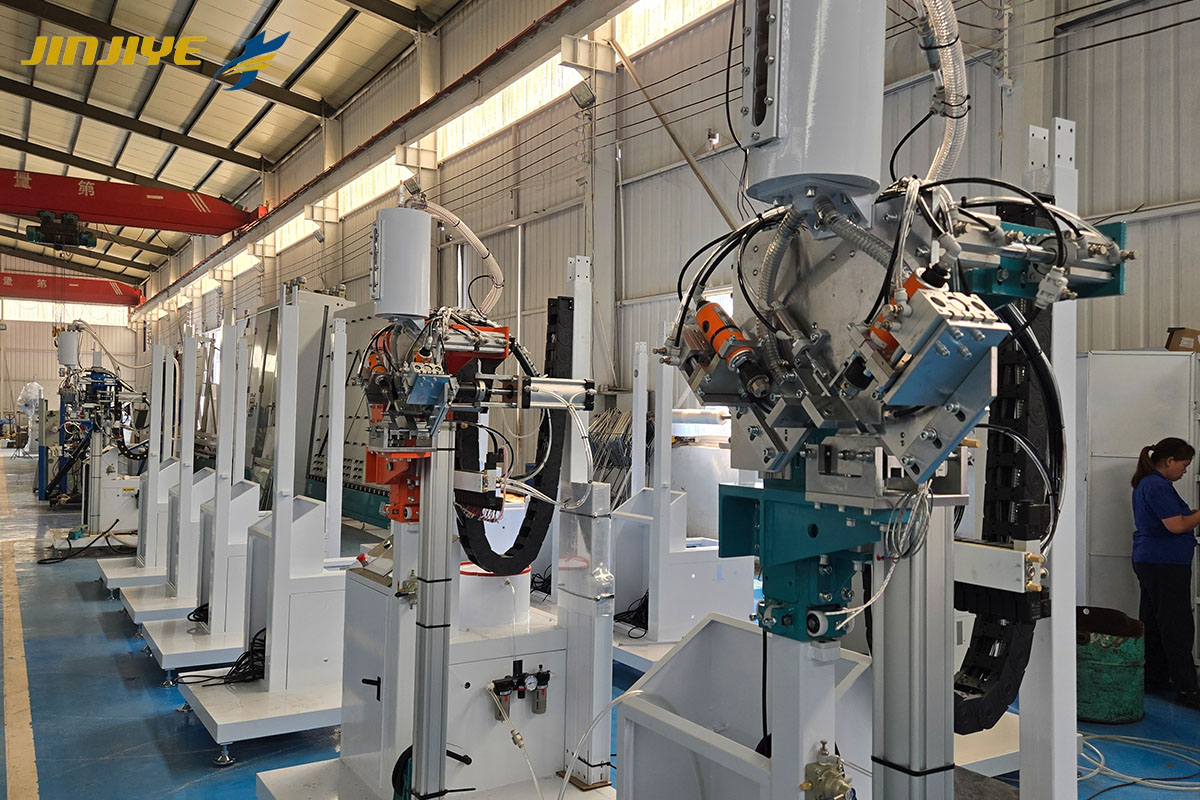
The JINJIYE Automatic Desiccant Filling Machine fills molecular sieve into aluminum spacer frames before butyl coating and IGU assembly. Adjustable filling height and automatic material feeding make it easier to change between frame specifications without repeatedly stopping the machine.
Handling More Than Standard Rectangular Frames
A typical production schedule may contain several spacer widths and frame sizes.
Standard rectangular frames are common in residential window production. Curtain-wall and transportation-glass orders, however, may involve larger frames, different spacer widths or arc-shaped designs. If resetting the filler takes too long, completed frames can begin to queue before the butyl-coating stage.
The JINJIYE machine can be configured for bent aluminum spacer frames and conventional corner-connected frames. Arc-angle and other customized frames can also be evaluated after the customer provides the spacer profile and frame drawing.
Adjustable Filling Height for Different Frame Sizes
The required filling position changes with the dimensions and construction of the spacer frame.
The filling height can be adjusted according to the frame specification. Before starting a production batch, the operator enters the relevant settings through the control interface and positions the frame for filling.
This adjustment is particularly useful for factories that frequently change between small residential frames and larger architectural frames.
The machine configuration should be selected according to the customer’s actual minimum and maximum frame sizes. Maximum capacity alone is not enough when a factory regularly processes small frames, narrow spacer profiles or customized shapes.
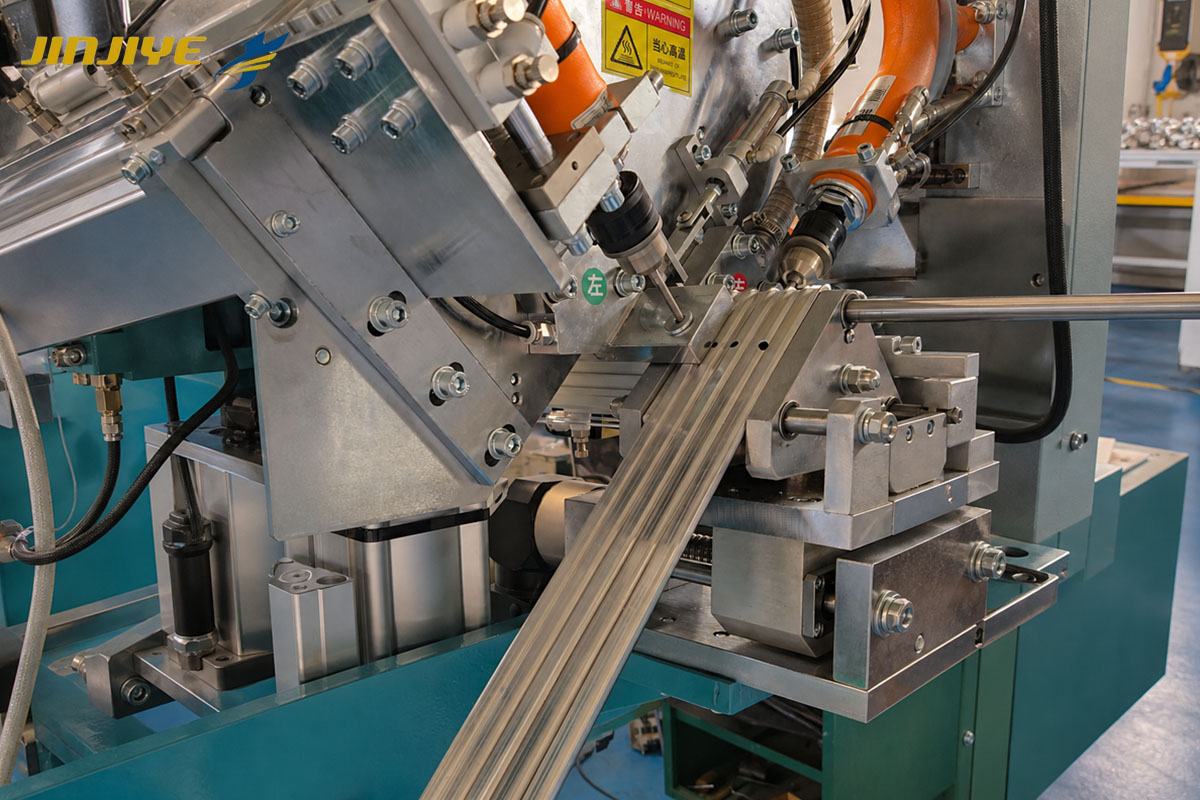
Automatic Replenishment Helps Avoid Frequent Stops
A filling station can slow down spacer preparation when operators repeatedly need to check and refill a small material container.
The automatic feeding system replenishes the filling section as molecular sieve is consumed. Operators still need to monitor the material condition, but they do not have to stop after every few frames to refill the working container manually.
This becomes more important when the filler is used together with an automatic aluminum spacer bending machine and a butyl extruder. The three machines form a connected spacer-preparation process:
The aluminum spacer is bent or assembled into a frame.
Molecular sieve is filled into the spacer.
The filling point is closed according to the machine configuration.
Butyl sealant is applied to both sides of the completed frame.
The prepared frame moves to IGU assembly and pressing.
Production improves only when these steps operate at a similar pace. A fast spacer bender offers little benefit if frames must wait for desiccant filling or butyl coating.
Material Condition Still Matters
Molecular sieve absorbs residual moisture inside the sealed cavity of an insulating glass unit. If it is exposed to workshop air for too long, it may begin absorbing moisture before entering the spacer.
Automation makes the filling process more repeatable, but it cannot restore damp material or clear a blocked spacer hole.
Before starting production, the operator should confirm that:
The molecular sieve has been stored in sealed packaging.
The feeding path is clean and free from excessive dust.
The spacer holes are correctly positioned and not blocked.
The air supply is stable.
The frame is held securely.
The selected filling height matches the current frame.
If filling becomes slow or uneven, the operator should check the material, spacer holes, feeding path and air pressure before assuming that the machine has developed a fault.
For additional operating guidance, read How to Operate an Automatic Molecular Sieve Filler for Insulating Glass Safely.
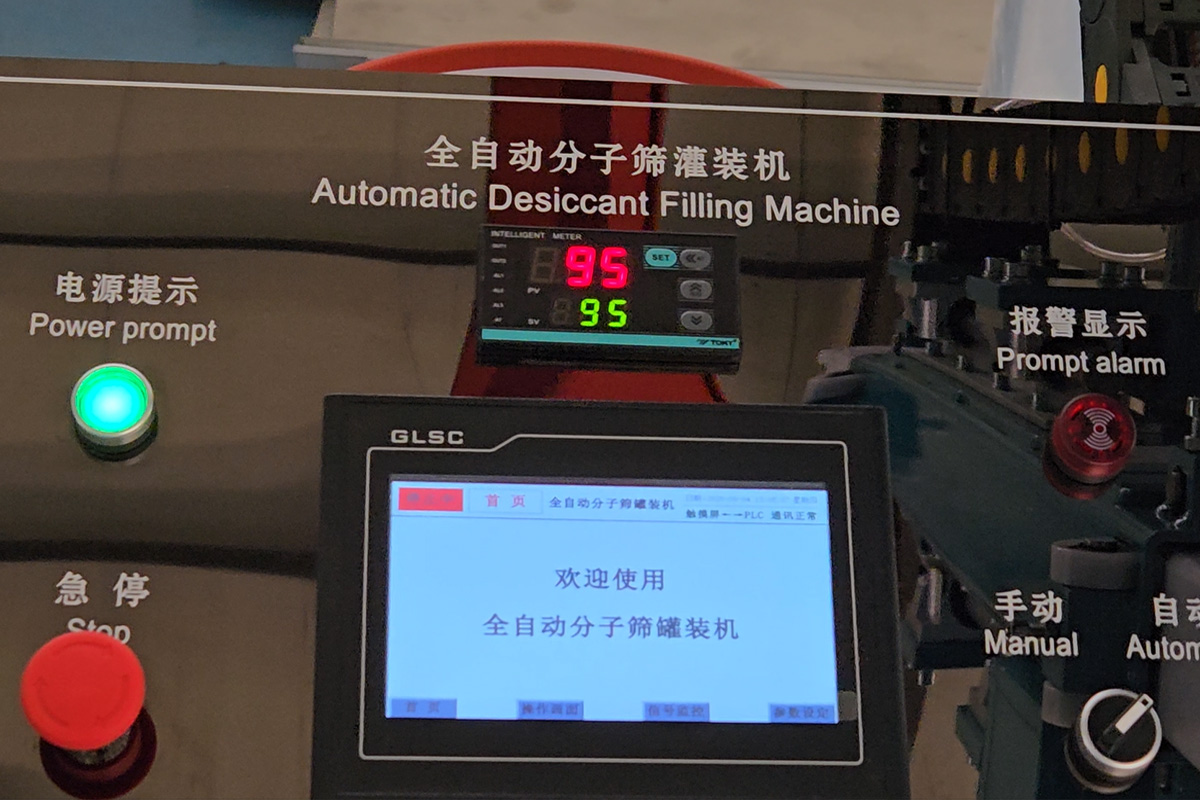
Information Required Before Machine Configuration
To recommend a suitable machine, the supplier needs more than the maximum frame size.
Customers should provide:
Spacer material and profile width
Minimum and maximum frame dimensions
Bent or corner-connected frame construction
Standard rectangular, arc-angle or customized frame shapes
Molecular sieve particle specification
Required daily production capacity
Factory voltage and air-supply conditions
Upstream spacer-bending equipment
Downstream butyl-coating equipment
Available workshop layout
Customers producing customized frames should also provide drawings or physical spacer samples. These details allow the frame-holding, drilling and filling requirements to be checked before the machine is built.
A Practical Addition to Spacer Preparation
The JINJIYE Automatic Desiccant Filling Machine is suitable for factories that process changing spacer specifications and want to reduce repeated manual filling.
Its adjustable filling height, automatic material feeding and support for different frame constructions allow it to work with a wider range of IGU orders.
The final configuration should always be based on the customer’s spacer profiles, frame-size range and expected production output.
Learn more about the JINJIYE Automatic Desiccant Filling Machine, or view the complete JINJIYE insulating glass equipment range.
For a machine recommendation, send JINJIYE your spacer specifications, minimum and maximum frame sizes, daily production requirement and workshop layout.