English
 Español
 Português
 Русский
 Deutsch
 Francés
 العربية
 한국어
한국어
 Türk
Türk
 日本語
日本語

Butyl Extruder vs Two-Component Sealant Extruder: What Buyers Should Know
Look at the edge of a conventional dual-sealed insulating glass unit. There is a thin primary seal between the spacer and each pane, and a secondary seal filling the perimeter cavity outside the spacer.
These seals are applied at different stages. The butyl extruder works on the spacer frame before assembly. For the assembled unit, the two-component machine mixes the sealant and delivers it to the application gun.
Check which sealing stage each item on the quotation covers. The name “sealant extruder” alone does not tell you whether the machine coats spacer frames or seals assembled glass.
The Butyl Machine Works on the Spacer
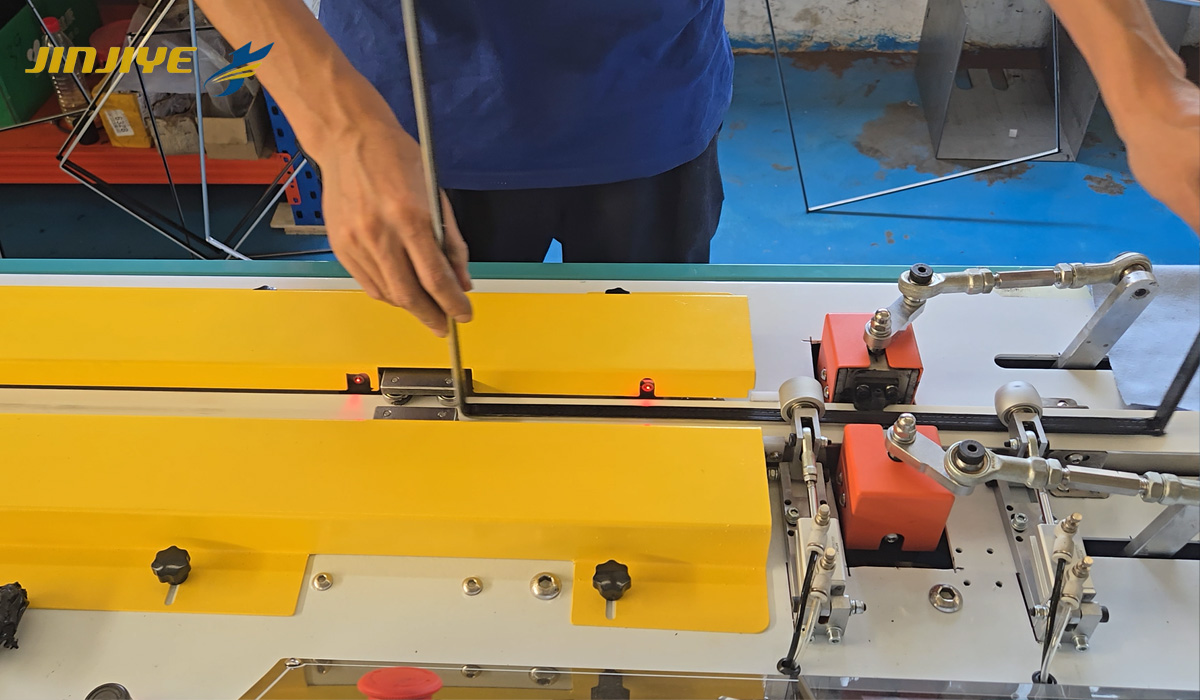
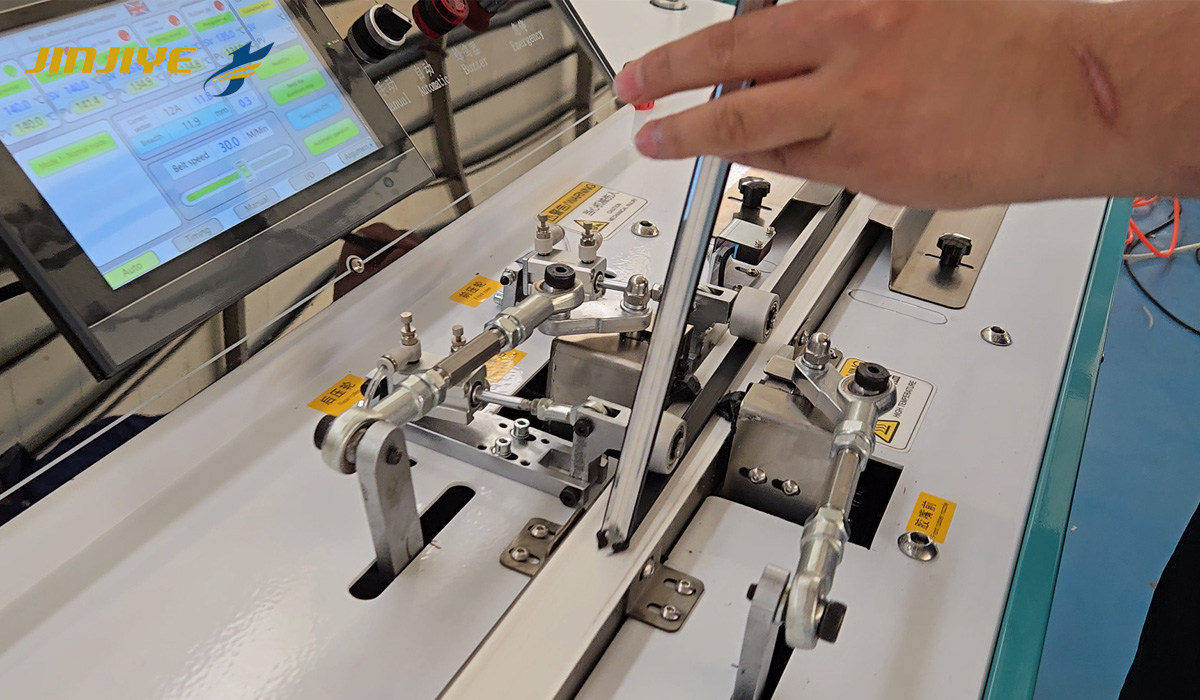
The spacer frame reaches this machine before it is placed between the glass panes. A butyl extruder applies a PIB-based primary sealant to the two spacer surfaces that will contact the glass.
The material is heated to its specified application condition. As the frame passes through the coating section, the machine applies the sealant along those surfaces. The resulting primary seal helps restrict moisture entry and insulating gas loss.
For a buyer, the useful question is not just “How fast does it run?” It is “What does the coating look like on our spacers?”
Ask to see your common spacer widths and a complete frame, including the corners. Inspect for interruptions and uneven application, then assess an assembled sample under your approved quality procedure.
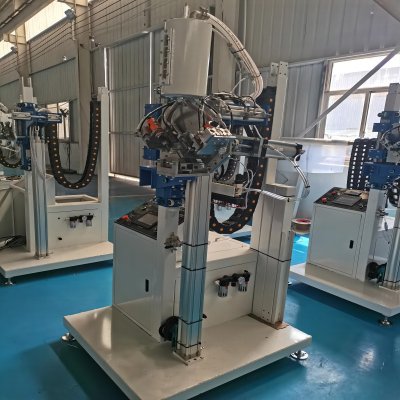
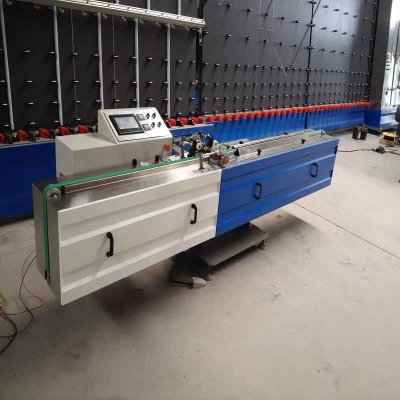
The JINJIYE butyl coating machine combines PLC-assisted control with semi-automatic operation. Operators still handle the frames. Automatic frame feeding and transfer need to be discussed separately. If these are part of your plan, have the supplier write them into the quoted scope rather than assume they come with the coater.
The Two-Component Machine Handles a Different Material System
At secondary sealing, the spacer is already inside the assembled IGU. The space around the outside of the spacer is filled with the secondary sealant approved for that IGU construction.
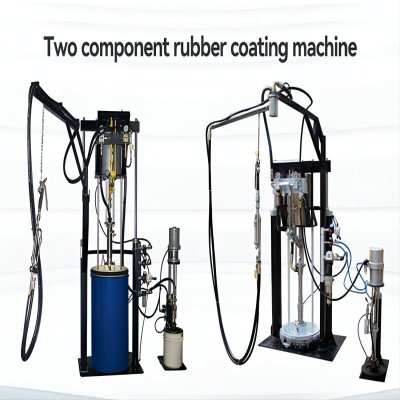
Base material and curing component enter the machine separately. They are brought together in the specified proportion and mixed before being dispensed through the gun.
This brings a different set of checks. Heating and spacer handling are no longer the main questions. Component supply, proportioning, mixing and application become the focus.
The JINJIYE two-component sealant extruder can be configured for compatible silicone or polysulfide sealants. Confirm the exact product rather than asking only whether the machine “works with silicone.”
Also check who guides the gun. Automatic proportioning does not mean automatic perimeter application. With a manually guided gun, the operator still controls placement and coverage.
Why One Cannot Simply Replace the Other
For the conventional dual-seal process described here, the differences are straightforward:
| Buying question | Butyl extruder | Two-component sealant extruder |
|---|---|---|
| What enters the station? | A spacer frame | An assembled glass unit |
| What material is applied? | One-component PIB primary sealant | An approved two-component secondary sealant |
| Where does it go? | Between spacer and glass | Into the outer perimeter cavity |
| What needs close control? | Coating condition and continuity | Material ratio, mixing and coverage |
An interrupted primary seal should be corrected at the primary sealing stage. Applying more secondary sealant is not a substitute. Even with a sound butyl coating, the unit still needs a correctly mixed secondary sealant.
Some spacer systems use a different sealing process. Have the spacer-system supplier confirm the sealing requirements before you place the equipment order.
Before You Ask for a Quote
For the butyl machine, send spacer samples or clear specifications: material, width range, typical frame dimensions and the intended PIB product. A short description of the current workflow is useful too: how frames arrive at the coater, how they leave and where handling or waiting holds up the next frame.
For the two-component station, include the sealant’s technical data sheet with your enquiry. The equipment supplier needs the product name, viscosity and mixing requirements, along with the container size used for each component. Include the units used for the mixing ratio. A ratio stated by weight cannot simply be entered as the same ratio by volume.
A trial should use representative materials and workpieces. Run a typical job first. Then change the setup for a second job—for example, another spacer width or a larger IGU that falls within the machine’s approved limits—and observe the changeover.
The demonstration should also cover the work between jobs: setting up, cleaning and returning to production after a routine stop. A short demonstration of continuous running will not show all the work required during a shift.
Temperatures, pressures and mixing settings must come from the equipment instructions, sealant guidance and your approved process, not another factory’s settings.
Before Upgrading, Find Where the Queue Starts
If spacer frames wait for butyl coating, review that station’s handling and cycle time. If assembled units are waiting for secondary sealing, follow one through the station. Check material feeding, mixing and application, as well as how the sealed glass is moved away.
Record dispensing time separately from waiting time. If the delay is in moving glass or resetting the station, increasing dispensing speed leaves that delay in place.
For an insulating glass production line, show the supplier your regular order sizes and quantities. The planned capacities for spacer coating and final sealing should be based on that workload.
Send JINJIYE the spacer materials and sizes you use, the sealant product names, your usual IGU dimensions and the output you need. This gives the equipment discussion a useful starting point.