English
 Español
 Português
 Русский
 Deutsch
 Francés
 العربية
 한국어
한국어
 Türk
Türk
 日本語
日本語

butyl bead shifts after spacer width chang
Butyl Bead Shifts After a Spacer Width Change: What to Check
When a butyl bead moves off-center immediately after changing spacer width, check the spacer’s physical position before changing the sealant temperature or pressure. The new width may be entered correctly on the screen while the spacer is still passing closer to one nozzle than the other. A guide may not have reached its expected position, the profile may be twisted, or cured residue may be affecting one nozzle. Keep the last acceptable frame and the first defective frame. Comparing them is usually more useful than adjusting several settings at once.
Start With What Changed
If the machine was coating normally before the spacer change, begin with the changeover.
Confirm the spacer that reached the machine. Do not rely only on the order sheet or packaging. Check its actual width, profile shape and condition. A different profile with the same nominal width may not sit in the guides in exactly the same way.
Look along the spacer for bowing, twisting, dents or damaged edges. When the profile does not travel squarely, the two sides may pass the coating nozzles at different positions.
This does not automatically mean the machine needs recalibration. First determine whether the problem follows the new spacer or remains when the previous spacer is tested again.
Check the Spacer Centering and Guides
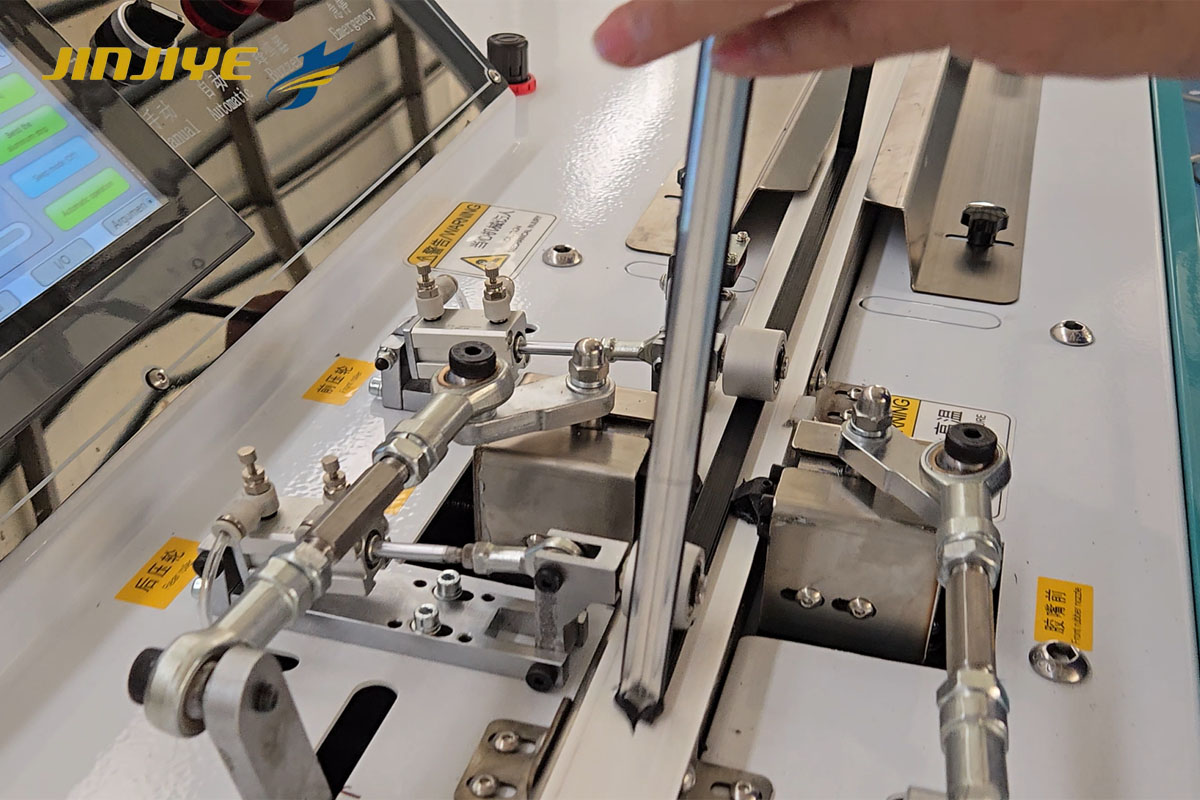
A width setting tells the control system which spacer is expected. It does not prove that the spacer is physically centered when it reaches the coating point.
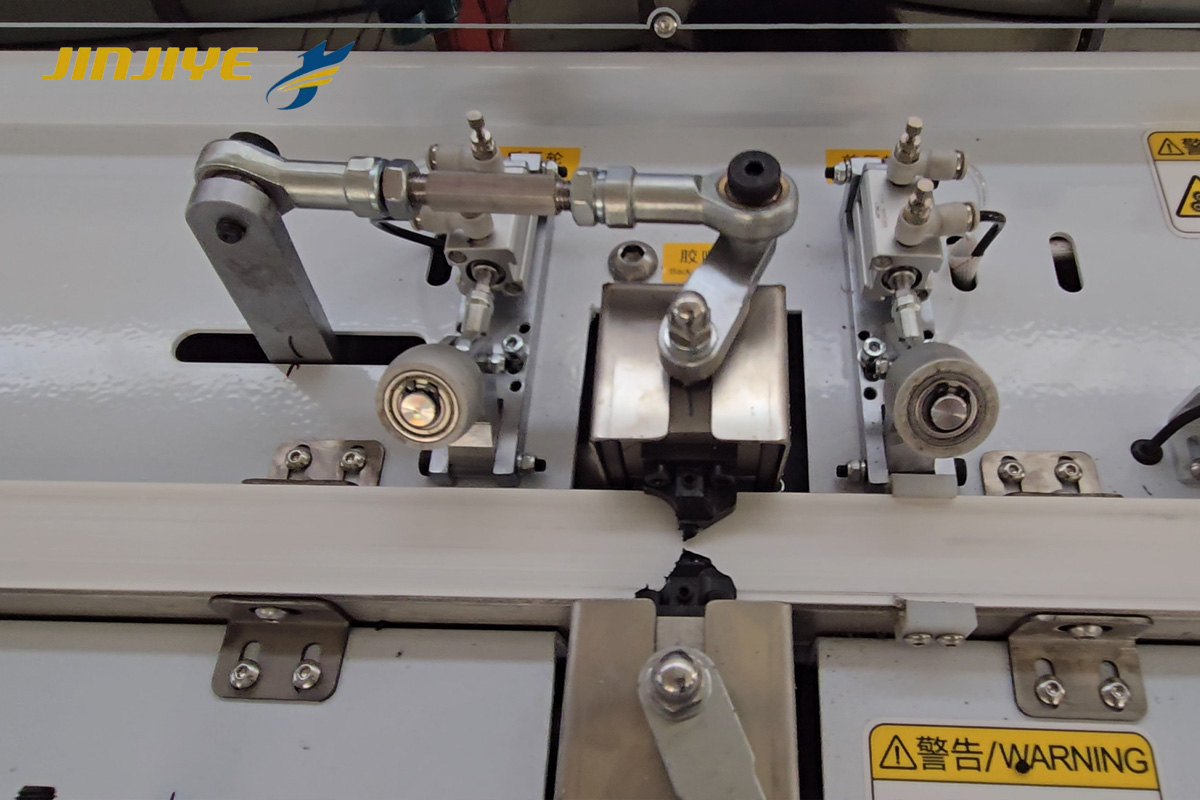
With the equipment stopped and made safe according to its manual, a trained operator should inspect the guide positions and spacer path. Check whether:
Both sides of the spacer are supported consistently.
The profile enters the coating area without leaning.
The guides moved to the intended changeover position.
Loose material or sealant residue prevents complete movement.
The spacer remains centered from entry to exit.
Do not place hands inside an operating coating section. Inspection, cleaning and adjustment must follow the machine manufacturer’s safety procedure.
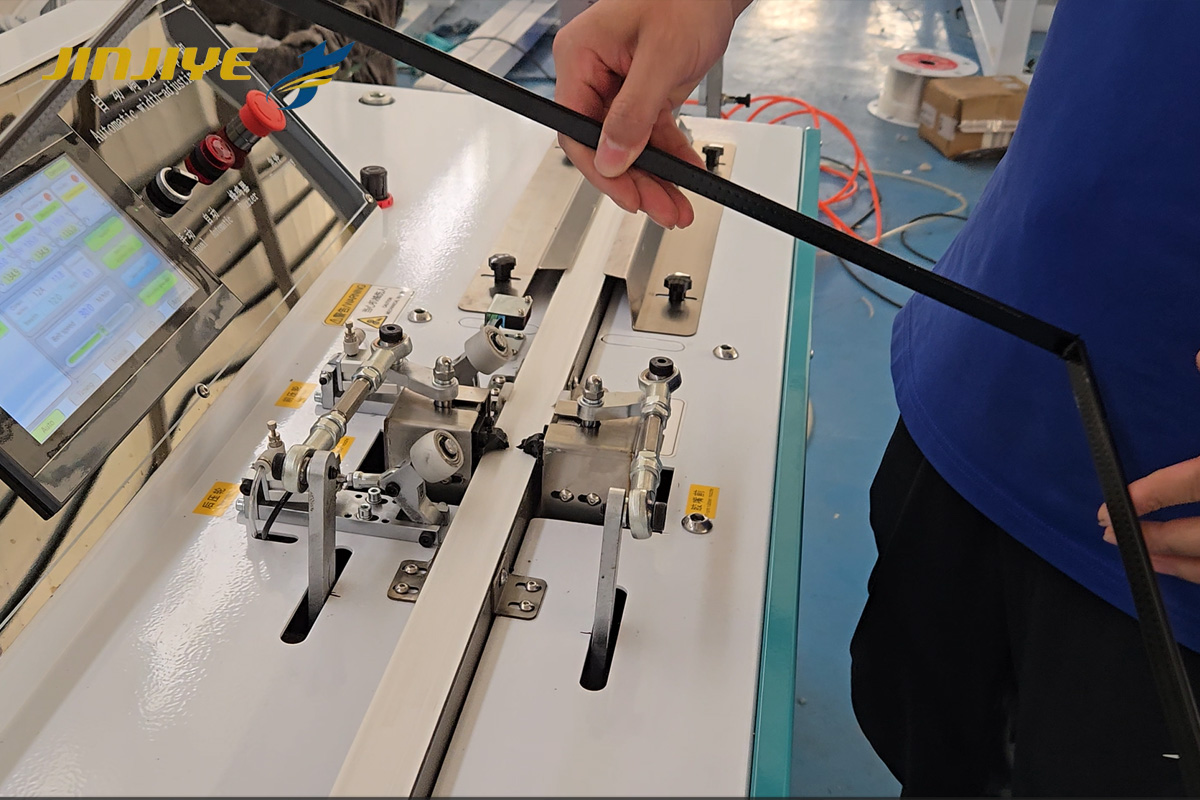
For factories processing several spacer sizes, an automatic butyl sealant extruder can reduce manual adjustment. The first frame after a width change still needs to be checked before releasing the full batch.
Inspect Both Nozzle Faces
A small deposit on one nozzle can change the appearance of the coating.
Inspect the nozzle faces using the approved cleaning procedure. Look for hardened material, an uneven opening, surface damage or a part that has not returned to its correct position. Compare the left and right sides rather than cleaning only the side where the defect is visible.
Avoid scraping the nozzle with an unsuitable metal tool. Damage that looks minor may affect later coating. Use the cleaning method and tools specified for the machine and sealant.
After cleaning, run a short test with the same spacer. If the coating returns to the center without changing heat or pressure, the issue was probably associated with the material path or nozzle condition rather than the production recipe.
Do Not Change Temperature, Pressure and Speed Together
PIB primary sealant is a thermoplastic material, so its behaviour changes with its condition and application temperature. However, there is no single correct temperature for every butyl product.
Use the sealant supplier’s current technical data sheet together with the equipment manual. Do not copy a temperature from another factory or website. Different products can specify different application conditions.
If the spacer is centered and the nozzles are clean, compare the current machine status with the last approved setup:
Has the machine completed its specified warm-up procedure?
Is the displayed temperature stable?
Has the sealant batch or supplier changed?
Is the material within its stated storage period?
Is the production speed the same as the approved setup?
Is the machine pressure stable rather than fluctuating?
Change one permitted variable at a time and record the result. If three settings are changed together, an acceptable frame may be produced without revealing which change corrected the problem.
Read the Pattern on the Test Frame
The location of the defect can narrow the inspection.
If both beads are shifted in the same direction for the entire frame, inspect spacer centering and guide position first.
If one bead is repeatedly thinner or interrupted while the other remains stable, check that nozzle and its material path. A blocked or damaged nozzle is one possibility, but the machine status and sealant condition should also be reviewed.
If straight sections look acceptable but the coating changes near corners, observe how the frame is supported and guided through the coating point. A frame that rotates, lifts or twists can change its distance from the nozzles.
If the first frame is poor but later frames gradually improve, review the warm-up and start-up procedure. Do not assume that running more defective frames is an acceptable way to stabilize production.
These patterns are inspection clues, not final diagnoses. Follow the equipment manual before making adjustments.
Use a Controlled First-Frame Check
After every spacer-width change, run one identified test frame before starting the complete order.
Record the spacer profile and width.
Confirm the selected machine program.
Check that the spacer is centered in the guides.
Inspect the coating on both sides and around every corner.
Compare the result with the factory’s approved sample or inspection criteria.
Release the remaining batch only after the first frame is accepted.
A quick visual check from several metres away is not enough. View both sides under suitable lighting. Confirm that the coating is continuous and positioned where the approved IGU process requires it.
The required bead dimensions and acceptance limits must come from the factory’s validated process, sealant supplier, customer specification or applicable certification program. They should not be invented for an online article.
Check the Upstream Spacer Process
The coating machine may be showing a problem created earlier.
A frame produced by an automatic aluminum spacer bending machine should be checked for its overall dimensions, diagonals, corner condition and joining point before butyl is applied. An out-of-square or twisted frame may not remain centered through the coating section.
Also check how frames are stored and carried. Leaning several frames against an unsuitable support can distort lighter profiles. Dirt, oil or dust on the spacer surface can create another coating problem even when the bead appears centered.
The goal is to separate three questions:
Is the spacer correct?
Is it travelling correctly?
Is the butyl being delivered correctly?
Answer them in that order.
What Buyers Should Verify Before Ordering
Factories using many spacer widths should ask for a changeover demonstration with their real profiles.
Do not test only one convenient spacer supplied by the machine manufacturer. Send representative narrow, common and wider profiles, together with typical frame sizes.
Ask the supplier to demonstrate:
How spacer width is selected or detected.
How the guides and nozzles reposition.
What the operator must inspect after changeover.
Which settings can be stored for repeated orders.
How nozzles are cleaned safely.
What alarms or status information are displayed.
Which spare and wear parts are included.
The JINJIYE butyl extruder range can be reviewed when comparing equipment, but the final configuration should be confirmed against the actual spacer profiles and butyl material used by the factory.
Final Advice
When a butyl bead shifts after a spacer-width change, return to the last confirmed condition. Verify the spacer, centering system and nozzle condition before altering the material settings.
Save the approved setup for each regular spacer specification and retain a simple first-frame record. A five-minute controlled check is easier to manage than discovering the same off-center coating across an entire batch.
For equipment selection or troubleshooting support, send JINJIYE the machine model, spacer profile, butyl product information, current settings and clear photographs of both sides of the defective frame.
Frequently Asked Questions
Why is the butyl coating thicker on only one side?
The spacer may be off-center, one nozzle may contain residue, or the two material paths may not be delivering consistently. Check the physical alignment before changing production settings.
Should I increase the temperature when the bead shifts?
Not automatically. A shifted bead often begins with spacer or nozzle alignment. Confirm the approved temperature from the sealant data sheet and machine manual before making any change.
Must every spacer-width change have a test frame?
A first-frame check is a practical way to stop one incorrect setup from being repeated through the full order. The factory should define and document its own approval procedure.
Can one butyl extruder process different spacer widths?
Many automatic machines are designed for multiple widths, but the supported range and changeover method depend on the model. Confirm compatibility using the factory’s actual spacer samples.
Why does the coating look correct on straight sections but change at corners?
The frame may change position as the corner passes through the coating area. Inspect frame geometry, support and movement as well as the nozzles.